


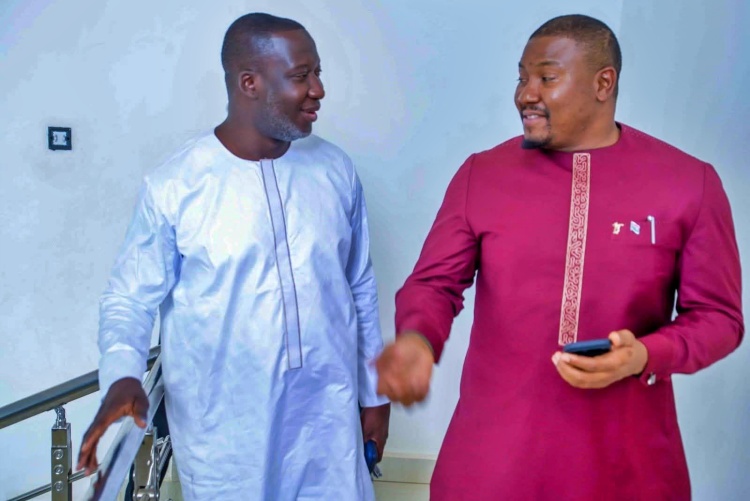
Gambiaj.com, (BANJUL, THE GAMBIA) – Coalition 2026 has escalated its warnings over what it describes as an alleged covert attempt by government officials to influence the Independent Electoral Commission (IEC) and prevent its flagbearer, Talib Ahmed Bensouda, from contesting the December 5 presidential election.
Bensouda made the allegations during a weekend rally, claiming that Attorney General and Justice Minister Dawda Jallow had approached the IEC and President Adama Barrow over his possible disqualification.
He also suggested that government officials were calculating that any legal challenge against his exclusion could come only after the election had already taken place.
Bensouda said he had “never seen an Attorney General going to IEC to dictate to them what to do,” while warning Jallow against becoming involved in what he portrayed as an effort to prevent his candidature.
The allegations remain unsubstantiated. Jallow has categorically denied them, saying he has neither visited the IEC since becoming Attorney General more than six years ago nor sent anyone to the Commission on his behalf.
He also rejected the claim that he advised President Barrow to direct the IEC, stressing that the Commission is independent in its electoral functions.
The confrontation comes after the government accepted findings of the Local Government Commission of Inquiry against Bensouda and ordered, among other measures, a criminal investigation and proceedings that could lead to his removal as Mayor of Kanifing.
The government has not, however, formally stated that the White Paper itself disqualifies Bensouda from the presidential race.
Coalition 2026 and UNITE have maintained that Bensouda remains eligible and that his nomination scheduled for November 7 will proceed. The coalition has portrayed the timing of the government’s action, coming shortly after the IEC released its nomination calendar, as politically motivated.
Threatening Rhetoric Raises Political Temperature
The rhetoric from some Coalition 2026 figures has meanwhile become increasingly confrontational.
UNITE national president Ebrima Dibba told supporters at a weekend rally in Sanyang that the movement was prepared to “put our lives to the line” if Bensouda were prevented from contesting. He also referred to preparing space in “the graveyard” and enlarging space in prisons, while simultaneously insisting that the coalition remained committed to peace.
UNITE Deputy President Tijaan Camara has also called on supporters to turn out in large numbers on November 7 for Bensouda’s nomination, describing the date as “D-Day.”
The statements come at a particularly sensitive point in the electoral calendar, with presidential nominations beginning this week and political tensions already heightened by disputes surrounding the Local Government Commission report and the eligibility of Bensouda.
GPU Warns Against Hate Speech and Intimidation
Against this backdrop, the Gambia Press Union (GPU) has issued a broader warning to political parties, presidential candidates, and their supporters against hate speech, intimidation, and misinformation ahead of the December 5 election.
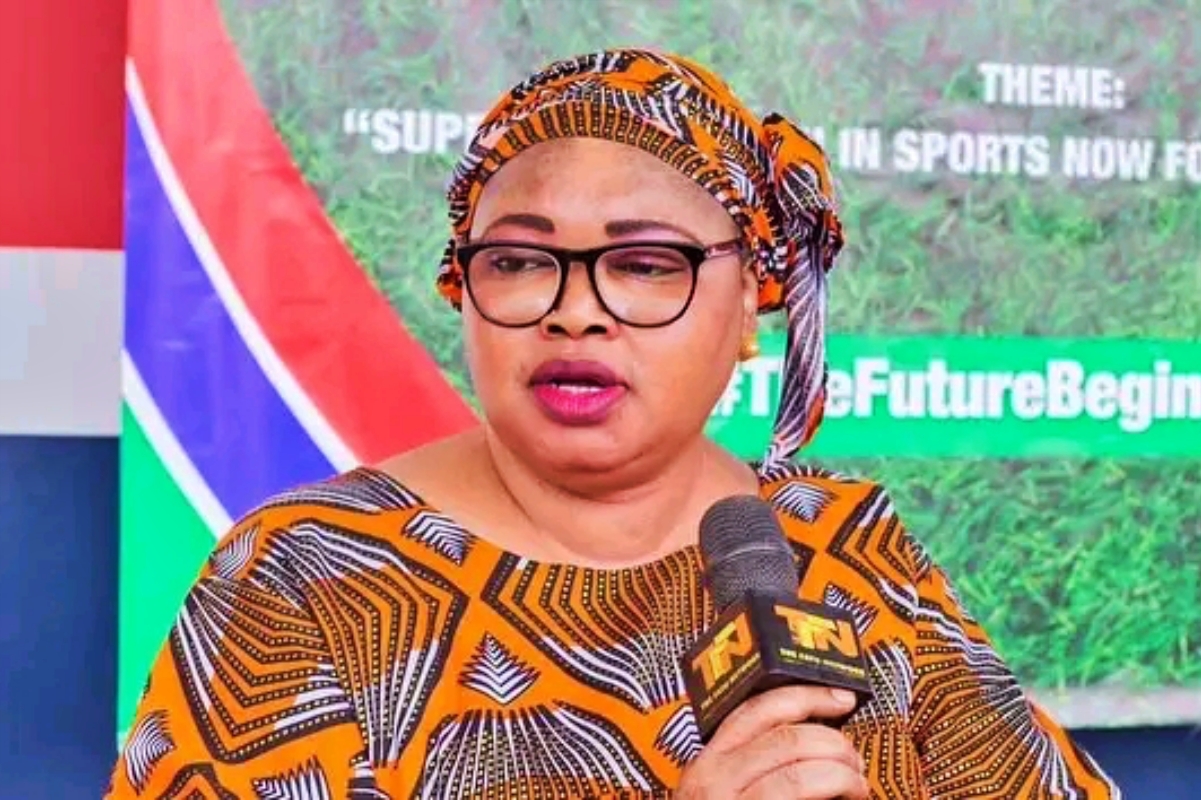
GPU President Isatou Keita said the nomination period was a critical moment for the country’s democratic process and urged political actors to exercise restraint and respect opposing political views.
“Elections should be a contest of ideas, not hostility; of vision, and not division,” Keita said.
She called on presidential candidates to focus on policy proposals and practical solutions rather than personal attacks and inflammatory rhetoric, warning that such language could undermine public confidence and damage democratic discourse.
The GPU has been preparing journalists for precisely these risks, including disinformation, hate speech, online abuse, and physical and digital threats during the election period.
A Disqualification Claim With Wider Consequences
The immediate dispute is therefore no longer limited to whether Bensouda is legally eligible to contest. His allegations of an alleged state effort to influence the IEC, combined with increasingly combative statements from coalition supporters, risk turning the nomination process itself into a major political flashpoint.
Bensouda has urged the IEC to preserve its independence, while the government has rejected the allegations of interference. The IEC, whose nomination schedule places Bensouda’s submission on November 7, remains the institution responsible for administering the nomination process.
With competing claims now circulating about the intentions of the government, the IEC, and the opposition coalition, the GPU’s warning places particular emphasis on the need to distinguish verified information from political allegations as the country moves closer to the election.







Leave a Reply