


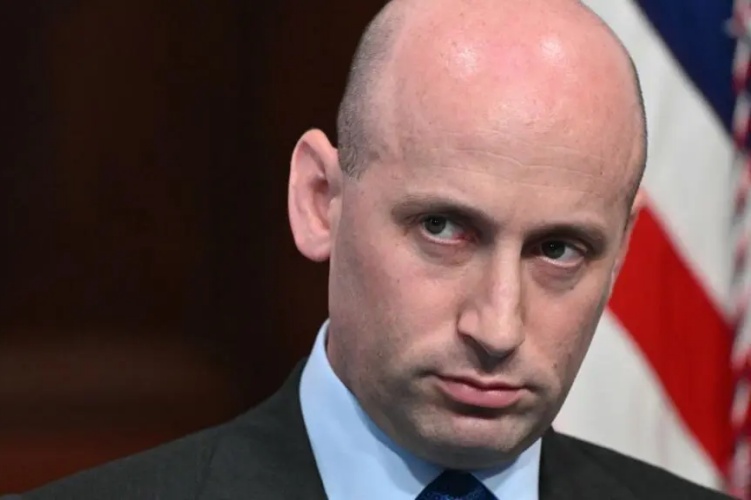
Gambiaj.com – (WASHINGTON, UNITED STATES) – Donald Trump’s decision to elevate Stephen Miller, the architect of his controversial Muslim travel ban and one of the principal architects of his administration’s aggressive immigration crackdown, to White House chief of staff signals a hardening rather than a reassessment of the president’s political direction following the Republican Party’s resounding midterm defeat.
Announced on Friday, November 6, just three days after the Republican electoral setback, the appointment places one of the most ideologically uncompromising figures in Trump’s inner circle at the center of executive power.
At 41, Miller will replace Susie Wiles, 69, who is leaving the position for another role outside government.
The timing is politically significant. The midterm results have been widely interpreted as a rejection of the first two years of Trump’s second presidency, particularly its domestic political direction.
Yet rather than respond with a more conciliatory figure or someone associated with a change of course, Trump has chosen a close ally whose influence has been central to some of the administration’s most divisive policies.
The appointment could therefore be read as an indication that Trump intends to double down on his political agenda, particularly immigration enforcement, despite the electoral warning from voters.
From Policy Architect to Gatekeeper of Presidential Power
The White House chief of staff is among the most influential positions in the American executive branch. The office controls access to the president, filters information reaching him, and coordinates the daily operations of the administration.
Miller’s elevation consequently represents more than a change in personnel. It gives him greater institutional influence over the administration’s priorities and potentially the ability to shape which policies receive presidential attention and how they are implemented.
He has long been regarded as the intellectual force behind much of Trump’s political agenda. Former Republican House Speaker Kevin McCarthy once described him as “the brain of Trump” shortly before the president’s return to office in January 2025.
Although Miller previously operated largely as an influential adviser behind the scenes, his new position places him at the center of the White House decision-making machinery.
His record on immigration offers an indication of what that influence could mean. He was one of the principal architects of the so-called Muslim ban, which restricted entry into the United States for nationals of several predominantly Muslim countries.
The policy triggered widespread protests and legal challenges before a revised version was eventually upheld by the Supreme Court.
He has also been closely associated with the expansion of Immigration and Customs Enforcement (ICE), the federal agency responsible for immigration enforcement and deportations.
According to The Wall Street Journal, Miller instructed ICE in May 2025 to intensify its operations after daily deportation figures fell below the levels recorded under former president Joe Biden. The intervention illustrated his determination to push immigration enforcement beyond conventional administrative priorities and make mass deportations a defining measure of the Trump presidency.
An Electoral Defeat, But No Immediate Change Of Direction
The appointment raises questions about what the Republican defeat means for the administration’s political strategy.
Midterm elections traditionally provide voters with an opportunity to pass judgment on the president’s performance, and a significant defeat can force an administration to reconsider its priorities, personnel, and approach to governing.
Trump’s decision, however, suggests that he sees the electoral setback differently. Instead of distancing himself from the policies that have generated opposition, he has promoted one of their strongest defenders to a position with considerable control over the administration.
That could have implications for the country’s already polarized political environment. Miller’s influence extends beyond immigration, encompassing a broader nationalist worldview that places American power and interests above international conventions and diplomatic restraint.
He has previously argued for an assertive foreign policy in which the United States should be prepared to use its power to secure strategic interests, including acquiring natural resources and overthrowing foreign governments.
His appointment could therefore strengthen the influence of an ideological approach that views political and international relations largely through the prism of national power.
Miller’s political convictions were evident long before he joined Trump’s first presidential campaign. He defended radical right-wing positions while still at high school and later at Duke University.
Through conservative activist David Horowitz, he entered influential right-wing circles, where he encountered figures including Steve Bannon and Tucker Carlson.
He joined Trump’s political movement at the age of 30 and became one of its most influential policy advisers.
Democrats Prepare For A New Political Battle
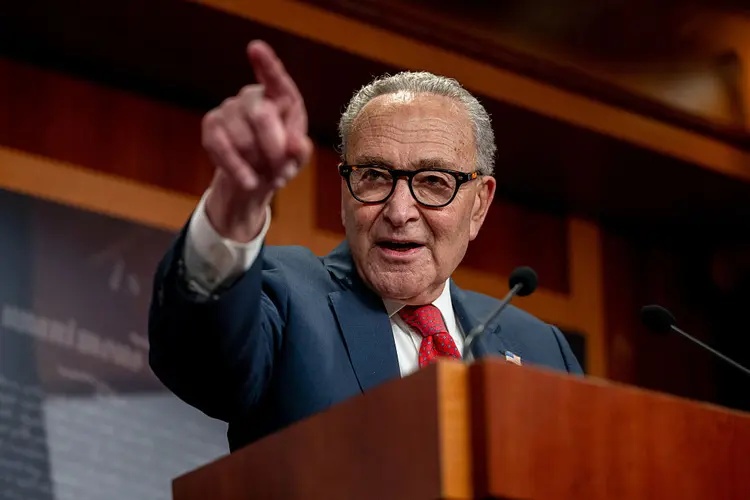
The appointment has already drawn a sharp response from Democratic leaders, who see Miller’s promotion as a warning about the administration’s future direction.
Senate Democratic leader Chuck Schumer pledged to “fight him every step of the way,” describing Miller as the architect of some of the administration’s most “barbaric and inhumane” policies.
Schumer argued that Trump had learned nothing from what he described as a historic electoral defeat and could not have made a worse choice for the position.
Miller had also defended Trump following the January 6, 2021, attack on the US Capitol, when supporters of the president stormed the building in an attempt to prevent Congress from certifying Joe Biden’s election victory.
His promotion therefore places a deeply polarizing political figure in a position that traditionally requires considerable coordination with Congress and other centers of government.
For Trump, the decision may reflect confidence in a trusted ideological ally at a moment when his administration faces renewed political pressure. But it also carries risks.
By elevating the figure most closely associated with some of his administration’s hardest-line policies immediately after an electoral setback, the president risks reinforcing the perception that he is unwilling to listen to voters demanding a different direction.
Ultimately, Miller’s appointment will be judged not simply by his proximity to Trump but by the extent to which he uses the institutional power of the chief of staff’s office to advance an already controversial political program.
What is clear is that the Republican midterm defeat has not, at least for now, produced the political recalibration many of Trump’s opponents had hoped to see.





Leave a Reply