



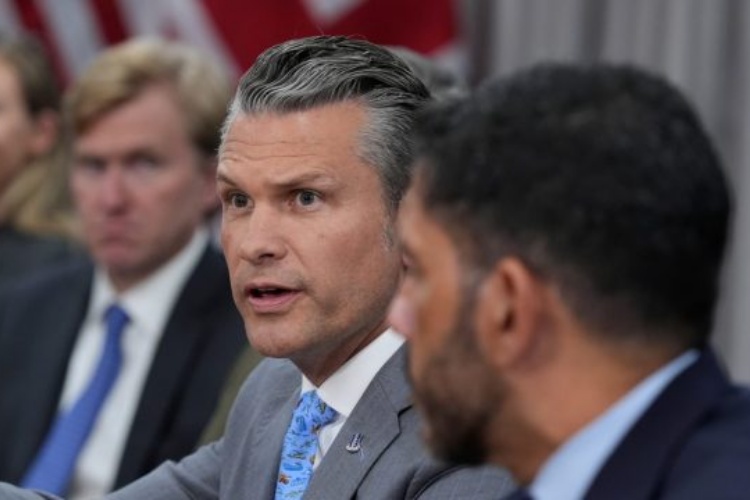
Gambiaj.com – (WASHINGTON, UNITED STATES) – Defense Secretary Pete Hegseth is facing growing resistance from members of his own Republican Party as Congress struggles to advance President Donald Trump’s record $1.5 trillion defense budget and prepares for a possible impeachment vote.
A Washington Post report, based on interviews with 30 people involved in congressional national security work, including 20 lawmakers, found that many members of both parties blame Mr Hegseth’s combative approach and strained relationship with Congress for the breakdown in the bipartisan cooperation that has traditionally helped defense legislation move through Capitol Hill.
Republican Congressman Austin Scott of Georgia, a senior member of the House Armed Services Committee, said: “The way Hegseth treats people is a problem.”
Senator Lisa Murkowski, a Republican from Alaska who opposed Hegseth’s confirmation, described his approach as “shockingly unprofessional.”
The tensions have become particularly evident as lawmakers consider Trump’s proposed defense spending. The administration has sought $1.5 trillion, including additional money linked to the war in Iran. But Congress remains divided over how to finance the request, with Democrats objecting to funding the conflict without congressional authorization and some Republicans questioning the administration’s approach.
Republicans Work Around Defense Secretary
Some Republicans have reportedly begun finding ways to work around Hegseth, including asking Pentagon uniformed officers to brief lawmakers instead of relying solely on the secretary’s office.
Joint Chiefs Chairman General Dan Caine has also held bipartisan breakfasts with lawmakers as the Pentagon tries to build support for the administration’s spending plans.
Senator Kevin Cramer of North Dakota has argued that lawmakers need access to information if they are expected to make major decisions about military operations.
“If we are asking them to make these country-altering decisions, I think we have to inform them,” Cramer said.
The annual National Defense Authorization Act, which Congress has passed for 65 consecutive years, has also encountered unusual difficulty. The legislation has struggled in the Senate after only narrowly advancing through the House, where more Republicans voted against it than Democrats voted for it.
The dispute comes as the financial cost of the Iran war continues to mount. The conflict has cost more than $47 billion, according to the Washington Post, forcing the Pentagon to postpone some training and maintenance activities.
Impeachment Vote Awaits Congress
Hegseth’s political difficulties could intensify when the House returns in November.
Republican Congressman Thomas Massie of Kentucky has said he intends to force a vote on articles of impeachment against Hegseth during the first week of the House’s lame-duck session. Massie’s resolution accuses Hegseth of violating congressional war powers in the Iran conflict and contains eight articles covering alleged abuses of executive and military authority.
Massie, who lost his Republican primary earlier this year and will leave Congress after the current session, has said he expects the impeachment resolution to receive support from Democrats and potentially some Republicans.
The impeachment effort puts Republican lawmakers in an unusual position: they must decide whether to defend a defense secretary from their own administration or support a congressional challenge over the conduct of the war.
The Pentagon has defended Hegseth, saying he remains willing to engage with lawmakers who raise concerns in good faith. The department has also previously described itself as unified behind his leadership.
Even if the House votes to impeach Hegseth, removal would require a two-thirds majority in the Senate. The immediate political battle, however, is likely to be fought in the House, where the impeachment vote could expose the extent of Republican unease over the Pentagon chief and the administration’s handling of the Iran war.














Leave a Reply