


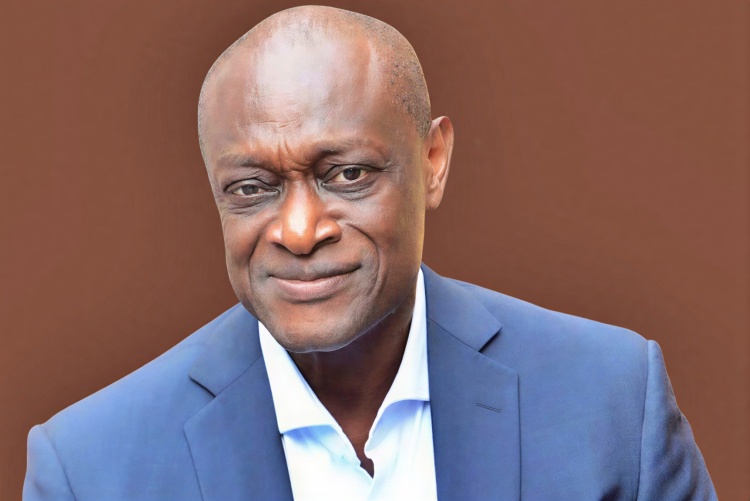
Gambiaj.com – (BANJUL, THE GAMBIA) – The Gambia Bar Association (GBA) has accused the Judiciary of effectively holding up a constitutional challenge to the appointment of Chief Justice Edi M.O. Faal, warning that the prolonged inaction risks compromising the independence of the courts and public confidence in the justice system.
In a strongly worded statement issued on Monday, November 9, the Bar Association said more than three months after filing the case on July 31, 2026, the suit had not been assigned to a Supreme Court Justice for preliminary directions or given a hearing date.
The association’s criticism centers on the fact that the case file was reportedly forwarded to Chief Justice Faal for directives, even though his own appointment and constitutional eligibility are the subject of the proceedings.
The GBA said the arrangement raised a fundamental conflict of interest, arguing that the Chief Justice should have no control over the administrative decisions that could determine when and how a case challenging his appointment proceeds.
“The Chief Justice has a direct personal interest in proceedings challenging the constitutionality of his own appointment. He ought not to exercise any judicial authority or discretionary control over the assignment, progression or determination of those proceedings,” the association said.
Registrar’s Response Raises Questions
The dispute over the handling of the case intensified after the GBA’s lawyers wrote to the Registrar of the Supreme Court on October 26, requesting that the matter be urgently assigned and progressed.
According to the association, the Registrar responded on October 30, confirming that the file had been received and forwarded to the Chief Justice for directives. The Registrar reportedly indicated that the directives would be communicated “if and when received“.
The Bar Association described the response as inadequate, particularly because it neither provided a hearing date nor explained whether any procedural requirements remained outstanding.
Its lawyers subsequently wrote again on November 3 seeking clarification and urgent action, but the association said it had received no response.
The GBA also disclosed that the Attorney General had applied for Chief Justice Faal’s recusal from the proceedings, an application it said it did not oppose. This means both sides have accepted that the Chief Justice should not participate in a case concerning the legality of his own appointment.
However, the association argued that recusal should extend beyond sitting on the case to include administrative decisions capable of influencing its progression.
It maintained that while receiving and forwarding a court file were routine administrative functions, deciding when the case should be listed, issuing directions on pending applications and determining the composition of the panel were substantive decisions that should be left to independent justices.
Constitutional Dispute Over Faal’s Eligibility
The case, instituted on July 31, challenges Chief Justice Faal’s appointment and his eligibility under Section 139 of the 1997 Constitution.
At the center of the dispute is Section 139(5)(b), particularly the constitutional requirements governing the legal qualifications and professional experience of candidates appointed to the office of Chief Justice.
The Bar Association’s position is that Faal’s legal experience in the United States cannot automatically satisfy the constitutional requirements without Parliament formally prescribing the United States as a relevant jurisdiction.
The Gambia Law Society has advanced a different interpretation, arguing that the constitutional provision does not make parliamentary prescription an obligatory precondition. It has also maintained that the Judicial Service Commission assessed Faal’s qualifications before his appointment and found him eligible.
The competing interpretations have raised important questions about the constitutional safeguards governing appointments to the country’s highest judicial office.
The GBA has maintained that those questions should be resolved through an independent judicial determination rather than prolonged uncertainty.
The significance of the challenge extends beyond Faal’s professional qualifications. The Chief Justice occupies a constitutionally important position, including a place in the presidential line of succession, making the question of eligibility particularly consequential for the country’s constitutional order.
Warning Of Wider Judicial Delays
The Bar Association said its concerns were not limited to the case involving the Chief Justice.
It alleged that several other cases filed in recent months, including matters involving urgent applications, were also awaiting attention in the Chief Justice’s office.
“Incidentally, there are several other cases filed in the past few months, some with urgent applications that need to be heard, suffering the same fate, gathering dust in the office of the Chief Justice. Justice delayed is justice denied,” the statement said.
With the current judicial term expected to end in December, the association warned that continued inaction could push the constitutional challenge into another judicial term without it ever being formally mentioned in court.
It said the circumstances were creating the perception that the proceedings were being deliberately stalled, although it acknowledged that the delay could be intentional or otherwise.
“Whether intended or otherwise, the practical consequence is the same: a matter going to the constitutional legitimacy of the highest judicial office remains in abeyance, without judicial consideration,” the association stated.
The GBA called on the Judiciary to explain publicly whether any directives had been issued on the case and, if not, why the matter had remained unattended.
It also demanded that the file be immediately placed before an independent Supreme Court Justice for preliminary directions and subsequent listing.
The association stressed that it was not seeking a predetermined outcome or attempting to influence the court’s eventual decision on Faal’s eligibility. Rather, it said its concern was that the constitutional questions raised should be heard and determined by an impartial court.
It warned that any interference by a party to the proceedings or someone with a personal interest in the outcome in decisions concerning the listing, hearing or composition of the court could constitute a denial of the right to a fair hearing.
The Bar Association said it reserved the right to seek appropriate legal remedies and take any legitimate action necessary if the case was not urgently assigned and heard.






Leave a Reply