


Gambiaj.com – (BANJUL, THE GAMBIA) – Seven years after Banjul took the bold diplomatic and legal step of dragging a Southeast Asian military power before the world’s highest court, The Gambia stands at the threshold of history. On Thursday, November 19, 2026, the International Court of Justice (ICJ) at the Peace Palace in The Hague will deliver its final, binding, and unappealable judgment in The Gambia v. Myanmar, a watershed case accusing Myanmar of committing genocide against its Muslim Rohingya minority.
For The Gambia, a small West African nation with no geographical or historical ties to Myanmar, Thursday’s ruling represents the culmination of a seven-year crusade for global accountability.
Spearheaded by The Gambia’s Ministry of Justice, under Abubacarr Marie “Ba” Tambadou, now led by Attorney General and Minister of Justice Dawda Jallow, the Banjul case is backed by the 57-member Organization of Islamic Cooperation (OIC), and has become a legal battle that has reshaped international law.
When The Gambia first filed the case in November 2019 under Article IX of the 1948 Genocide Convention, it became the first nation without a direct connection to alleged atrocities to invoke the convention’s erga omnes obligations, the principle that preventing and punishing genocide is a universal duty owed to humanity as a whole.
A Moral Stand Rooted in Banjul’s Own Reckoning
While Banjul acted on behalf of the OIC, Gambian officials and international observers alike have long noted that the country’s moral clarity on the Rohingya crisis was forged in its own domestic reckoning.
As reports of massacres, systematic sexual violence, and burned villages emerged from Myanmar’s Rakhine State in August 2017, The Gambia was emerging from 22 years of authoritarian rule under former president Yahya Jammeh and establishing its Truth, Reconciliation and Reparations Commission (TRRC) to confront state-sponsored killings, torture, and enforced disappearances.
Having confronted impunity at home, Banjul refused to stay silent while over 740,000 Rohingya were driven across the border into Bangladesh during what Myanmar’s military euphemistically termed “clearance operations“.
Over the years, The Gambia’s legal team secured crucial early victories at The Hague, including a unanimous January 2020 order imposing provisional measures on Myanmar to protect the remaining Rohingya population, and a July 2022 ruling affirming the court’s jurisdiction.
Following three weeks of intense merits hearings that concluded in January 2026, the judges are now ready to issue their final verdict.
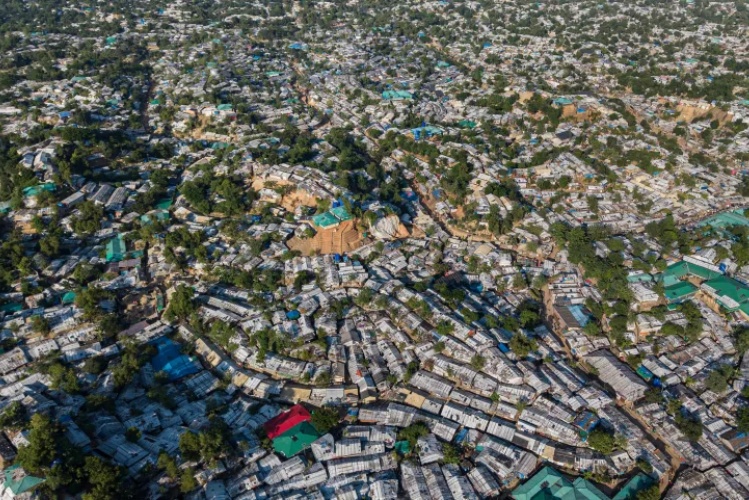
An aerial view of a Rohingya refugee camp, home to more than a million of Myanmar’s persecuted Rohingya minority, in Cox’s Bazar, Bangladesh, on November 25, 2025 [Mahmud Hossain Opu/AP]
Unlike criminal tribunals that try individuals, the ICJ determines state responsibility. Throughout the proceedings, The Gambia’s legal team argued that Myanmar’s military, first under the civilian-military power-sharing government of Aung San Suu Kyi and subsequently under Senior General Min Aung Hlaing’s 2021 military junta, carried out killings, mass rape, and the destruction of livelihoods with the specific intent to destroy the Rohingya as a group.
Myanmar’s military authorities have consistently rejected the charges, claiming their forces were conducting legitimate counter-insurgency operations against the Arakan Rohingya Salvation Army (ARSA) and contesting the evidentiary weight of United Nations fact-finding reports cited by Banjul.
If the Court rules in The Gambia’s favor, Banjul is demanding concrete remedies including ordering Myanmar to prosecute perpetrators of genocidal acts.
The Gambia also wants to ensure the safe, voluntary, and dignified return of displaced Rohingya, restoring their property, and recognizing their legal right to identify as Rohingya, reversing decades of statelessness entrenched by Myanmar’s 1982 citizenship law.
Financial and material compensation where destroyed property cannot be restored, a demand Myanmar has fiercely contested.
Deepening Humanitarian Desperation
The verdict arrives at a moment of acute desperation for the Rohingya people. Nearly a decade after the 2017 exodus, roughly 1.2 million refugees remain confined to overcrowded camps in Cox’s Bazar, Bangladesh, where restrictions on movement and formal employment leave families reliant on dwindling international assistance.
Sweeping foreign aid cuts initiated by the Trump administration in 2025, alongside reductions by other donors, have severely eroded healthcare, education, legal aid, and child protection in the camps.
Inside Myanmar’s Rakhine State, the approximately 520,000 Rohingya who remain are trapped in escalating civil war between the military junta and the ethnic Rakhine Arakan Army, facing forced conscription, land seizures, and deadly drone and artillery strikes.
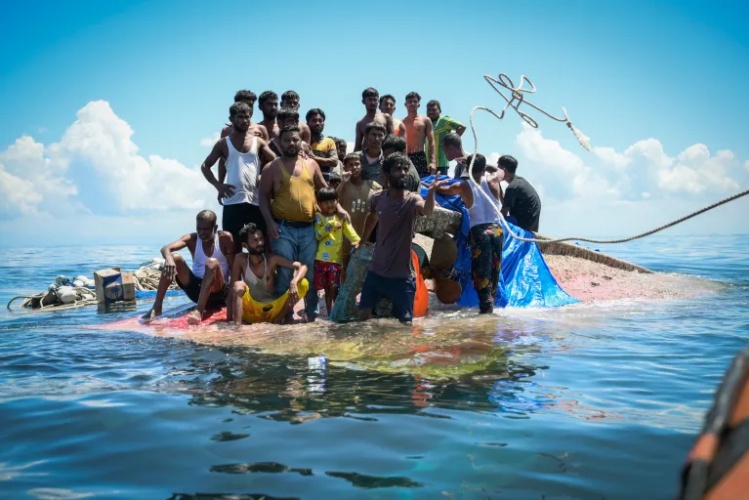
Driven by hopelessness, thousands have risked perilous sea crossings toward Malaysia and Indonesia; according to the UNHCR, over 3,135 Rohingya have died or vanished at sea since 2022, including a record 900 lives lost in 2025 alone.
Global Stakes Beyond Rakhine
Historically, the ICJ has set an extraordinarily high evidentiary bar for proving genocidal intent — most notably in 2007, when it found Serbia failed to prevent the Srebrenica massacre in Bosnia rather than directly committing genocide.
How the bench applies that threshold on Thursday will reverberate far beyond Southeast Asia, setting a critical precedent for other pending cases before the World Court, including South Africa’s genocide case against Israel over Gaza.
Regardless of how the court navigates the complex legal questions of state intent, The Gambia’s leadership has already cemented the “Smiling Coast of Africa” as a global champion of international justice, proving that even the smallest nations can hold the powerful to account on the world stage.






Leave a Reply