


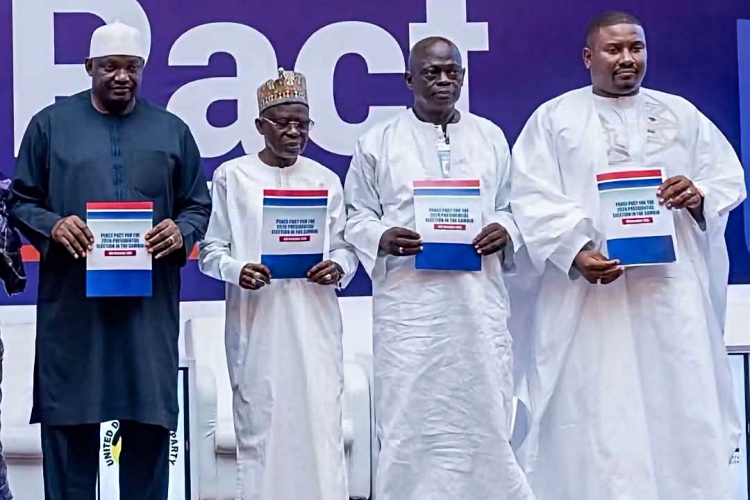
Gambiaj.com – (BANJUL, The GAMBIA) – Incumbent President Adama Barrow holds a narrow three-point lead in a tightly contested three-way race ahead of The Gambia’s December 5 presidential election, according to polling figures from civic governance group Gambia Participates.
The survey shows Barrow, who is seeking a third five-year term under the ruling National People’s Party (NPP), leading with 28% of voter support.
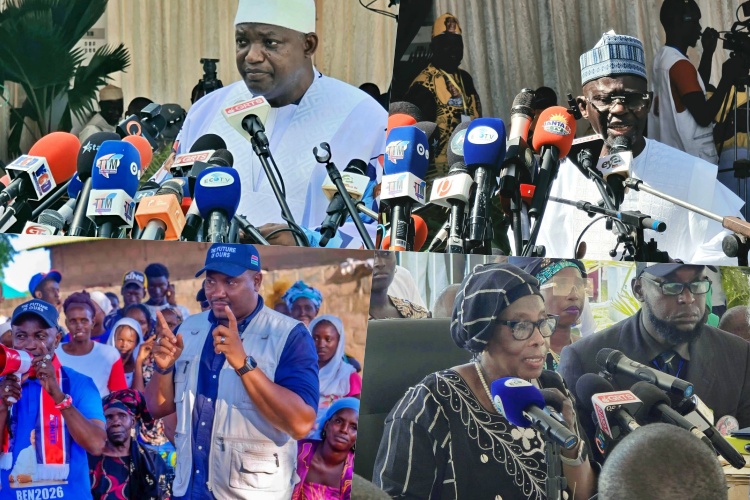
Veteran opposition leader Ousainou Darboe of the United Democratic Party (UDP) follows closely at 25%, while Kanifing Mayor Talib Ahmed Bensouda—running under the Unite for Nation, Integrity, Transformation and Equality (UNITE) movement—sits just one point behind at 24%.
Other candidates collectively account for 4% of respondents, while a decisive 19% of the electorate remains undecided with less than three weeks until voters head to the polls.
A Fragmented Field and a Decisive Undecided Bloc
The latest figures underscore a sharp tightening of the race compared to earlier polling and previous election cycles.
In the December 2021 presidential election, Barrow won a comfortable majority with 53.2% of the vote against Darboe’s 27.7%.
By contrast, Gambia Participates’ August 2026 Round 2 survey showed Barrow at 32%, Darboe at 25%, and Bensouda at 19%.
The newer numbers suggest that while Darboe has held steady, Bensouda has gained five percentage points, eroding the incumbent’s margin and turning the contest into a statistical dead heat among the top three contenders.
| Candidate | Party / Affiliation | Current Poll Share | August 2026 Poll |
| Adama Barrow | National People’s Party (NPP) | 28% | 32% |
| Ousainou Darboe | United Democratic Party (UDP) | 25% | 25% |
| Talib Ahmed Bensouda | UNITE | 24% | 19% |
| Other Candidates | Various / Independent | 4% | 7% |
| Undecided | — | 19% | 17% |
Because The Gambia elects its president via a simple plurality (first-past-the-post) system rather than a two-round runoff, split opposition support between Darboe and Bensouda, who together command 49% of polled voters, remains a central strategic dynamic in the race.
At the same time, the 19% undecided bloc is large enough to swing the outcome to any of the top three candidates.
Key Issues and Election Backdrop
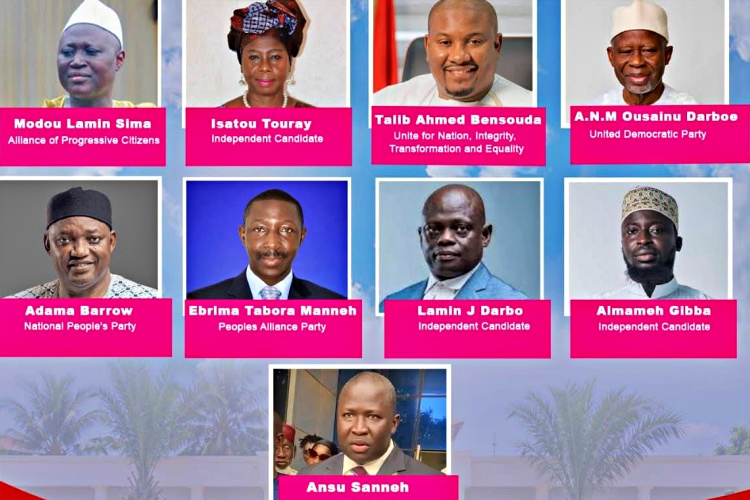
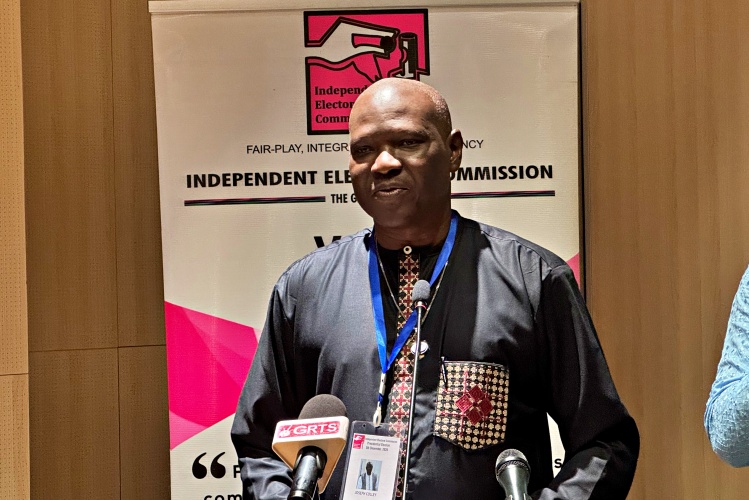
The December 5 vote will be The Gambia’s third presidential election since the 2016 democratic transition ended Yahya Jammeh’s 22-year rule. Candidate nominations closed on November 14, with the Independent Electoral Commission (IEC) clearing nine candidates, including former Vice President Isatou Touray, running as an independent, to contest the presidency.
Barrow’s bid for a third term has been a focal point of national debate. While the 1997 constitution imposes no presidential term limits, opposition leaders have criticized the failure to pass the 2020 draft constitution, which would have introduced a two-term cap.
Beyond constitutional reform, voters and analysts point to everyday economic pressures—including the high cost of living, youth unemployment, corruption, and persistent electricity outages—as the primary issues driving voter sentiment in the final stretch of the campaign.



Leave a Reply