


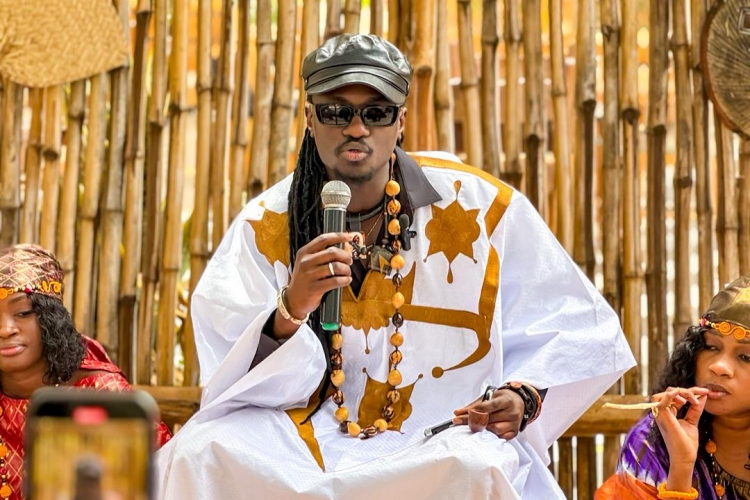
Gambiaj.com – (BANJUL, The Gambia) – Gambian music figure Royal Messenger has officially unveiled a new artistic and cultural identity, reintroducing himself as “Lya Gaye de Domi Gewel” in what he describes as a journey of cultural rediscovery and artistic rebirth rooted in traditional Senegambian sounds.
The announcement was made on Saturday during a press conference and media engagement session held at Akazza Garden and organised by Griot Music Management under the “Lya Gaye” project team.
The event brought together journalists, cultural stakeholders, and entertainment industry figures to discuss the role of griots, locally known as gewels, in preserving Gambian history, storytelling, and cultural identity through music.
Organisers described the initiative as a cultural revival project aimed at promoting indigenous Gambian and Senegambian heritage while repositioning traditional griot artistry within contemporary music and global entertainment spaces.
Royal Messenger, who built his reputation through reggae and dancehall music, rose to prominence with early projects including his 2014 mixtape Zion Period Phase One. He later released his debut studio album Vigiriat in 2016 and won multiple Best Reggae Dancehall Artist awards between 2017 and 2019.
His musical journey also included performances across The Gambia and Senegal, collaborations with UK-based artist Joe Stone, appearances alongside Jamaican dancehall star Beenie Man, and a European tour in 2019 that expanded his international profile.
Speaking during the event, the artist said his new direction is not a rejection of reggae music but a deeper embrace of his cultural roots.
“No matter how much we imitate foreign music, we cannot dominate their culture,” he said. “The only way forward is to embrace our own identity and bring it into the music.”
He explained that his transition toward Wolof and griot-inspired sounds followed years of experimenting with reggae fusion, adding that incorporating local language and traditional rhythms gave his music a stronger sense of authenticity and belonging.
“When I sing in Wolof, I feel more connected to my people and my heritage,” he said. “This is not just music for me anymore; it is legacy.”
The press conference also featured remarks from Hassoum Ceesay, Director of the National Council for Arts and Culture, who described the transformation as a form of cultural rediscovery rather than a departure from reggae music.
According to Ceesay, the shift reflects a broader global movement in which artists are reclaiming their cultural identities through language, heritage, and storytelling.
During a question-and-answer session, journalists raised concerns about whether griot-inspired traditional music could resonate with younger audiences increasingly influenced by global music trends. In response, the artist argued that authenticity remains central to artistic relevance, insisting that culturally grounded music continues to connect strongly with young people.
He further clarified that reggae remains an important part of his musical foundation, noting that the genre’s rhythm and structure would continue to shape his evolving sound despite the shift in artistic direction.
The new cultural initiative, titled Groudii Gewel, is expected to promote Gambian heritage through music, storytelling, and live performances, with a broader ambition of elevating griot traditions onto international platforms.
The rebranding of Royal Messenger as Lya Gaye de Domi Gewel marks a significant turning point in his career, signalling what he describes as both a cultural awakening and a renewed commitment to placing Gambian identity at the centre of his music.






Leave a Reply