



Gambiaj.com – (DURBAN, South Africa) – A new wave of anti-migrant mobilization in South Africa is increasingly being shaped by one figure: Jacinta Ngobese-Zuma, a former radio personality whose rapid rise from local broadcaster to national anti-foreigner campaigner is drawing concern from rights groups, diplomats, and the United Nations.
As anti-migrant marches spread across major South African cities, Ngobese-Zuma has emerged as one of the most visible and media-savvy faces of a movement critics say is normalizing xenophobia under the banner of immigration activism.
Together with Zandile Dabula, she has helped fuel increasingly aggressive public campaigns targeting foreign nationals, particularly migrants from other African countries such as Nigerians and Ghanaians.
Their activities have intensified amid warnings from António Guterres, who recently condemned the growing threats, harassment, and violence directed at migrants in South Africa.
From Radio Personality to Anti-Migrant Mobilizer
Ngobese-Zuma first gained public recognition as a presenter at Vuma FM in Durban. After her contract was reportedly not renewed in 2025, she transitioned into activism, establishing the “March and March” movement, a fast-growing organization that has organized demonstrations across several provinces.
What distinguishes Ngobese-Zuma from previous anti-immigration figures is her ability to combine emotional personal narratives, populist rhetoric, and social media amplification into a potent political platform.
In widely circulated videos, she portrays herself as someone driven by childhood trauma linked to alleged immigration-related fraud involving her mother and a Nigerian man she claims falsely married her mother through identity manipulation.
Ngobese-Zuma openly acknowledges that this experience may have shaped what she calls her “bitterness” toward foreign nationals.
“Maybe it’s a childhood trauma,” she said in one video, while arguing that undocumented migrants exploit loopholes in South Africa’s marriage and identity systems.
Analysts say these deeply personal stories have become central to her political appeal. By framing migration through emotional grievances rather than policy discussions, she has succeeded in resonating with economically frustrated South Africans grappling with unemployment, inequality, and failing public services.
Populism Built on Economic Frustration
Political observers increasingly describe Ngobese-Zuma and Dabula as populist political entrepreneurs, activists who convert public anger into political capital.
Their movements operate in communities hardest hit by poverty and unemployment, where migrants are often blamed for competition over jobs, housing, healthcare, and informal trading opportunities.
Although the movements claim to oppose only undocumented migration, critics argue that their rhetoric frequently collapses distinctions between legal migrants, refugees, and undocumented foreigners, thereby encouraging hostility toward foreigners in general.
The movements have staged demonstrations in cities including Johannesburg and Tshwane, often accusing migrants of criminality, economic exploitation, and abuse of South African systems.
Ngobese-Zuma’s campaign has also drawn attention for targeting symbolic issues capable of generating nationalist outrage, including protests against the controversial “coronation” of a self-proclaimed Igbo king in the Eastern Cape.
Observers say such actions are designed not merely to protest immigration but to cultivate a broader narrative that foreign Africans are undermining South African sovereignty and identity.
Media Visibility and the Mainstreaming of Xenophobia
One of the most significant factors behind Ngobese-Zuma’s rise has been media exposure.
Critics argue that extensive and often uncritical television, radio, and online coverage has helped legitimize anti-migrant activism by presenting figures like Ngobese-Zuma as ordinary civil society leaders rather than political agitators.
Researchers studying xenophobia in South Africa have long warned that repeated media amplification can normalize anti-foreigner rhetoric, especially when inflammatory claims go unchallenged.
Ngobese-Zuma’s communication style has made her particularly effective in the digital era. Unlike older nationalist movements rooted in party structures, her activism thrives through viral clips, emotionally charged speeches, and grassroots-style mobilization shared widely on social media platforms.
This has enabled her movement to expand rapidly beyond KwaZulu-Natal into other provinces.
Operation Dudula Alliance Raises Alarm
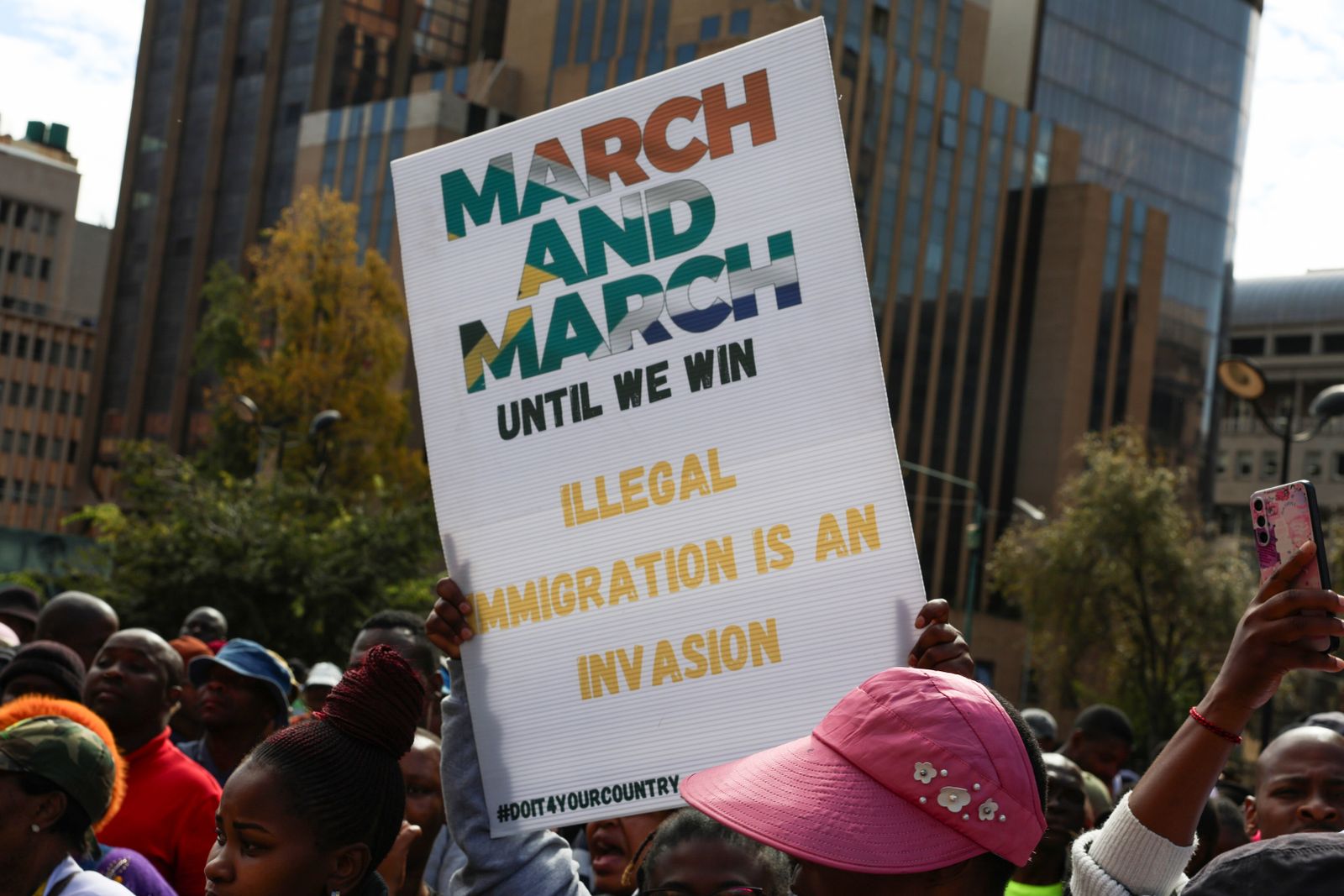
Marchers during the protest against illegal immigration during a march to Mary Fitzgerald Square on April 29, 2026 in Johannesburg, South Africa.
Ngobese-Zuma’s movement has also aligned itself with Operation Dudula, a controversial anti-migrant organization fronted by Dabula.
Operation Dudula previously faced legal action after allegations of intimidation, harassment, and violence against migrants. A South African High Court ruling in 2025 prohibited the group from demanding identification documents, interfering with schools and clinics, or inciting hatred against foreign nationals.
The court explicitly ruled that only immigration and police authorities have legal powers to verify immigration status.
Despite the judgment, anti-migrant demonstrations have continued, raising concerns that authorities are failing to adequately enforce restrictions against vigilante-style activism.
The continued public marches, combined with calls for a nationwide shutdown linked to anti-migrant grievances, have heightened fears that tensions could escalate further.
International Concern Growing
The anti-migrant rhetoric is now attracting international scrutiny.
In a strongly worded statement issued around South Africa’s Freedom Day commemorations, UN Secretary-General Guterres condemned “xenophobic attacks and acts of harassment and intimidation against migrants and foreign nationals.”
He warned against individuals “exploiting socioeconomic conditions” to incite hatred and violence.
The remarks carried particular historical weight, as Guterres reminded South Africans that international solidarity across Africa had played a crucial role during the anti-apartheid struggle.
Diplomatic missions from countries including Ghana and Nigeria have reportedly advised their citizens to exercise caution, with some migrant-owned businesses temporarily shutting operations amid fears of attacks.
There are also concerns about possible economic repercussions for major South African corporations operating across the continent, including firms such as MTN Group and Standard Bank, should anti-South African sentiment intensify elsewhere in Africa.
Ramaphosa Walking a Political Tightrope
President Cyril Ramaphosa has attempted to strike a delicate balance by acknowledging public frustrations over illegal migration while cautioning against vigilantism and hate-driven actions.
“We are not a country of hate,” Ramaphosa said during Freedom Day commemorations.
Yet analysts say the government faces mounting pressure to move beyond rhetoric and decisively confront movements accused of fueling xenophobia before isolated marches evolve into broader unrest.
For now, Ngobese-Zuma remains at the center of South Africa’s increasingly combustible immigration debate, a figure whose personal story, populist messaging, and growing national following are reshaping the country’s xenophobic politics in real time.





Leave a Reply