


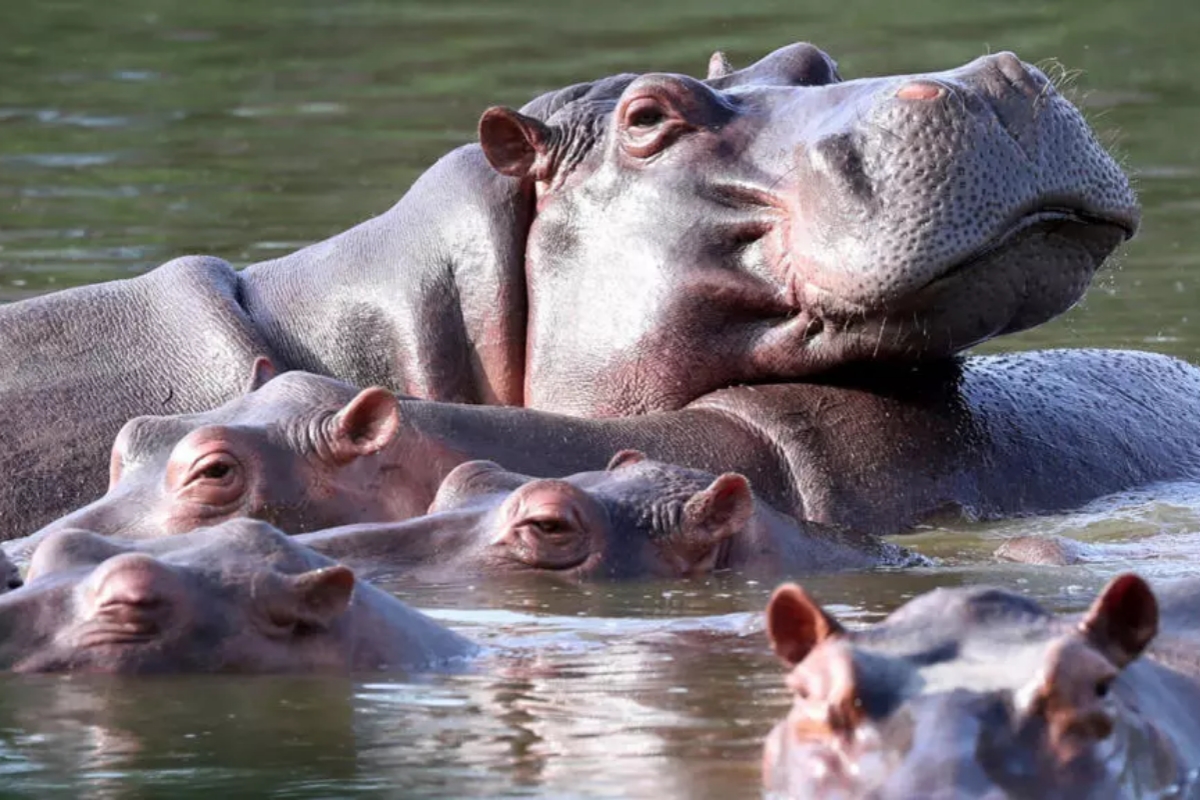
Gambiaj.com – (BOGOTA, Colombia) – The Colombian government has announced plans to kill dozens of wild hippopotamuses descended from animals illegally introduced by notorious drug lord Pablo Escobar, in what authorities now describe as a growing national conservation emergency.
Originally brought into the country in the 1980s for Escobar’s private zoo at Hacienda Nápoles, the four hippopotamuses have since multiplied rapidly, creating the only population of wild hippos outside Africa.
Today, their numbers are estimated to exceed 200, with herds expanding far beyond their original habitat.
Environmental authorities say the animals, now commonly referred to as “Escobar’s hippos,” have evolved from a bizarre legacy of narcotrafficking into a serious ecological threat.
With no natural predators in Colombia, the species has spread more than 100 kilometers from Escobar’s former estate, encroaching on rivers and wetlands vital to native wildlife.
Officials warn that the invasive mammals are disrupting fragile ecosystems and threatening indigenous species such as manatees and river turtles. There are also increasing concerns about public safety, as hippos are known to be highly aggressive and capable of attacking humans.
After nearly two decades of unsuccessful containment efforts, including sterilization programs and relocation to zoos, the government says more drastic measures are now unavoidable.
Environment Minister Irene Vélez confirmed that a culling program targeting 80 hippos will be implemented, marking the first time authorities have authorized euthanasia on such a scale.
“Without this action, it will be impossible to control the population,” Vélez warned, noting projections that the number of hippos could reach 500 by 2030 if left unchecked.
The decision has ignited fierce backlash from animal rights advocates, who argue that the killings are inhumane. Green Party senator Andrea Padilla Villarraga condemned the move, stating that “mass killings will never be an acceptable solution, especially when carried out by a government.”
In response, authorities insist the operation will prioritize lethal injections rather than open hunting, framing it as a controlled and necessary intervention to protect biodiversity.
The unfolding debate highlights how Escobar’s legacy continues to reverberate decades after his death, this time not through violence or narcotics, but through an ecological imbalance that has placed Colombia’s environment at risk.








Leave a Reply