


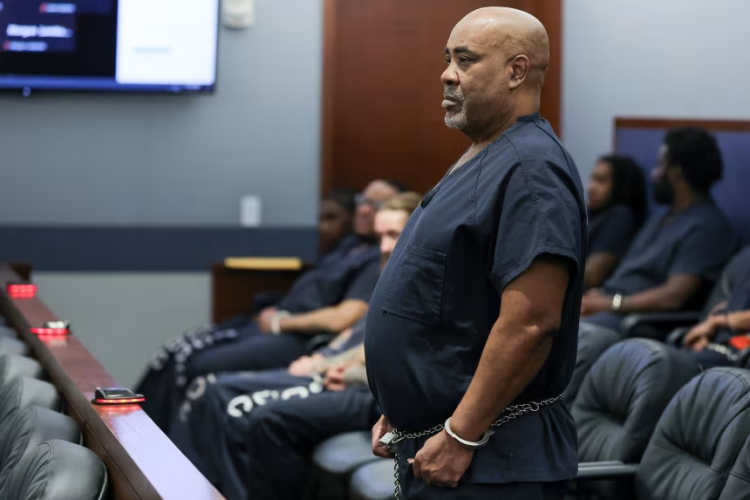
Gambiaj.com – (LAS VEGAS, United States) – Nearly three decades after Tupac Shakur was gunned down in Las Vegas, the only surviving member of the group prosecutors say was involved in the killing is finally going on trial.
Jury selection is due to begin Monday in Las Vegas in the case against Duane “Keffe D” Davis, a former leader of the South Side Compton Crips who prosecutors accuse of ordering the September 1996 drive-by shooting that killed the 25-year-old rapper.
The trial is expected to last about a month, with jury selection alone potentially taking a week. Davis, 63, has pleaded not guilty to murder with the use of a deadly weapon and faces life in prison without parole if convicted.
The case is one of the most closely watched cold cases in American popular culture. Yet even after a verdict, key questions may remain unanswered, including who actually pulled the trigger.
Prosecutors’ case rests largely on Davis’s own words.
Prosecutors are expected to argue that Davis was the “shot caller” who organized the attack after an altercation involving his nephew, Orlando “Baby Lane” Anderson.
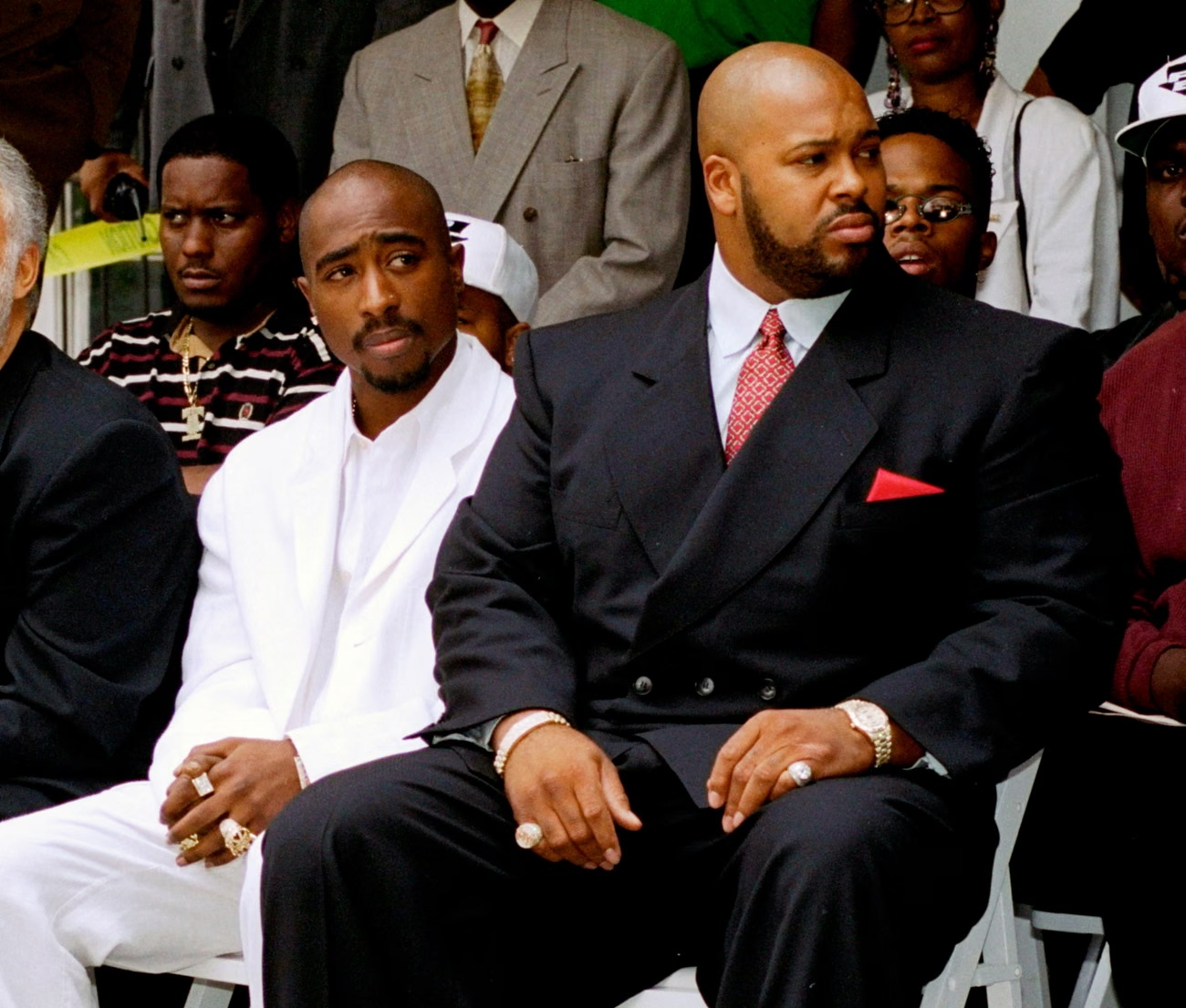
Tupac Shakur, left, with the Death Row Records chair Marion ‘Suge’ Knight in Los Angeles the month before the killing. Photograph: Frank Wiese/AP
Earlier on the night of 7 September 1996, Shakur and Death Row Records boss Marion “Suge” Knight had confronted and attacked Anderson at the MGM Grand casino following an alleged assault on a member of Death Row’s entourage.
According to prosecutors, Davis sought revenge.
He has previously acknowledged obtaining a gun and getting into a white Cadillac with Anderson and two other men. The group then searched for Shakur and Knight before finding them traveling in a BMW on the Las Vegas Strip.
The Cadillac pulled alongside Shakur’s vehicle, and gunfire erupted. Shakur was struck multiple times, while Knight was wounded by a bullet fragment.
Shakur died six days later in the hospital.
The prosecution’s unusual challenge is that much of its case comes from statements Davis himself made over the years. There is no murder weapon, getaway vehicle, or surveillance footage directly identifying the shooter.
Instead, prosecutors are expected to rely heavily on Davis’s memoir, interviews, podcast appearances, and statements he gave to investigators.
“In this case, almost all of the evidence the state will seek to introduce” is intended to establish the credibility of Davis’s accounts of his role in the killing, prosecutors said in a recent court filing.
The 2019 memoir that revived the cold case
For years, the investigation appeared to have stalled. That changed after Davis published his 2019 memoir, Compton Street Legend, in which he described his involvement in the events surrounding Shakur’s death.
In the book, Davis wrote that he obtained a Glock pistol and joined Anderson and two other men in a Cadillac as they searched for Shakur and Knight.
He described the moment they spotted the rapper and pulled alongside his vehicle.
Davis wrote that Shakur appeared to reach beneath his seat before one of the men in the Cadillac grabbed the Glock and opened fire.
Although Davis did not identify the shooter by name, prosecutors say his account effectively places him at the center of the conspiracy.
Everyone else prosecutors say was inside the Cadillac that night has since died, leaving Davis as the only surviving member of the group.
His revelations eventually helped revive the investigation and led to his arrest in September 2023.
Davis now says he is innocent.
Davis has since attempted to distance himself from his earlier accounts.
He maintains that he never killed anyone and has argued that statements in his memoir were exaggerated or fabricated to boost book sales.
In an interview from prison with ABC News last year, Davis said prosecutors had no evidence against him and insisted that he could not be placed in Las Vegas at the time of the shooting.
He has also claimed that he did not actually read the finished memoir and that his co-author added or embellished details.
“I just gave him details of my life,” Davis said. “And he went and did his little investigation and wrote the book on his own.”
The defense has unsuccessfully sought to prevent prosecutors from introducing the memoir as evidence, as well as statements Davis made to investigators in 2008.
A long-running feud behind the killing
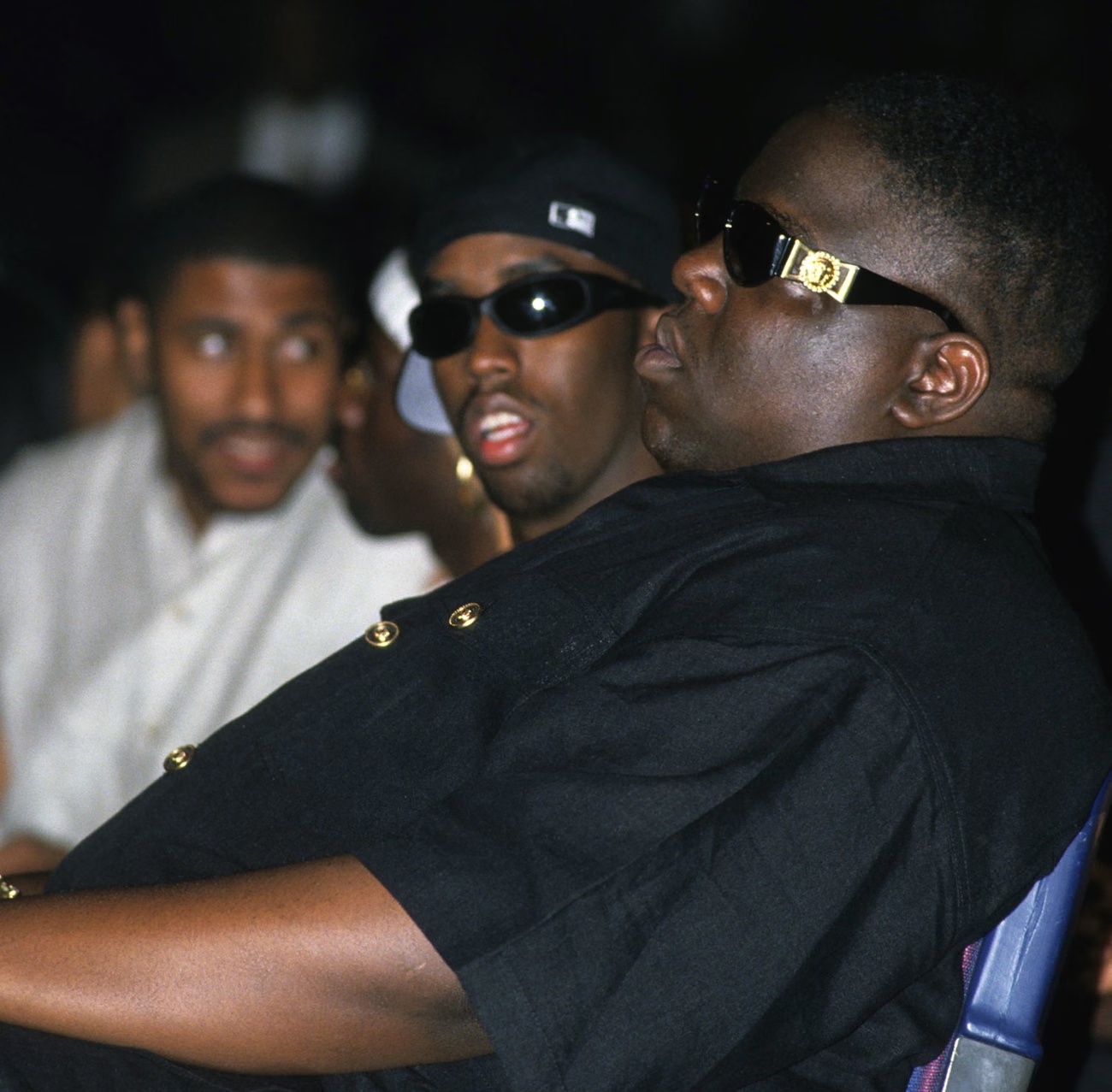
Sean ‘Diddy’ Combs (left) and the Notorious BIG at an awards ceremony in New York in 1995. Photograph: Al Pereira/Getty Images
The trial is expected to revisit one of the defining rivalries of 1990s hip-hop: the bitter feud between the West Coast-based Death Row Records and New York’s Bad Boy Records.
Shakur had become one of the biggest stars of the era after joining Death Row, whose artists were associated with Los Angeles and the West Coast. Bad Boy, led by Sean “Diddy” Combs, represented the East Coast and featured rapper Christopher Wallace, known as the Notorious B.I.G.
The rivalry became increasingly personal, with Shakur and Wallace caught at its center.
Wallace was himself murdered in Los Angeles in March 1997, just months after Shakur’s death. His killing also remains unresolved.
Shakur, the son of Black Panther activist Afeni Shakur, had risen from a difficult upbringing in Harlem and Baltimore to become a defining figure in American music.
His songs, including California Love and All Eyez on Me, helped cement his status as one of hip-hop’s most influential artists.
A verdict may not end the questions.
The prosecution’s case presents an unusual legal dynamic.
Prosecutors will need to persuade jurors that Davis’s previous accounts are credible, while his defence is expected to portray those same statements as the words of a man who exaggerated his past to make money and build his reputation.
Davis has also said that his earlier statements were protected by a 2008 agreement with federal investigators. During that interview, he reportedly told authorities that he obtained a gun after Shakur and Knight attacked Anderson and that Anderson was the person who fired from the back seat of the Cadillac.
He later made similar claims publicly.
In a 2018 interview for BET’s Death Row Chronicles, Davis said the fatal shots came from the back seat. His 2019 memoir went further, providing a detailed account of the events.
Those statements ultimately became the foundation of the case against him.
For nearly 30 years, Shakur’s murder has generated theories, accusations, and speculation among fans and investigators alike. The trial may finally produce a legal answer to who was responsible for setting the attack in motion.
But with the alleged gunman dead and no murder weapon or direct video evidence available, the courtroom battle will largely center on one question: Can Davis’s own words prove that he orchestrated the killing?








Leave a Reply