


Gambiaj.com – (BANJUL, The Gambia) – The World Food Programme has suspended its planned lean season response in The Gambia due to a major funding shortfall, even as food insecurity is projected to worsen across the country in the coming months.
In its May 2026 country brief, WFP said the suspension was caused by “unavailable funding and forecasts for crisis response,” with the funding gap amounting to USD 4.8 million.
The agency warned that The Gambia faces a growing risk of food and nutrition insecurity during the June-August lean season because of deteriorating climatic conditions, persistent macroeconomic pressures, reduced social protection coverage, and severe humanitarian funding constraints.
According to the latest Cadre Harmonisé analysis supported by WFP and the Government, approximately 167,941 people are currently facing crisis-level food insecurity, representing about 7 percent of the population analyzed. That number is projected to rise sharply to 262,167 people, or roughly 11 percent of the population, during the lean season.
The report also cited worrying weather forecasts from the Department of Water under the Ministry of Agriculture, predicting below-average rainfall and a delayed onset of rains across the country, in line with broader regional projections.
Beyond the suspended lean season intervention, WFP said funding constraints are also threatening the continuation of its school feeding program for the 2026-2027 academic year.
The agency estimates a separate funding gap of USD 4.6 million over the next 12 months, warning that support may have to be reduced from the current 422 beneficiary schools to about 140 schools from September 2026 if no additional resources are secured.
WFP said the reduction would particularly affect children in the country’s most vulnerable regions.
Despite the looming funding crisis, the agency reported several ongoing interventions during March and April 2026.
WFP transferred about USD 722,000 to 422 schools to procure food commodities ahead of the third term of the 2025-2026 school year, benefiting more than 164,000 children in the Upper River, Central River North and South, and North Bank regions.
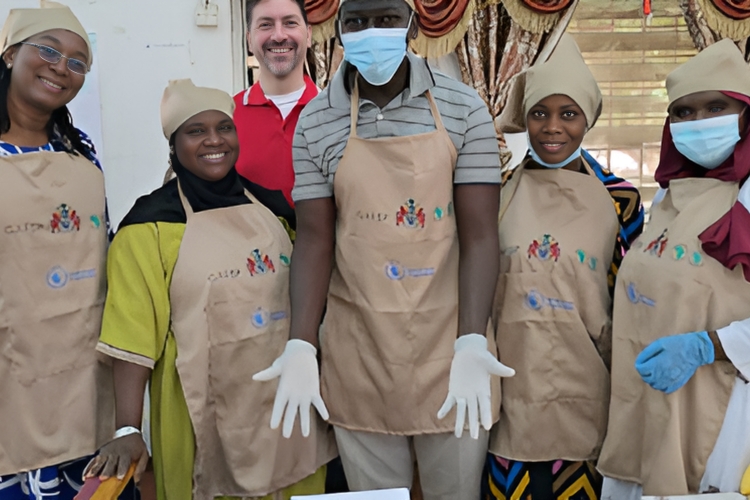
The organization also trained nearly 400 school cooks, all women, in culinary skills and safe food preparation practices aimed at improving food safety and nutrition in schools.
In the agriculture sector, WFP conducted market linkage and procurement training for farmers in Foni, while additional sensitization activities targeted farmers in the Central River and Upper River regions to improve their participation in school feeding supply chains.
The agency further intensified climate resilience initiatives, including training on agricultural microinsurance and index insurance for local stakeholders and insurers. WFP said it plans to insure more than 8,000 smallholder farmers against drought and prolonged dry spells this year.
As part of its disaster risk financing strategy, WFP said it will also take out a USD 200,000 drought insurance policy expected to cover around 24,000 households in the event of a climate shock during the 2026 farming season.
Meanwhile, the agency disclosed that the government and the African Development Bank are discussing a potential USD 5 million matching grant under the Ending School-Aged Hunger Trust Fund, some of which could be directed toward school feeding if approved later this year.










Leave a Reply