


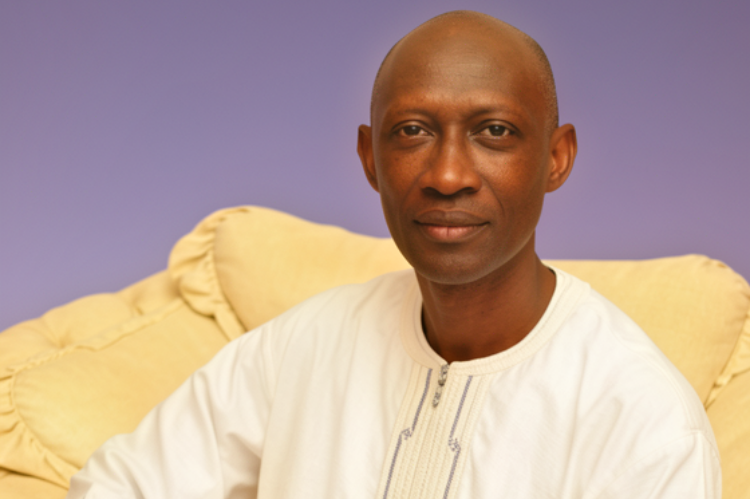
Gambiaj.com – (BANJUL, The Gambia) – When Central Bank Governor Buah Saidy stood before his audience and warned that Gambians are steadily losing control of their own economy, the room perhaps nodded politely, as audiences often do at such gatherings, and then moved on.
That would be a costly mistake.
Governor Saidy’s warning was not the routine caution of a technocrat filling conference time. It was a distress signal from the very institution mandated to protect the financial sovereignty of this nation. When the head of the Central Bank tells you that your economy is slipping away from your hands, the appropriate response is not applause and adjournment. It is an urgent, honest, and sustained national conversation.
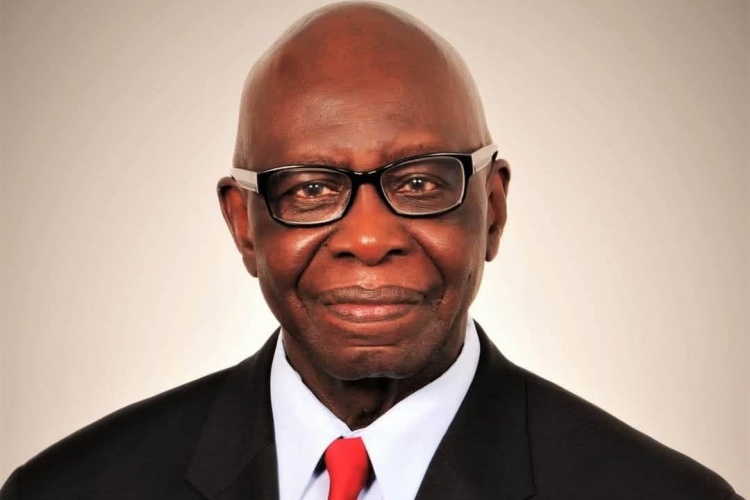
It is also a moment to pause and remember that Governor Saidy did not speak into a vacuum. The late Vice President Badara Joof, a man whose contributions to this country deserve far more recognition than they have received, raised precisely these same concerns about land and business ownership long before this conversation became fashionable.
He did not live to see his warnings translated into policy. That is a national loss that should weigh heavily on those who now hold the reins of power. The least this generation can do is honor his vision by finally acting on it.
Three Governments, One Unresolved Question
The Gambia has passed through three distinct political eras since independence, and each has left its own economic fingerprint, though none has satisfactorily answered the fundamental question of who truly benefits from this country’s growth.
Under President Jawara, the logic of structural adjustment swept through the economy like a seasonal wind, dismantling state enterprises on the promise that a vibrant Gambian private sector would rise in their place. It largely did not.
Local businesses, starved of capital and facing unequal competition, struggled to fill the space that retreating state enterprises left behind.
Under President Jammeh, the private sector did not wither; it was captured. Economic opportunity became a reward for political loyalty rather than a product of enterprise and innovation.
Many Gambian entrepreneurs, particularly those in the diaspora, found themselves on the outside of a system that had little interest in their participation unless it also served political ends.
When the Coalition government came to power in 2016, Gambians dared to hope for something different, an economic order built on transparency, fair competition, and genuine inclusion. Nearly a decade later, many are still waiting.
The question that haunts dinner tables, WhatsApp groups, and market conversations remains stubbornly unanswered: who actually owns the Gambian economy?
The Evidence Is Everywhere
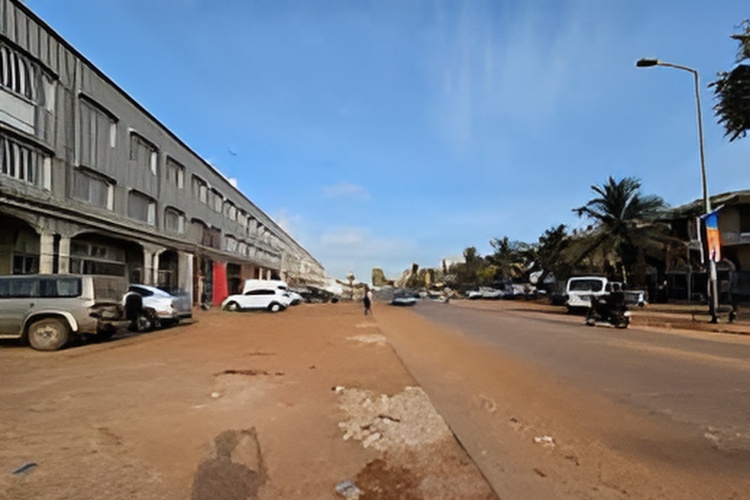
You do not need an economist to answer this question. A short drive through any of the country’s growing commercial corridors will tell you most of what you need to know.
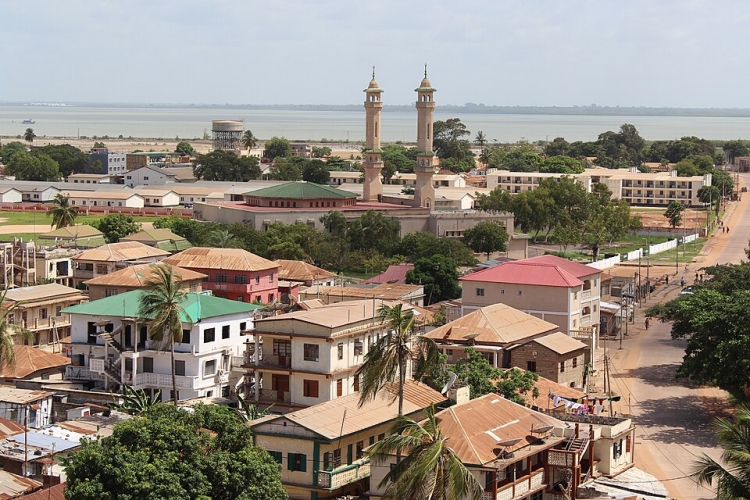
Look at the major construction sites rising across Brikama, Sukuta, and Bijilo. Look at wholesale trade, at transport, at real estate development, and at the new hotels reshaping the tourism landscape. In sector after sector, a growing share of economic activity and capital ownership is concentrated in foreign hands.
This is not an argument against foreign investment. Every successful economy, from the United States to Singapore to Rwanda, welcomes outside capital. The critical distinction, however, is that successful countries also build deliberate mechanisms to ensure their own citizens remain active participants in wealth creation, not merely spectators watching prosperity pass them by.
Foreign investment becomes a problem not when it arrives, but when it arrives in a vacuum of policy, when there are no local content requirements, no joint-venture frameworks, no procurement targets, no land protection measures, and no serious effort to build Gambian entrepreneurial capacity alongside it.
That vacuum is precisely what exists today.
The Diaspora Contradiction
Of all the contradictions in Gambia’s current economic arrangement, perhaps none is more glaring, or more damaging, than the treatment of its diaspora.
Year after year, Gambians living abroad send home hundreds of millions of dalasi in remittances. They finance education. They build houses. They pay for healthcare. They support entire extended families and, by extension, entire communities. Remittances remain one of the single largest sources of foreign exchange this country possesses.
And yet, when those same Gambians attempt to move beyond remittances and invest productively at home, they routinely encounter a wall of bureaucratic obstacles, unresolved land disputes, weak legal protections, limited financing options, and an investment environment that offers them few meaningful incentives.
A country cannot, on one hand, celebrate the loyalty of its diaspora citizens and, on the other, create conditions that punish their ambition. This is neither logical nor sustainable. Remittance dependency is not an economic strategy.
Transforming diaspora transfers into productive domestic investment is. The Gambia has consistently chosen the former while paying lip service to the latter.
Land: The Alarm That Cannot Be Silenced
Governor Saidy’s specific observations about Brikama, and by extension the broader pattern of land transfer across the country, represent perhaps the most politically sensitive dimension of this entire debate.
Across Africa, nations have learned painful and irreversible lessons about what happens when strategic land assets are transferred without adequate protection of national interests. Land is not merely real estate. It is the foundation upon which communities, livelihoods, and future generations will either thrive or find themselves permanently dispossessed.
The debate must be carefully distinguished from narrow ethnic or nativist sentiment. This is not about where an investor was born. It is about national interest and intergenerational equity. Future Gambians cannot reclaim land that has already been sold or leased away for decades. That is a simple and sobering truth.
The legitimate policy questions are straightforward: What proportion of strategic land should be protected under Gambian ownership? How should communities benefit materially from major developments on their land? What mechanisms guarantee local participation in decisions that shape their economic futures?
These questions have answers, and other countries have found them. The Gambia has simply not yet summoned the political will to look.
Beyond Rhetoric: What a Real Agenda Looks Like
To be clear, economic nationalism dressed up in slogans is not a policy. “Gambia for Gambians” as a chant without a framework is simply noise that will fade after election season.
What is needed is a credible, enforceable, and legally grounded local content framework, one that mandates preferential access to government contracts for qualified Gambian businesses; requires joint ventures in strategic sectors; creates genuine diaspora investment incentives; establishes land protection policies; expands affordable financing for local entrepreneurs; demands skills transfer from large foreign investors; and sets measurable procurement targets to increase domestic participation.
None of this is radical. None of it is untested. These are the very instruments that countries like Malaysia, Botswana, and Rwanda have deployed, with documented success, to ensure that economic growth translates into broad citizen ownership rather than narrow elite capture.
The objective is not exclusion. It is participation.
The Election Gambia Needs to Have
The next general election should not be reduced to another exercise in personality politics, tribal arithmetic, and campaign promises that dissolve in the rain before inauguration day is over.
The Gambian electorate deserves, and is capable of engaging with, a substantive national debate about economic citizenship. About who owns the land, the banks, the hotels, and the major commercial enterprises that define this economy. About whether the profits generated within this country’s borders remain here and benefit GGambians ordepart with the next wire transfer.
These questions do not respect political party lines. They matter to the farmer in the North Bank whose land sits beside a new foreign-owned agricultural concession.
They matter to the young graduate in Serrekunda who cannot access a bank loan that a better-connected foreign competitor can obtain easily.
They matter to the diaspora entrepreneur in Europe or America who sends money home faithfully every month but cannot get a simple land title sorted without paying for connections they should not need.
A campaign built around economic citizenship, framed not as xenophobia but as the legitimate demand for inclusion, fair competition, diaspora empowerment, and land justice, has the potential to elevate the quality of Gambian democratic discourse in ways this country has rarely seen.
The Responsibility Is Collective.
Governor Buah Saidy has done his part. He has spoken plainly and on the record from the most credible economic platform in the country.
The responsibility now shifts to the political parties that claim to represent Gambian interests, to the civil society organizations that exist precisely for moments like this, to the private sector associations that must stop waiting for government and begin advocating for themselves, and to ordinary Gambians who must demand that the next election be about something real.
The future of The Gambia will not be determined solely by the rate at which its economy grows. It will be determined by who owns that growth, who shapes it, and whether Gambians themselves remain genuine stakeholders in the prosperity they work every day to create.
The alarm has been raised, again.
The question is whether, this time, anyone with the power to act is truly listening.

















Leave a Reply