


Gambiaj.com – (BANJUL, The Gambia) – The government has come under pressure from lawmakers over its decision to delay the implementation of a new parole system, with MPs warning that citizens’ rights should not be put on hold simply because the state has yet to secure the resources needed to establish rehabilitation facilities.
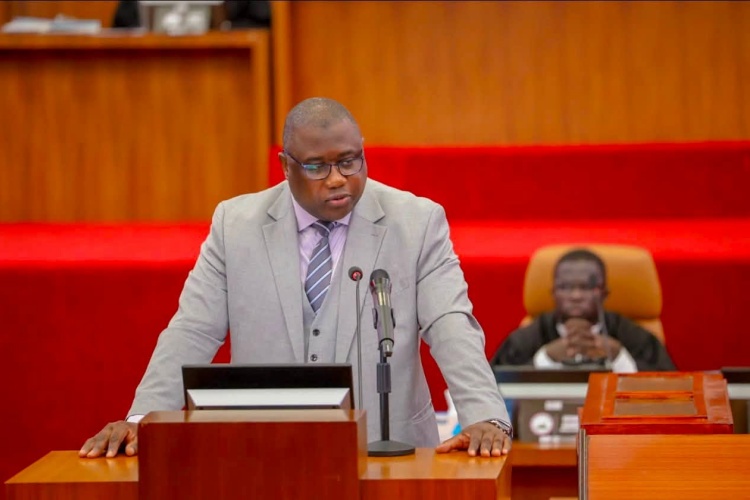
The issue came before the National Assembly on Tuesday during the second reading of the Criminal Procedure Amendment Bill, 2026, tabled by Attorney General and Minister of Justice Dawda A. Jallow.
The bill seeks to suspend the operation of Section 258 of the Criminal Procedure Act, 2025, which introduced parole as part of broader reforms aimed at modernizing The Gambia’s criminal justice system.
Presenting the Bill, Minister Jallow said the 2025 Act was designed to bring the country’s criminal justice system in line with modern practices, including suspended sentences, community service, and parole.
However, he explained that implementing some of these reforms requires rehabilitation facilities and programs that the government currently lacks the financial resources to provide.
MPs Question Indefinite Suspension
The explanation drew concern from several lawmakers, who questioned whether financial constraints should justify suspending a legal provision without a clear deadline for its implementation.
The Member for Upper Saloum supported the broader objective of the amendment but questioned why the proposed suspension had been left open-ended.
The lawmaker warned that allowing the executive an indefinite period to establish the required facilities could effectively leave the parole provision suspended for years.
The member suggested that Parliament should instead consider setting a specific timeframe, such as three or five years, within which the government would be required to put the necessary infrastructure in place.
The Member for Wuli East took a stronger position, arguing that justice is a fundamental responsibility of the state and should not be delayed simply because implementation is costly.
The lawmaker urged the government to explore funding options and consider a phased approach to implementation rather than putting the legal provision on hold.
Calls for Funding and Existing Facilities
Similar concerns were raised by the Member for Foni Kansala, who argued that if rehabilitation facilities are the main obstacle, the government should address the funding gap through the national budget.
The lawmaker also questioned whether existing rehabilitation facilities could be upgraded and used instead of waiting for entirely new infrastructure to be built.
The Member for Busumbala likewise defended parole as a progressive and human-rights-enhancing reform. The lawmaker suggested that Parliament should work with the government to identify the resources needed to make the system operational.
Meanwhile, the Member for Latri Kunda Sabigi questioned why Parliament was being asked to amend a law so soon after its passage.
The lawmaker urged the Ministry of Justice to develop a concrete project proposal for rehabilitation facilities and seek assistance from development partners rather than suspend the provision indefinitely.
The Member for Banjul Central also questioned what had changed since the original legislation was drafted, asking whether the financial and infrastructural requirements for implementing parole had not been known at the time.
The Member for Upper Fulladu West similarly called for greater clarity on how the government intends to address the institutional gap and demanded a clear timeline for implementation.
The Member for Serrekunda argued that technical and financial challenges should not become barriers to justice.
The lawmaker questioned whether existing facilities could be rehabilitated or repurposed, rather than treating the absence of ideal facilities as sufficient grounds to delay the reform.
Government Defends the Amendment
Government supporters, however, maintained that the proposed amendment does not abolish or weaken the principle of parole.
The Majority Leader argued that the government was merely postponing implementation until the necessary infrastructure and rehabilitation programs are in place.
He maintained that the amendment should therefore be viewed as a temporary measure rather than an abandonment of the reform.
The debate now leaves Parliament with a central question: whether the government should be given an open-ended period to prepare for parole, or whether lawmakers should impose a clear deadline to ensure that the reform eventually becomes operational.









Leave a Reply