


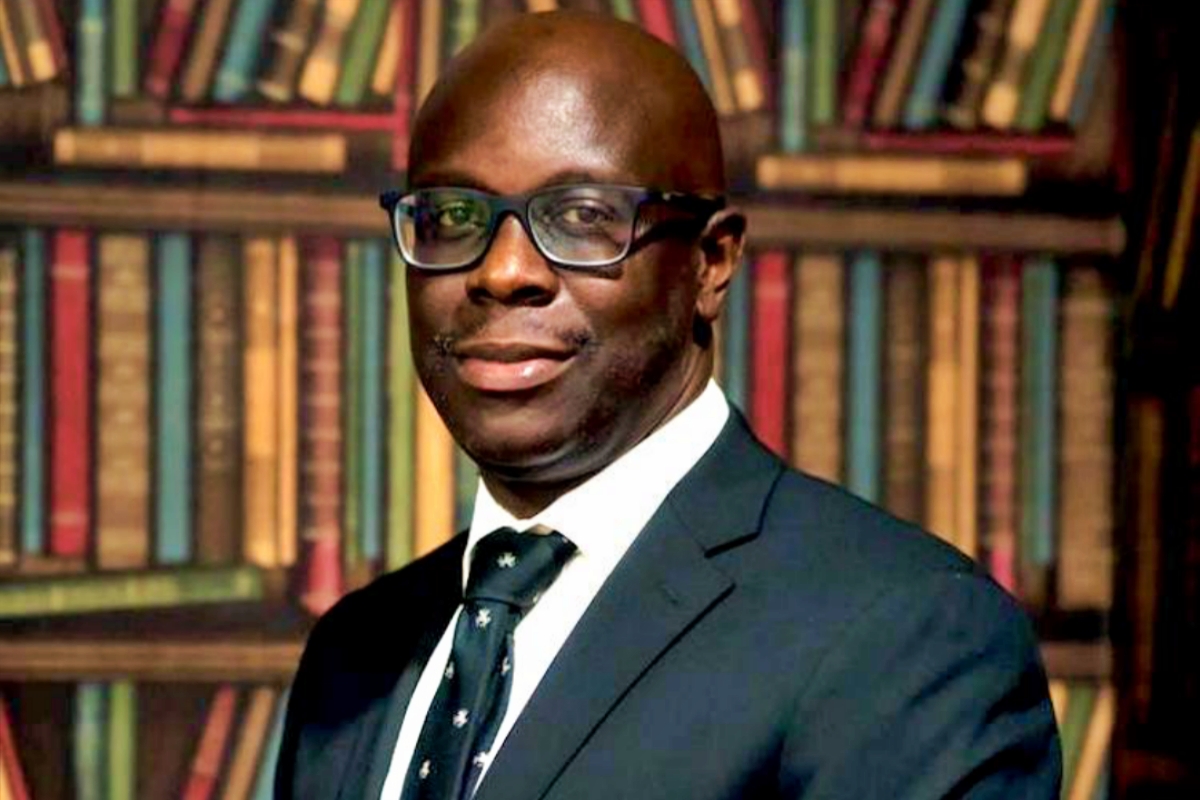
Gambiaj.com – (BANJUL, The Gambia) – Prominent Gambian lawyer and former president of the Gambia Bar Association, Salieu Taal, has sharply criticized the arrest of young activists linked to Gambians Against Looted Assets (GALA), describing the police action as a troubling sign for civil liberties and the rule of law in The Gambia.
In a strongly worded statement issued following the arrest of several youths attempting to commemorate the first anniversary of GALA, Taal questioned the legal justification for the arrests and warned that the country risks undermining its democratic and transitional justice credentials.
“The arrest of young Gambian men and women yesterday by the police for attempting to commemorate the one-year anniversary of GALA should be cause for concern for every Gambian,” Taal said.
The senior lawyer said he revisited multiple legal instruments, including the Public Order Act, the Constitution, the Criminal Offenses Act 2025, the Criminal Procedure Act 2025, and the Supreme Court ruling in Darboe v. IGP, in an attempt to understand the legal grounds for the arrests.
Taal argued that while the Public Order Act requires permits for public processions and the use of public announcement systems, the law does not abolish the constitutional right to peaceful assembly.
Citing the Supreme Court’s landmark ruling in Darboe v. IGP SC003/2016, he noted that the court itself acknowledged that the Act merely places limitations on the exercise of assembly rights rather than extinguishing them altogether.
He questioned whether the Inspector General of police has the authority to determine when Gambians may gather in public spaces, raising hypothetical examples involving the Gambia Bar Association and the Public Utilities Regulatory Authority holding public events at Westfield.
“What then is the legal basis for arresting members of the GALA executives and others?” he asked.
Taal also expressed shock over footage from the arrest scene in which a police officer reportedly asked whether GALA was a registered association.
“As if registration is a requirement to enjoy one’s constitutional right to assemble peacefully. It is not. It never was,” he stated.
The lawyer said the arrests stand in contradiction to The Gambia’s international image as a country pursuing democratic reforms and transitional justice after the fall of former ruler Yahya Jammeh.
He pointed to the country’s hosting of the African Commission on Human and Peoples’ Rights, the establishment of the Truth, Reconciliation, and Reparations Commission, and the recent appointment of a Special Prosecutor to prosecute Jammeh-era crimes as evidence of The Gambia’s commitment to accountability and reform.
“And yet here we are, still arresting and detaining young people arbitrarily, while parading ourselves as the new kid on the block, the poster child of transitional justice,” he said.
Taal further called for tighter oversight of the Police Intervention Unit, arguing that security forces must only exercise powers explicitly granted by law.
“The respect for the rule of law is sacrosanct. The police are no exception,” he said.
He urged Attorney General and Justice Minister Dawda Jallow to advise the police to release all detained youths, insisting that “the conduct of the police demands a national conversation.”
“The weaponization of draconian laws has no place in a country on a transitional justice trajectory,” Taal added, arguing that the colonial-era Public Order Act “has no place in a democratic society.”
“The Gambia needs peace and it needs order. But peace and order built on law, not fear,” he concluded.





Leave a Reply