


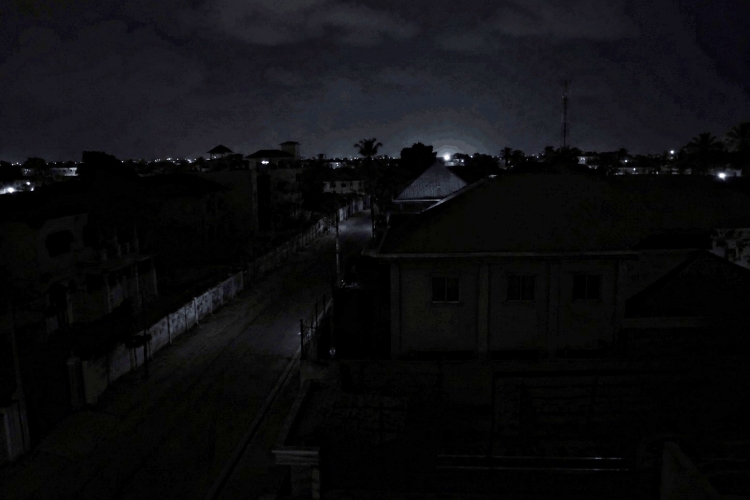
Gambiaj.com – (BANJUL, The Gambia) – Across several communities in Greater Banjul, frequent power outages and sudden restorations of electricity have graduated from a daily inconvenience into a mounting safety crisis, one that is reshaping how people live, work, and move after dark.
At Westfield Junction, taxi driver Lamin Jarju has watched the transformation firsthand. “When the lights go off here, the whole place changes immediately,” he said. “People become alert. Some passengers even refuse to walk short distances because they fear what might happen in the dark.”
The fear is not unfounded. In Serekunda, shop owner Fatou Cham says she now closes earlier than usual, driven by rising anxiety and repeated reports of petty theft in unlit streets. “When there is no light, anything can happen. I have heard of phones being snatched and people being followed after leaving shops. You cannot take chances anymore,” she said.
When the Lights Fail Hospitals
The consequences of electricity instability extend well beyond the streets and into the heart of public health. A video that recently circulated on social media showed nurses at Serekunda Hospital attending to patients by torchlight during a blackout, images that jolted many Gambians into confronting the fragility of emergency care under an unreliable power supply.
A healthcare worker at the facility, who requested anonymity to speak freely, described the reality behind those images. “When the power goes off in the middle of treatment, we have no choice but to continue with torchlights. It is not safe for patients or staff, but we have to manage,” the worker said.
The situation raises serious questions about patient safety, infection control, and the broader risks of performing medical procedures under inadequate lighting, particularly in a facility that serves one of the country’s most densely populated urban areas.
Police Stations Left in the Dark
Security infrastructure, too, is not spared. Sources in Serekunda say there are periods during outages when even the local police station is without electricity, hampering night operations and response capacity. For residents like Musa Ceesay, this compounds an already unsettling reality.
“If even the police station is in darkness, it makes people feel unprotected. It adds to the fear at night,” Ceesay said.
In Bundung, youth leader Alieu Sowe says criminal opportunists have learned to exploit the cover of darkness. “When it is dark, people get attacked. Phones are taken, and in some cases people are injured. Darkness gives them cover,” he said, a frank assessment that underscores the direct link between power supply and public security.
Livelihoods Wiped Out by Surges
For those whose incomes depend on refrigeration and electrical equipment, the damage from sudden power surges is proving financially devastating. Mariama Bojang, a food seller in Latrikunda, recounted losing an entire week’s stock in a single incident.
“The power went off in the afternoon and came back at night with a shock. Everything in my freezer got spoiled. That was my week’s profit gone,” she said, her account reflecting a loss that, for many small traders, can take weeks to recover from.
Electricians operating in affected areas confirm they are overwhelmed with repair calls. Technician Ebrima Manneh said the pattern is relentless. “We see it almost every week: fridges, televisions, stabilizers. When power returns suddenly, it damages equipment. People are losing money regularly,” he said.
A Communication Deficit and An Urgent Call for Action
While the national power utility, NAWEC, has in the past attributed outages to technical faults and scheduled maintenance, many residents say the deeper problem is the absence of timely and adequate communication.
Communities are repeatedly caught off guard by prolonged blackouts and abrupt restorations, with little warning and no clarity on how long they must endure without power.
This communication gap leaves households unable to plan, businesses unable to protect their stock, and healthcare facilities unable to prepare backup arrangements in advance.
As night continues to fall across Greater Banjul’s neighborhoods, the message from residents is unambiguous: the electricity crisis is no longer merely an infrastructure problem. It has become a public safety emergency, a health risk, and an economic burden borne disproportionately by ordinary Gambians, many of whom can least afford it.
Their call is simple and growing louder: reliable power, or at the very least, the dignity of being told when it will and will not be there.









Leave a Reply