



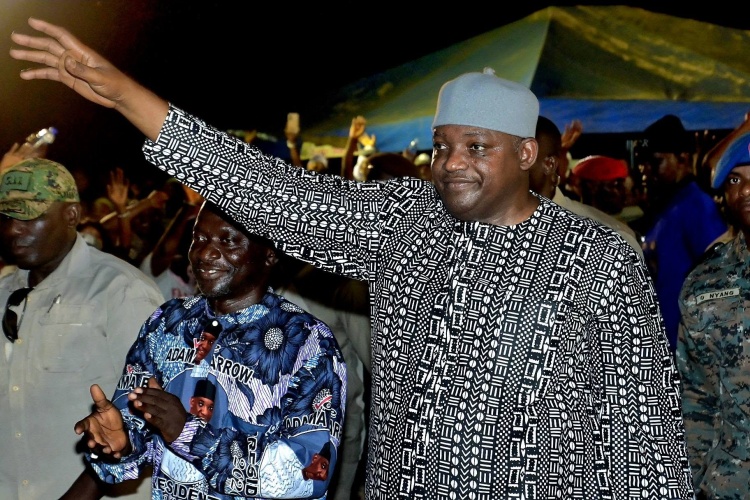
Gambiaj.com – (BANJUL, The Gambia) – Supporters of President Adama Barrow are pushing back against recurring opposition claims that democracy is deteriorating in The Gambia, arguing instead that the country is experiencing one of the most open political periods in its history.
The debate has resurfaced amid growing criticism from opposition figures who accuse the government of democratic backsliding. However, defenders of the administration insist that the current political environment itself contradicts such assertions.
According to this view, Gambians today enjoy unprecedented freedom of expression, with political parties campaigning openly, radio stations hosting fierce criticism of the government, and activists and ordinary citizens freely expressing their opinions both offline and on social media.
“If democracy is truly reversing, many Gambians will ask why critics are able to speak more freely today than at any other point in the country’s history,” said Momodou Baldeh who recently switched allegiance to NPP.
Backers of the government maintain that democracy should not only be measured through political rhetoric and academic interpretations but also through citizens’ everyday experiences, including freedom, tolerance, participation, and stability.
Since President Barrow assumed office in 2017, The Gambia has held peaceful elections, witnessed an expansion of media freedom, and seen increasingly vibrant public debate across the country. Supporters also point to the role of the National Assembly and the courts as signs of institutional openness.
Baldeh, for example, argues that many of the same opposition figures warning about democratic decline continue to operate freely under the current administration, organizing rallies, granting interviews, criticizing the presidency, and governing municipalities without interference.
The administration’s defenders also highlight ongoing infrastructure and social investments, including road construction, electricity expansion, digital transformation initiatives, improvements in health care and education, and youth empowerment programs.
Ousman Fatty, while acknowledging that development alone does not define democracy, argues that improvements in public services and infrastructure remain significant to citizens seeking better living conditions.
For many Gambians, supporters say, the contrast with past periods of political fear remains significant. Open disagreement with the government, once considered risky, has increasingly become part of normal public discourse.
Ultimately, they argue, the future direction of the country will be decided by Gambian voters at the ballot box rather than through what they describe as political alarmism, with citizens likely to judge leaders based on peace, stability, openness, and tangible progress.






Leave a Reply