


Gambiaj.com – (BANJUL, The Gambia) – As the December presidential election approaches, some familiar political language from an earlier Gambia is finding its way back into public discussion. Alliances are shifting, old relationships are being revisited, and political actors are once again being described through labels that have survived long after the circumstances that produced them. One of the most enduring is the “Banjul Mafia.”
The first point to make is that there was never a formal organization called the Banjul Mafia. It had no constitution, membership register, headquarters, or recognized leadership.
The expression was used to describe a network of people, particularly those associated with Banjul, who were perceived to have privileged access to political power, government institutions, business opportunities, and influential social circles. Over time, however, the expression became broader than the people it originally described.
The expression has gained renewed attention in recent political discussion, partly because some prominent figures associated with Banjul have again become subjects of national interest. But this is also a reminder of why history matters.
The fact that several influential people came from the same city does not, by itself, mean that they belonged to a single network or acted according to a common purpose. To understand the expression properly, we therefore need to look beyond individual personalities and examine the social environment from which these relationships developed.
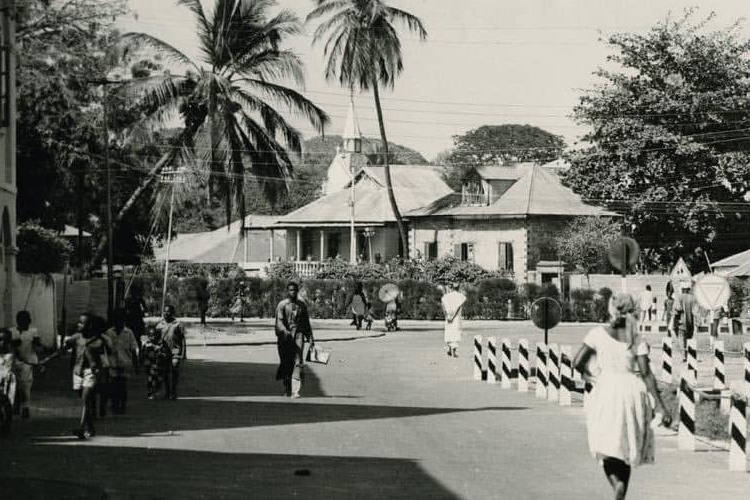
To understand why the idea took root, we have to understand Banjul itself. As the capital and the country’s principal administrative and commercial center, Banjul brought together civil servants, politicians, lawyers, teachers, businessmen, professionals, intellectuals, sportsmen, and young people.
Families knew one another. People attended the same schools, played football together, belonged to the same social groups, and met regularly at neighborhood gatherings. These relationships were not necessarily political. They were part of ordinary urban life.
This is where the old Banjul “vous” become important. The word, derived from the French rendezvous, came to describe gatherings of young people around particular streets, neighborhoods, friendships, or common interests. Some were mainly social, sporting, and cultural, while others became centers for political discussion. Together, they helped shape the social environment in which many young Gambians grew up.
Roxy Vous, for example, was already active by the early 1960s. In 1963, it organized what is regarded as the first recorded beauty pageant in The Gambia at the UAC Tennis Lawn, an event won by Joanna Jahumpa as Miss Bathurst.
Metta Vous, later known as Metta Youth Club, had an even broader social and community character. Its activities included football, tennis, dances, social gatherings, and beauty contests.
In 1965, it organized Miss Independence, won by Elizabeth Thomas, and later that year Miss Gambia, won by Ndey Jagne.
Oumie Barry won in 1966, followed by Janie Jack in 1967, Marie Carayol in 1969 and Princess Margaret Davies in 1970. Ndey Jagne subsequently represented The Gambia at Miss World 1965.
The activities of Metta Vous went beyond pageants. Its proceeds were used to support children in school and assist the hospital and other needy institutions. The club also helped promote young Gambian women and gave the country international visibility at a time when independence was still new. These were not political organizations. They were part of the social and civic life of the city.
Zicoza was another prominent Banjul youth organization, and its rivalry with Roxy Vous reflected the competitive spirit of youth culture at the time. Such organizations gave young people opportunities to organize themselves, develop friendships, and demonstrate their talents. For many, the relationships formed in these settings lasted well beyond their youth.
Not every vous had the same character. Kent Street, which emerged around 1967, became particularly associated with political discussion and intellectual debate. Its meetings provided a space where young people could openly discuss politics, African affairs, and the direction of the country. This political character is important, but it should not be projected onto every vous.
Camden Vous was remembered in old Banjul as one of the places where young people gathered around ideas of social reform and enlightenment. Allen Street, you illustrate another side of the tradition, functioning essentially as a group of friends.
Music House Vous provides perhaps the clearest reminder that these gatherings could remain entirely outside partisan politics, bringing together people of different political affiliations through their shared love of music and friendship.
Taken together, these examples tell us something important. Banjul’s social networks did not begin as a political conspiracy. They developed naturally through families, neighborhoods, schools, sports, music, social activities, and friendships.
In a small capital city, such relationships inevitably became valuable social capital. A young person could know someone through school, meet another through football, become part of a vous and later encounter the same people in the civil service, business, professional life, or politics.
This is probably the historical foundation on which the expression “Banjul Mafia” acquired its power. When people from the same relatively small social environment later occupied influential positions, outsiders could reasonably perceive that connections mattered.
Sometimes they probably did. Knowing the right people can open doors, create opportunities, and provide access to information. But that is not the same as saying that all those people belonged to one organized group or acted according to a common plan.
There is also a danger in looking back at Banjul through today’s political divisions. The old city was not politically or socially uniform. It contained establishment figures and critics, conservatives and radicals, wealthy families, and ordinary working people. Its residents came from different ethnic, religious, and social backgrounds. Some young people who emerged from Banjul’s social environment went into government, while others became critics of government.
Some entered business or professional life; others remained involved mainly in social and cultural activities.
The real issue, therefore, is not whether Banjulians knew one another. Of course they did. The question is whether personal connections, family background, or geography were allowed to become more important than competence and fairness in determining access to national opportunities.
That distinction remains relevant today. Every society produces networks. In a small country such as The Gambia, those networks can be particularly strong. They can be useful when they build trust, cooperation, and social responsibility.
They become a problem when access to public office, contracts, employment, or other opportunities appears to depend more on who one knows than on what one can contribute.
This is why the expression “Banjul Mafia” should be used with care. It may capture a genuine historical perception about privileged networks, but it can also oversimplify the past and unfairly turn an entire city into a political category. Banjul’s history was much more complicated than that.
The old Banjul was a close community. Its streets, schools, families, sporting activities, social clubs, and Vous created relationships that survived across generations. Some of those relationships eventually reached into politics and government. That is a fact of social history, not evidence by itself of a conspiracy.
As The Gambia enters another election season, perhaps the more useful question is not who belongs to a “Banjul Mafia,” but whether the modern state has created institutions in which every Gambian, regardless of birthplace, family connection, or social network, has a fair opportunity to participate and succeed.
History should help us understand where our political language came from. It should not become a substitute for evidence. The Banjul Mafia may be a memorable phrase, but Banjul’s history is far more complicated than the label suggests.










Leave a Reply