


Gambiaj.com, (NAIROBI, KENYA) — Paul Nthenge Mackenzie was once a street vendor and taxi driver in the Kenyan coastal town of Malindi. By the time authorities discovered hundreds of graves in a nearby forest in 2023, he had become the self-proclaimed pastor of a religious movement whose teachings would be linked to one of Kenya’s worst mass deaths.
On Monday, a Kenyan court convicted Mackenzie and 28 co-accused of murdering 191 followers, including 190 children and one adult. The conviction followed a trial that exposed how his Good News International Church developed into an isolated sect where followers were subjected to extreme religious teachings, including the rejection of education and medical treatment and, ultimately, prolonged fasting to death.
Mackenzie founded the Good News International Church in Malindi in 2003. He later established Good News Media and used online broadcasting to spread his sermons. By 2012, his ministry had expanded into a media operation, and his preaching attracted thousands of followers both in person and online.
But his increasingly radical teachings also brought him into conflict with authorities.
A Preacher Who Rejected Schools And Hospitals
Mackenzie’s teachings included opposition to formal education, some medicines and vaccinations. His message was that conventional institutions were part of a worldly system that followers should reject.
In 2017, police searched his compound in Malindi and found dozens of children who were not attending school. Mackenzie was subsequently charged over the operation of an unregistered educational facility.
He was also detained in 2019 after opposing the government’s efforts to introduce national identification numbers, which he described as satanic.
The same year, his church premises were closed and Mackenzie moved with followers to the Shakahola area, where the movement became increasingly isolated from wider society.
The Kenya National Commission on Human Rights found that followers were attracted to the area partly by promises of cheap and affordable agricultural land. The movement’s relocation intensified during the Covid-19 pandemic.
From Religious Community To Isolated Cult
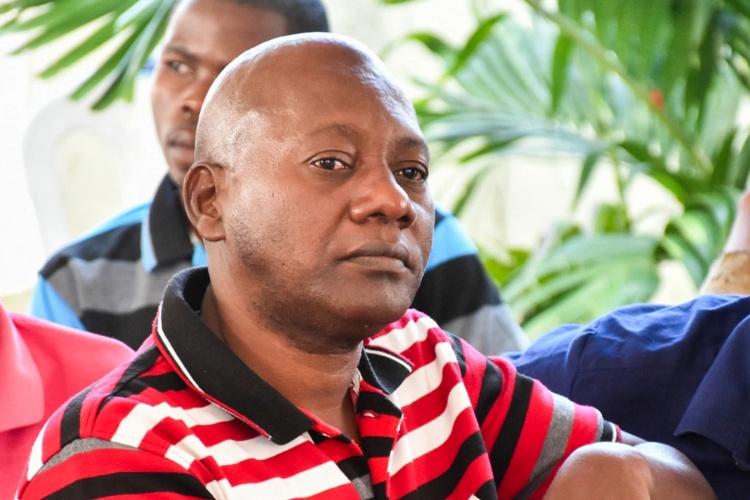
Cult leader Paul Mackenzie attending his sentencing on October 19 in Mombassa
In Shakahola, Mackenzie and his followers established settlements with biblical names, including Nazareth, Jerusalem and Judea, living in rudimentary homes away from the surrounding communities.
His apocalyptic preaching also became more intense.
Mackenzie told followers that the end of the world was approaching and that conventional education and employment had little value. Some followers abandoned their jobs and schooling and moved into the forest.
His rejection of healthcare was equally extreme. Followers were discouraged from seeking treatment in hospitals, while the court heard that “medical treatment was presented as an instrument of Satan.”
The movement’s isolation helped Mackenzie exercise increasing control over his followers.
The Fasting That Lasted More Than Two Years
According to Justice Diana Kavedza, the religious doctrine eventually became centerd on fasting as a pathway to heaven.
The court found that the practice began around January 2021 and continued for more than two years before authorities uncovered the scale of what was happening. Children were targeted first, followed by other members of the community.
The court found that guards were used to enforce the instructions. Followers who attempted to escape or eat were beaten, while those who resisted the teachings were prevented from leaving.
The starvation was therefore not simply a matter of followers voluntarily choosing to fast. The court concluded that Mackenzie and those operating under him had created an organized system in which religious teachings were used to compel people to starve.
More Than 400 Bodies In The Forest
The scale of the tragedy emerged in April 2023 after police began investigating reports of missing people.
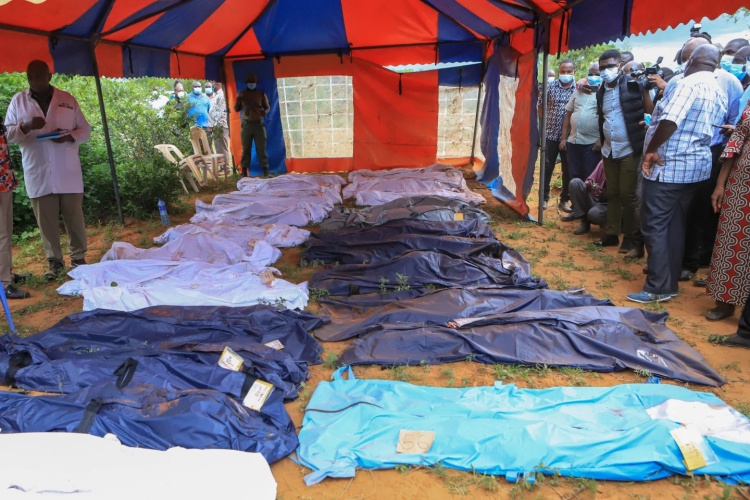
Officers searching the Shakahola Forest found severely malnourished followers and shallow graves scattered across the vast Chakama Ranch in Kilifi County.
Over the following weeks, investigators exhumed more than 400 bodies. Many had been buried in mass graves.
Starvation was the main cause of death, although postmortem examinations also found victims who had died from suffocation, strangulation or head injuries.
For some victims, decomposition made it impossible to determine how they died. Others died shortly after being rescued because they were already severely emaciated.
The discovery transformed Mackenzie from a controversial preacher into the central figure in what became known as the Shakahola massacre.
The Warnings Before Shakahola
The tragedy has also raised questions about how Mackenzie was able to continue operating despite having come to the attention of Kenyan authorities years earlier.
Police had investigated his activities as early as 2017, when children were found living at his compound without attending school. His church was eventually shut down in 2019, but he continued his activities after relocating to Shakahola.
The Kenyan government later acknowledged that state agencies should have been able to prevent the deaths.
The case has since fueled calls for tighter oversight of religious organizations in Kenya, where churches and independent preachers wield considerable influence.
191 Murder Convictions
Mackenzie denied that he forced his followers to fast and pleaded not guilty to the murder charges.
But after hearing evidence from 123 prosecution witnesses, including survivors and children caught up in the movement, Justice Kavedza found Mackenzie and his co-accused guilty of the deaths of 191 people. Two other defendants died during the prosecution of the case.
The 191 murder convictions account for only part of the Shakahola death toll. More than 400 bodies were recovered from the forest, and Mackenzie faces separate charges relating to other deaths, including manslaughter, terrorism and child torture.
His mitigation hearing is scheduled for October 30, with sentencing set for November 6.
The case has left Kenya confronting a disturbing question: how a preacher who had spent years publicly promoting increasingly extreme religious teachings was able to build a community large enough, isolated enough and controlled enough for hundreds of people to die before the authorities intervened.









Leave a Reply