


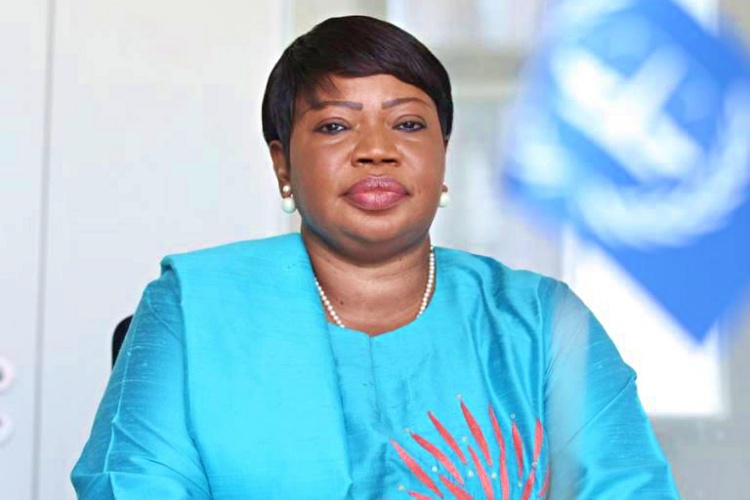
Gambiaj.com – (DAKAR, SENEGAL) – Former International Criminal Court (ICC) prosecutor Fatou Bensouda has urged The Gambia to prioritize reparations for victims of human rights abuses under former president Yahya Jammeh, warning that truth and judicial verdicts alone cannot deliver justice without tangible benefits for survivors.
Speaking at a transitional justice meeting in Dakar organized by The Gambia’s Ministry of Justice and the Institute for Security Studies (ISS), Bensouda called for a coordinated approach that integrates criminal prosecutions, compensation, institutional reforms and national reconciliation.
She said the main challenge was no longer establishing the truth about past abuses but implementing the recommendations of the Truth, Reconciliation and Reparations Commission (TRRC), particularly those intended to provide relief to victims.
Citing the case of former Chadian president Hissène Habré, convicted in 2016 by the Extraordinary African Chambers, Bensouda noted that reparations ordered for thousands of victims remained largely unpaid years later.
“A verdict has been delivered, but not all the promises surrounding that verdict have been fulfilled,” she said, highlighting the gap between judicial decisions and their impact on victims.
Reparations Should Not Wait For Trials
Bensouda warned that victims in The Gambia should not have to wait for lengthy criminal proceedings before receiving medical care, psychological support and financial compensation.
Although the government has accepted most of the TRRC’s recommendations and established institutions to advance accountability and reparations, she cautioned that insufficient funding could undermine their effectiveness.
The proposed Special Tribunal for The Gambia is estimated to require $60 million over five years, while the Office of the Special Prosecutor and structures responsible for reparations also face significant resource needs.
She argued that assistance for vulnerable victims should be provided independently of the pace of criminal proceedings.
“A victim should never have to choose between participating in a trial and receiving the care they are entitled to,” Bensouda said.
She also called for a unified roadmap linking prosecutions, reparations, institutional reforms and reconciliation, with clear responsibilities, deadlines and mechanisms for public oversight.
Such coordination, she said, would reduce the risk of victims having to repeat traumatic accounts before multiple institutions. Witness protection, access to archives and security sector reform would also be essential to establishing accountability and preventing future abuses.
Government Highlights Progress
Hussein Thomasi, representing The Gambia’s Attorney General and Justice Minister, said the country had moved beyond debating whether to pursue transitional justice and was now focused on translating commitments into action.
“We have moved beyond the question of whether The Gambia had or would continue to have a transitional justice process,” he said.
He highlighted the establishment of the Office of the Special Prosecutor, the Special Criminal Division of the High Court, the Special Tribunal for The Gambia and the Reparations Commission, with support from the Economic Community of West African States (ECOWAS) and the African Union.
Thomasi also announced that more than $2.5 million had been recovered from the confiscation and sale of assets belonging to Jammeh in the United States. The funds are intended for the victims’ compensation fund.
The recovery represents an important step towards financing reparations, although sustained resources will be needed to meet the broader commitments arising from the TRRC process.
ISS Warns Against Loss Of Momentum
Ornella Moderan, director of the ISS regional office in Dakar, described The Gambia as being at a decisive point between developing its transitional justice framework and implementing it.
She said the TRRC’s final report and the government’s white paper provided an ambitious roadmap covering criminal accountability, reparations, memorialization and institutional reform.
“It is once the report is published that the real work begins, and that is where commitment must be sustained,” Moderan said, warning that inadequate funding and declining support from international partners could slow progress.
Discussions at the meeting focused on the relationship between justice and reparations, victims’ participation in decisions affecting them, and the role of institutional reforms in preventing future violations.
Participants also examined the contribution of community-based and traditional reconciliation practices, while stressing that these should not replace formal accountability mechanisms.
Switzerland Reaffirms Support
Pietro Mona, representing the Swiss ambassador to Senegal and The Gambia, said justice and peace should be treated as complementary rather than competing objectives.
“Justice is not an obstacle to peace; it is an essential partner,” he said.
Mona called for an integrated approach in which prosecutions, reparations, reconciliation and institutional reforms reinforce one another. He also stressed the need to strengthen institutional independence and accountability within the security services.
Switzerland reaffirmed its support for The Gambia’s efforts to combat impunity and reform the security sector.
Bensouda, meanwhile, said responsibility for past abuses extended beyond criminal convictions to include public accountability, apologies, restitution and memorialization, with victims remaining at the center of the process.
She argued that reconciliation could not substitute for accountability but would become possible when wrongdoing was acknowledged, addressed and appropriately sanctioned.
“The law can protect the weak against the strong,” she said, urging The Gambia to complete the work undertaken in the name of the principle of “Never Again”.
After years of documenting abuses and establishing the truth, The Gambia now faces the challenge of ensuring that its transitional justice commitments deliver lasting justice, meaningful reparations and stronger institutions for victims and society.






Leave a Reply