


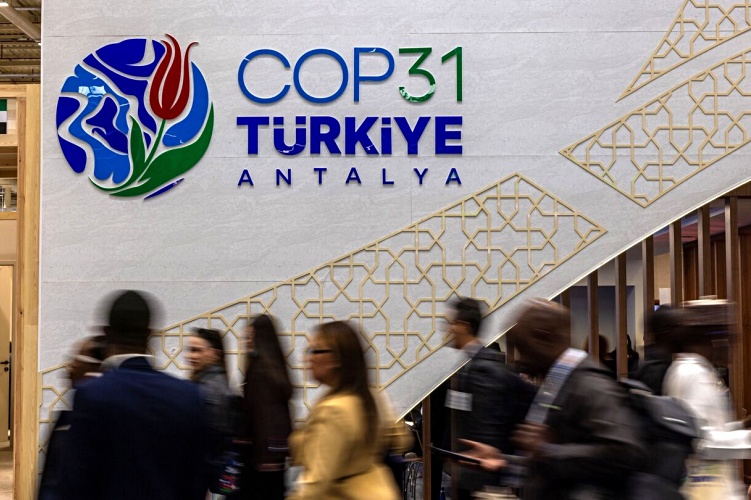
Gambiaj.com – (ANTALYA, TÜRKIYE) – The COP31 climate summit ended in diplomatic deadlock on November 22 after the European Union and several other countries rejected a proposed agreement backed by the Turkish presidency for failing to explicitly mention fossil fuels, leaving negotiations without an overarching deal despite two weeks of discussions.
The collapse exposed deep divisions between countries pushing for a clear commitment to phase out fossil fuels and those resisting language that could threaten their economic interests. The disagreement also highlighted persistent tensions over climate financing, particularly between wealthy industrialized nations and developing countries bearing the brunt of climate change.
A European representative accused oil-producing states of having “taken COP31 hostage” following the rejection of the proposed text. Saudi Arabia had opposed any explicit reference to fossil fuels, while European countries were unwilling to reopen discussions on climate financing.
“Countries were not ready to take a step towards each other and think collectively about the solutions that could be found,” said Céline Kauffmann, director of programs at the Institute for Sustainable Development and International Relations (IDDRI).
African Countries Express Frustration
The failure to reach an agreement was particularly disappointing for African countries, whose demands on climate financing and adaptation remained largely unaddressed by the proposed text.
Mohamed Adow, director of the African climate advocacy organization PowerShift Africa, described the summit as the worst COP, arguing that its collapse should serve as a wake-up call for wealthy countries and major polluters.
“The rich countries and polluting governments must stop arriving empty-handed,” he said.
Adow also criticised the prospect of Africa having to take responsibility for resolving the diplomatic divisions left behind by the Turkish-hosted summit, with Ethiopia scheduled to host the next climate conference.
“COP31 was a ghost COP. The next one will take place in Ethiopia, in Africa, and it is a disgrace that the disorder left here must be untangled by Africa,” he said.
He argued that developing countries needed concrete commitments rather than repeated promises, particularly on who would provide climate financing and when vulnerable communities would benefit.
Countries struggling with debt, he added, needed adequate resources to protect themselves against a climate crisis they had done little to cause, without being pushed further into poverty.
Despite Failure, Some Progress Recorded
Although the summit failed to adopt its overarching decision, climate advocates said the negotiations were not entirely without progress.
Céline Kauffmann pointed to several initiatives, partnerships and coalitions launched during the conference, many of which focused on practical solutions outside the formal United Nations negotiating framework.
These included efforts to accelerate the transition away from fossil fuels, with around 20 countries having now presented roadmaps outlining how they intend to achieve that objective.
Gaïa Febvre, head of international policy at the Climate Action Network, said several other texts had nevertheless been adopted during the summit, although they would need to be strengthened at COP32.
She also welcomed Ethiopia’s selection as the next host, saying the African setting would provide an opportunity to maintain pressure on climate adaptation, a major priority for the continent.
Ethiopia and the African negotiating bloc are expected to play a central role in shaping the agenda for next year’s conference, while also attempting to rebuild consensus after the breakdown in Turkey.
Saudi Arabia’s Contradictory Climate Position
Saudi Arabia emerged as one of the most prominent opponents of efforts to explicitly address fossil fuels in the final agreement.
The kingdom, one of the world’s leading oil producers, is pursuing an economic diversification strategy under Crown Prince Mohammed bin Salman through its Vision 2030 program, which seeks to reduce the country’s dependence on oil revenues.
However, its resistance to stronger international commitments on fossil fuels has raised questions about the apparent contradiction between its domestic economic ambitions and its position in global climate negotiations.
David Rigoulet-Roze, a researcher at the French Institute for Strategic Analysis, said the kingdom’s position reflected the complex challenge facing oil-producing countries as they contemplate a post-oil future.
Vision 2030 represents an acknowledgement that moving beyond oil dependence is ultimately necessary, he explained, but Saudi Arabia still needs oil revenues to finance that transition.
This creates an inherent contradiction, as the kingdom seeks to protect the economic interests that continue to underpin its development while facing growing international pressure to accelerate the energy transition.
Saudi Arabia and other Gulf oil monarchies are also confronting wider regional instability and economic uncertainty, including tensions surrounding the Strait of Hormuz, a critical route for global energy supplies.
Meanwhile, the urgency of climate action continues to grow. 2026 is expected to rank among the hottest years ever recorded, while scientists warn that 2027 could potentially surpass existing temperature records.
With COP31 ending without a comprehensive agreement, the responsibility now shifts to Ethiopia to revive negotiations and place the concerns of vulnerable countries, particularly those in Africa, more firmly at the centre of the global climate agenda.








Leave a Reply