


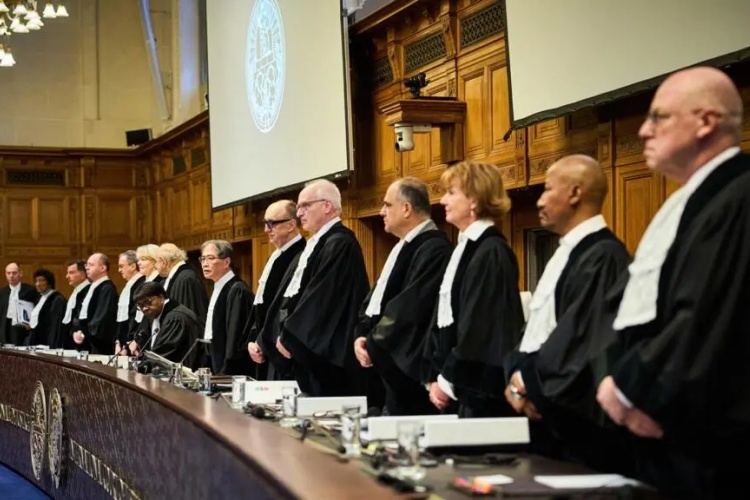
In a landmark ruling on Thursday, November 19, the United Nations’ highest court found that Myanmar had committed genocide against the Rohingya Muslim minority in northern Rakhine State, marking the first time in its 80-year history that the court has established that a state committed what is widely described as “the crime of crimes”.
The ruling, adopted by nine votes to six, also found Myanmar in breach of its obligation to prevent genocide under the 1948 UN Convention on the Prevention and Punishment of the Crime of Genocide.
Reading the judgment, ICJ President Judge Yuji Iwasawa said Myanmar’s security forces had killed thousands of Rohingya civilians, committed widespread sexual violence, carried out extreme violence against children and attacked people fleeing the violence.
The court also upheld estimates by an independent UN fact-finding mission that at least 10,000 Rohingya were killed during the 2017 military crackdown, finding that the figure was supported by the evidence before it.
At the time, approximately 815,000 Rohingya were living in Rakhine State, with hundreds of thousands subsequently fleeing across the border into neighbouring Bangladesh.
The Question Of Genocidal Intent
Beyond the scale of the killings, the ruling carries particular legal significance because genocide is defined not simply by the number of people killed, but by the intention to destroy, in whole or in part, a protected national, ethnic, racial or religious group.
The 1948 Genocide Convention identifies five categories of acts that can constitute genocide, including killing members of a protected group, causing serious bodily or mental harm, deliberately imposing conditions calculated to bring about its physical destruction, preventing births and forcibly transferring children.
The ICJ concluded that the only reasonable inference from the evidence was that Myanmar intended to destroy a substantial part of the Rohingya population.
International lawyer Johann Soufi explained that the court had clarified an important principle: genocidal intent can exist alongside other military or political objectives.
A state may claim to be pursuing legitimate security objectives or fighting an armed group, he said, while simultaneously committing acts intended to destroy a protected population.
The existence of other objectives does not automatically exclude the possibility of genocide.
The judgment therefore reinforces the importance of examining the overall pattern of conduct, rather than accepting a state’s stated military or security justification at face value.
Why The Gambia’s Case Matters Beyond Myanmar
The ruling is also significant because it reinforces the principle that states have an obligation to prevent and punish genocide, even when the alleged crimes are committed outside their own territories.
Under the 1948 convention, countries must take all measures within their power to prevent genocide and hold those responsible accountable.
The Gambia invoked that obligation when it brought proceedings against Myanmar before the ICJ in 2019, seeking to hold the Asian country accountable for its treatment of the Rohingya.
For the Rohingya community, the decision represents a major recognition of years of suffering.
Wai Wai Nu, a former political prisoner and director of the Women’s Peace Network, told Reuters that the ruling had ended what she described as Myanmar’s longstanding denial of the community’s existence and suffering.
She welcomed the court’s recognition of genocide and its demands for guarantees against a repetition of the crimes, as well as restitution and compensation.
However, despite the binding nature of ICJ decisions, the court has no independent enforcement mechanism to compel states to implement its judgments.
Whether Myanmar’s authorities will comply with the ruling, including measures to facilitate the safe return of Rohingya refugees who wish to go home and provide compensation, remains uncertain.
Implications For Israel’s Case At The ICJ
The ruling has also drawn attention to the ongoing genocide proceedings brought by South Africa against Israel over its military operations in Gaza.
South Africa filed its case before the ICJ in December 2023, arguing that Israel had violated the Genocide Convention.
In January 2024, the court found that Palestinians in Gaza faced a serious and imminent risk of genocide and ordered Israel to take measures to prevent acts prohibited under the convention, including direct and public incitement to genocide.
The ICJ has yet to deliver a final judgment in the case, which could take several more years.
Meanwhile, a UN independent commission of inquiry concluded in 2025 that Israel had committed genocide in the Palestinian territory, a finding strongly rejected by the Israeli government, which accused the commission of bias and relying on what it called Hamas propaganda.
Although the Myanmar and Israel cases are different in several respects, legal experts have identified similarities in the arguments advanced by both governments.
Both have invoked national security and military objectives to defend their actions.
For international law professor Rafaëlle Maison of Paris-Saclay University, the question of genocidal intent can be established through patterns of conduct or explicit statements by political and military leaders.
She argued that statements by Israeli officials could be relevant to the court’s assessment of intent in the South African case.
Soufi also pointed to the importance of examining the cumulative impact of military operations, including the killing of children and the destruction of civilian communities.
He said the evidence documented by UN investigative mechanisms in Gaza contained elements similar to those considered relevant by the ICJ in the Myanmar case.
A Test For International Justice
Beyond its immediate implications for the Rohingya, the judgment comes at a time when international judicial institutions face increasing political pressure, particularly from powerful countries.
UN High Commissioner for Human Rights Volker Türk said the ruling sent a strong message that those responsible for genocide must be held accountable.
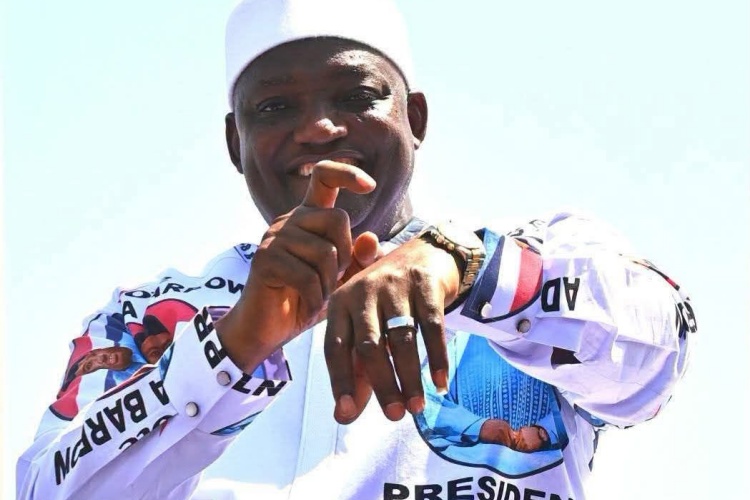
Gambian President Adama Barrow described it as a historic day for international justice.
However, the court’s decision also comes amid growing criticism of international judicial institutions from governments that have challenged their authority.
The United States, which officially recognised the atrocities against the Rohingya as genocide in 2022 under then-Secretary of State Antony Blinken, has increasingly criticised international courts over their actions involving Israel.
In November, US Secretary of State Marco Rubio attacked the International Criminal Court (ICC), describing it as illegitimate and threatening to dismantle it.
Washington has also expressed concern about the potential implications of the ICJ’s approach to establishing genocidal intent in the Myanmar case.
US Ambassador to the United Nations Michael Waltz had previously warned against what he viewed as a possible lowering of the evidentiary threshold for establishing genocide.
For Soufi, the broader challenge is whether states, including established democracies, will continue to respect international judicial institutions when their decisions affect powerful political and military allies.
He warned that international justice rests on a fundamental principle: no state, however powerful, should be above the law.
The Gambia’s legal victory has therefore established an important precedent in the fight against genocide. But whether it signals a stronger era of international accountability will depend not only on the decisions of judges in The Hague, but also on the willingness of governments to respect and implement them.






Leave a Reply