


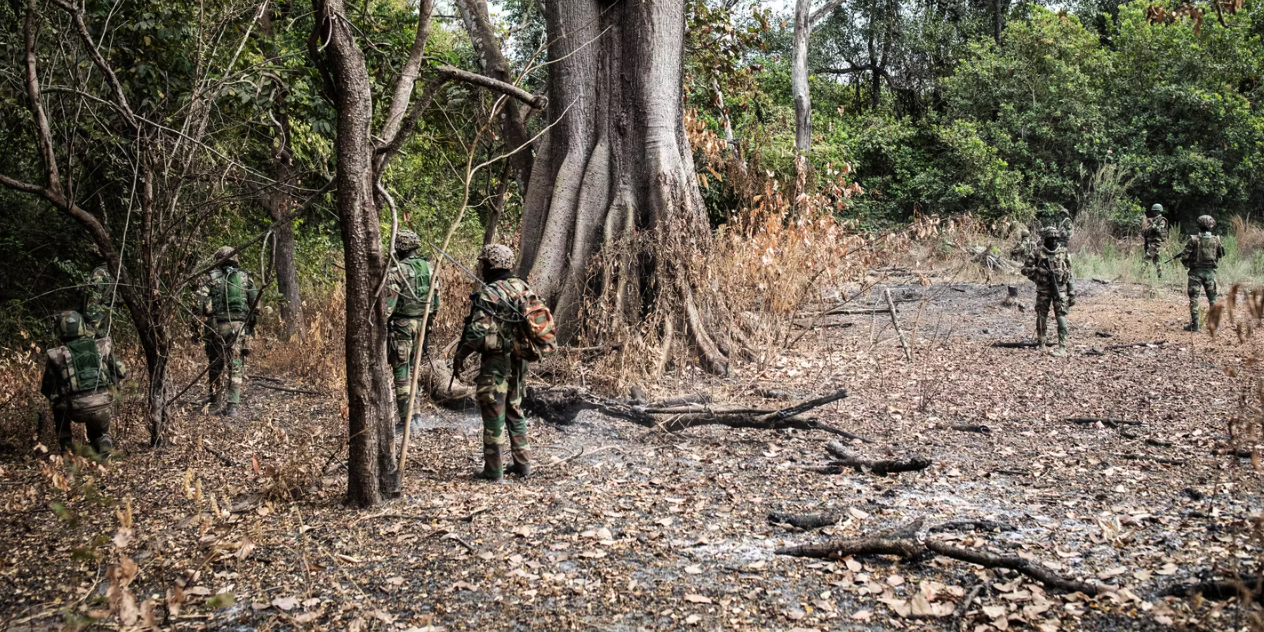
Gambiaj.com – (BANJUL, The Gambia) – One Senegalese soldier was killed and six others wounded on Thursday after troops clashed with suspected fighters linked to the Movement of Democratic Forces of Casamance (MFDC) during an operation to destroy cannabis farms in southern Senegal, the army said.
According to a statement issued by the Senegalese Armed Forces’ Directorate of Information and Public Relations, the confrontation occurred on March 12 in the Kadialock area of North Sindian in the Bignona department, close to the Gambian border in the southern Casamance region.
The army said a military detachment operating under Military Zone No. 5 encountered a group of armed individuals while carrying out operations to destroy fields of “chanvre indien,” a term used locally to refer to marijuana.
“The first toll indicates one soldier killed and six wounded,” the statement said, adding that several of the attackers were “neutralized” during the exchange.
Military units have since continued operations in the area aimed at dismantling cannabis plantations, pursuing armed groups and ensuring the safety of local populations and their property.
Long-Running Rebellion Now Largely Weakened
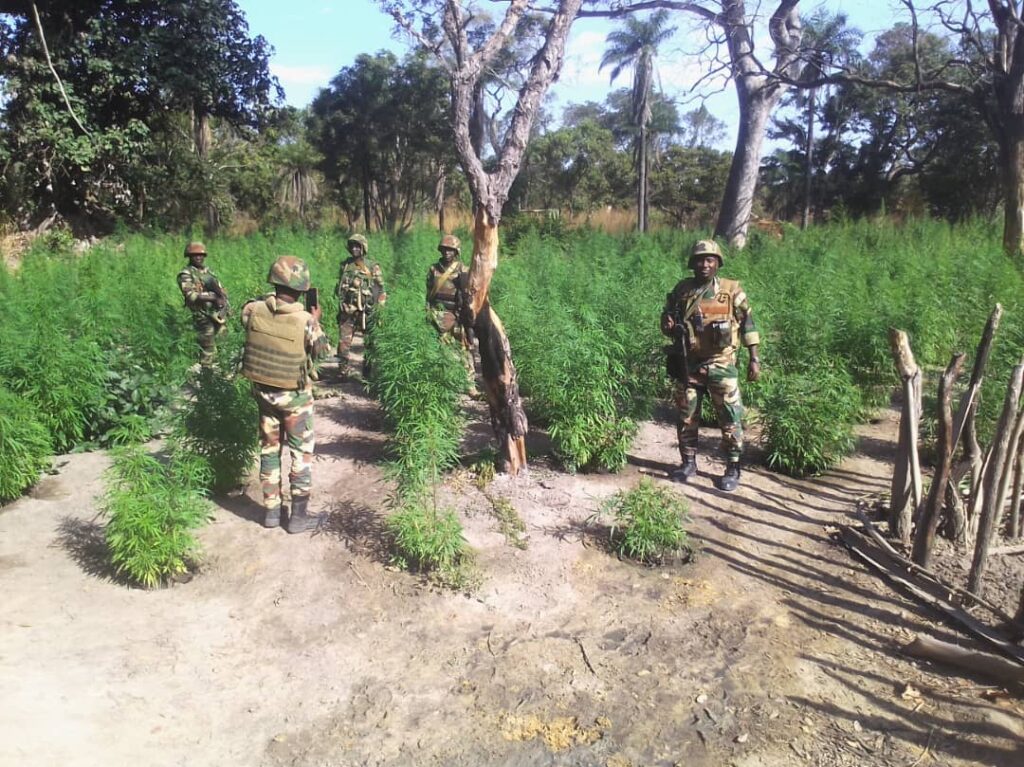
MFDC’s cannabis farms in North Sindian being secured and destroyed by Senegalese army troops. AFP/JOHN WESSELS, February 2021.
The clash occurred in a region historically linked to the decades-long separatist rebellion led by the MFDC in Casamance, Senegal’s southern enclave separated from the rest of the country by The Gambia.
Founded in the early 1980s, the MFDC launched an armed campaign seeking independence for Casamance, citing grievances over political marginalization and uneven economic development.
The conflict evolved into one of West Africa’s longest-running low-intensity insurgencies, marked by sporadic fighting, landmines, and periodic ceasefire efforts.
However, analysts and regional security observers say the movement has been significantly weakened over the past decade due to internal divisions, sustained military pressure from Senegal, and declining local support.
Many MFDC factions have splintered, with several commanders abandoning the armed struggle or entering into local ceasefire arrangements with the government.
Criminal Networks Replace Political Insurgency.
Security sources and regional researchers note that some remnants of the rebellion, particularly factions operating near the Senegal-Gambia border, have gradually shifted away from political objectives toward illicit economic activities.
These activities include cannabis cultivation in forested areas of northern Casamance, timber trafficking, and other cross-border smuggling operations.
The cannabis fields targeted in Thursday’s military operation are believed to be part of these networks, which use remote forest zones along the frontier with The Gambia as cultivation and transit corridors.
Authorities say such operations are increasingly framed as security and anti-trafficking missions rather than conventional counter-insurgency campaigns.
Despite the relative decline of the separatist rebellion, Senegalese forces have maintained regular patrols and targeted operations in the region to dismantle armed bands and prevent criminal networks from exploiting the remnants of the insurgency.














Leave a Reply