


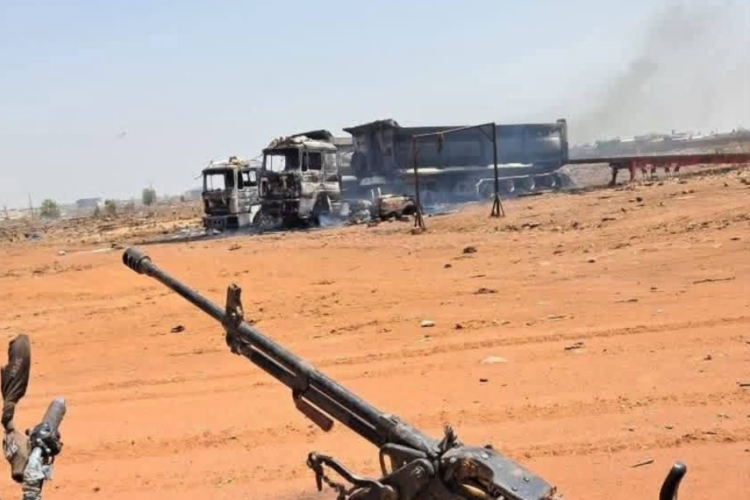
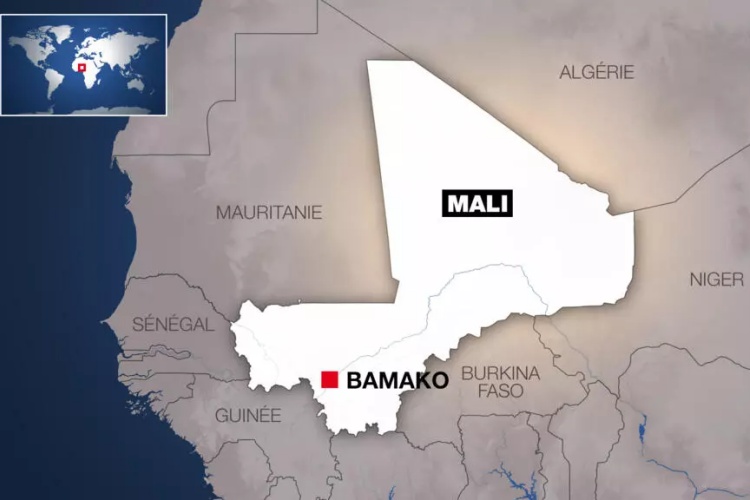
Gambiaj.com – (BAMAKO, Mali) – Mounting uncertainty is gripping Mali as the country confronts the aftermath of coordinated attacks that killed Defense Minister Sadio Camara, with growing public concern intensified by the continued silence of junta leader Assimi Goïta.
Two days after the large-scale assaults, Mali’s presidency has yet to issue a formal statement addressing either the minister’s death or the broader security situation, a silence that is increasingly unsettling for a population already shaken by the scale and coordination of the violence.
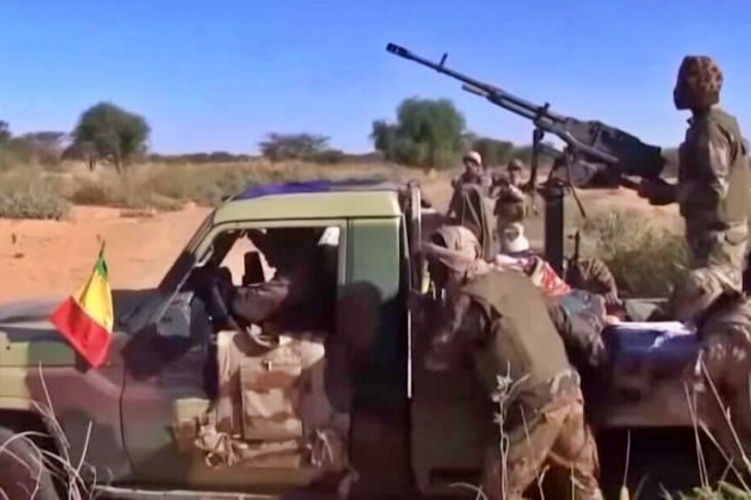
The attacks, carried out over the weekend by the Front de libération de l’Azawad (FLA) and the Groupe de soutien à l’Islam et aux musulmans (JNIM), targeted at least seven localities, including Kati, a key military stronghold near Bamako.
Camara was killed after his residence was struck in what authorities described as a suicide attack, one of the most high-profile losses for Mali’s military leadership in recent years.
While military officials have sought to project control, claiming that hundreds of attackers were neutralized and that the assaults were repelled, the broader picture on the ground suggests a far more fragile situation.
In the north, the strategic city of Kidal has effectively slipped from state control. Jihadist fighters and Tuareg rebels now dominate the city, following the withdrawal of Malian forces and Russian paramilitary elements after negotiations. The junta has framed the exit as a “repositioning,” but it underscores a significant shift in territorial dynamics.
For many Malians, the immediate concern is not only the violence itself but also what comes next. Residents in Bamako and other areas describe a tense calm, with fears that the attacks could be a prelude to further instability or even a broader offensive by armed groups seeking to consolidate their positions.
“The silence from the top is worrying,” said a local observer in the capital. “People want reassurance, clarity—something to show that the situation is under control.”
Security analysts say the coordinated nature of the attacks highlights a troubling evolution in the conflict, pointing to increasing operational alignment between jihadist factions and separatist movements. Such cooperation, they warn, could complicate military responses and prolong the crisis.
Reports from the north indicate that armed groups are entrenching themselves, particularly in and around Kidal, which has long been a symbolic and strategic hub in Mali’s conflict.
The Front de libération de l’Azawad has signaled its intention to defend its areas of influence, warning other forces against encroachment—an indication that clashes could intensify.
Meanwhile, the human toll continues to resonate. Alongside the death of the defence minister, casualties among Malian soldiers have been reported, further compounding the sense of vulnerability within the ranks and among civilians.
As Mali enters a critical period, the absence of a clear presidential voice risks deepening public unease. With the situation still fluid and the potential for escalation high, many are left watching closely—and waiting—for signs of direction from a leadership that has, so far, remained conspicuously quiet.



Leave a Reply