


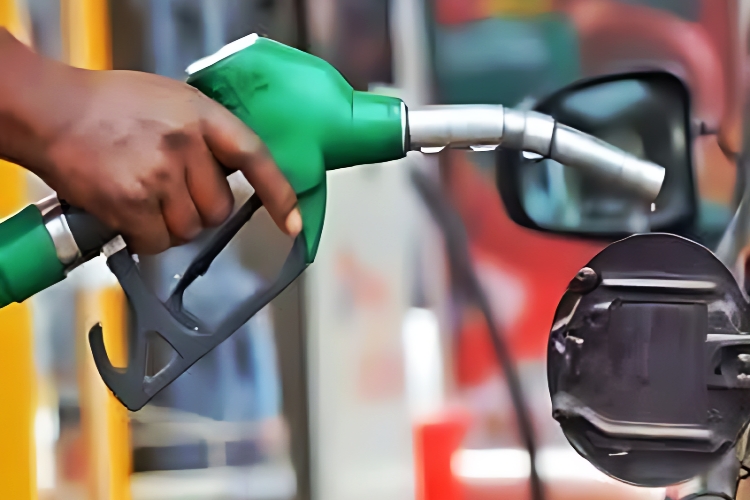
Gambiaj.com – (BANJUL, The Gambia) – The latest fuel price adjustments announced by the Ministry of Petroleum, Energy, and Mines have once again brought into sharp focus one of the most difficult policy challenges facing developing economies: how to respond to rising global energy costs without undermining domestic stability.
As of May 2026, petrol is priced at D112.00 per liter, gasoil at D120.00, and jet fuel at D133.72. These increases, driven largely by pressures in the global oil market and ongoing geopolitical tensions, are being felt across The Gambia by households, transport operators, farmers, and businesses alike.
Fuel pricing in The Gambia is also heavily influenced by exchange rate movements, given the country’s dependence on imported petroleum products purchased in foreign currency.
Beyond rising international oil prices, fluctuations in the value of the dalasi, coupled with higher shipping and supply chain costs, continue to place upward pressure on domestic fuel prices.
In response, the government has reportedly deployed subsidies exceeding D500 million over April and May to cushion the immediate impact on consumers.
While this intervention has provided temporary relief, it also raises an unavoidable question: how long can such a strategy be sustained?
The Fiscal Burden of Subsidies
From a purely economic standpoint, broad fuel subsidies are difficult to maintain. Institutions such as the International Monetary Fund have long argued that subsidies are costly, often poorly targeted, and place considerable pressure on public finances.
Resources allocated to subsidies may reduce the funds available for critical sectors such as health, education, and infrastructure.
Over time, prolonged subsidies can widen fiscal deficits, increase government borrowing, and place additional strain on already limited foreign exchange reserves. For small, import-dependent economies with constrained fiscal space, such pressures can become increasingly difficult to sustain over the long term.
Yet the economic argument alone does not tell the full story.
Fuel is a central input across the entire economy. When fuel prices rise, transport costs increase, food prices climb, and the overall cost of living rises rapidly. In an import-dependent economy like The Gambia’s, these effects spread quickly through everyday life.
For many households, fuel increases come on top of broader inflationary pressures, including rising food and utility costs. Even modest price hikes can significantly erode household purchasing power. Public transport is particularly sensitive, as fare increases immediately affect workers, students, and small traders.
It is within this context that subsidies, despite their limitations, serve an important short-term purpose. They help slow the transmission of global price shocks into the domestic economy and provide temporary social relief during periods of volatility.
Balancing Economic Adjustment and Social Stability
At the same time, public debate increasingly reflects not only concern about prices themselves but also broader questions of fairness and burden-sharing.
Public acceptance of difficult economic measures often depends on whether citizens believe the sacrifices are being distributed equitably across society.
Recent discussions have also focused on the structure of fuel pricing itself. While fuel taxes remain an important source of government revenue, periods of exceptional hardship often revive debate over whether temporary reductions in certain levies could provide short-term relief without significantly undermining fiscal stability.
Others argue that part of the fiscal space for relief measures could come from stronger expenditure discipline, including reducing non-essential public spending and improving oversight of fuel consumption within government institutions.
In periods of economic strain, visible efforts toward fiscal restraint can strengthen public trust and improve acceptance of adjustment measures. Transparency therefore becomes essential. Clear communication on fuel pricing, subsidy levels, and the government’s broader policy direction can help reduce uncertainty and build public confidence.
The broader reality is that fuel price volatility is largely driven by external global forces beyond the control of small economies.
Similar tensions between subsidy reduction and social protection are being experienced across many African countries, including Senegal, Ghana, and Nigeria, where governments continue to struggle with balancing fiscal sustainability against public affordability.
For The Gambia, the challenge is, therefore, not how to avoid such shocks entirely, but how to manage them responsibly.
A more balanced approach may involve temporary and clearly targeted subsidies focused on sectors such as public transport, agriculture, and fisheries, where fuel costs directly affect livelihoods and food supply chains. Better targeting can help ensure that limited public resources reach the areas where they can have the greatest social and economic impact.
The recurring cycle of fuel crises also underlines the urgency of accelerating investment in renewable energy and energy diversification. Expanding solarization initiatives for public institutions, irrigation systems, street lighting, and small businesses could gradually reduce dependence on imported fuel.
In the long run, reducing fuel vulnerability is no longer only an environmental objective; it is increasingly becoming an economic and fiscal necessity.
There are no easy solutions. Fuel pricing sits at the intersection of economics and social welfare, where every decision carries trade-offs. Economic adjustment may at times be unavoidable, but social trust remains one of the most important national assets any government must protect during periods of hardship.












Leave a Reply