


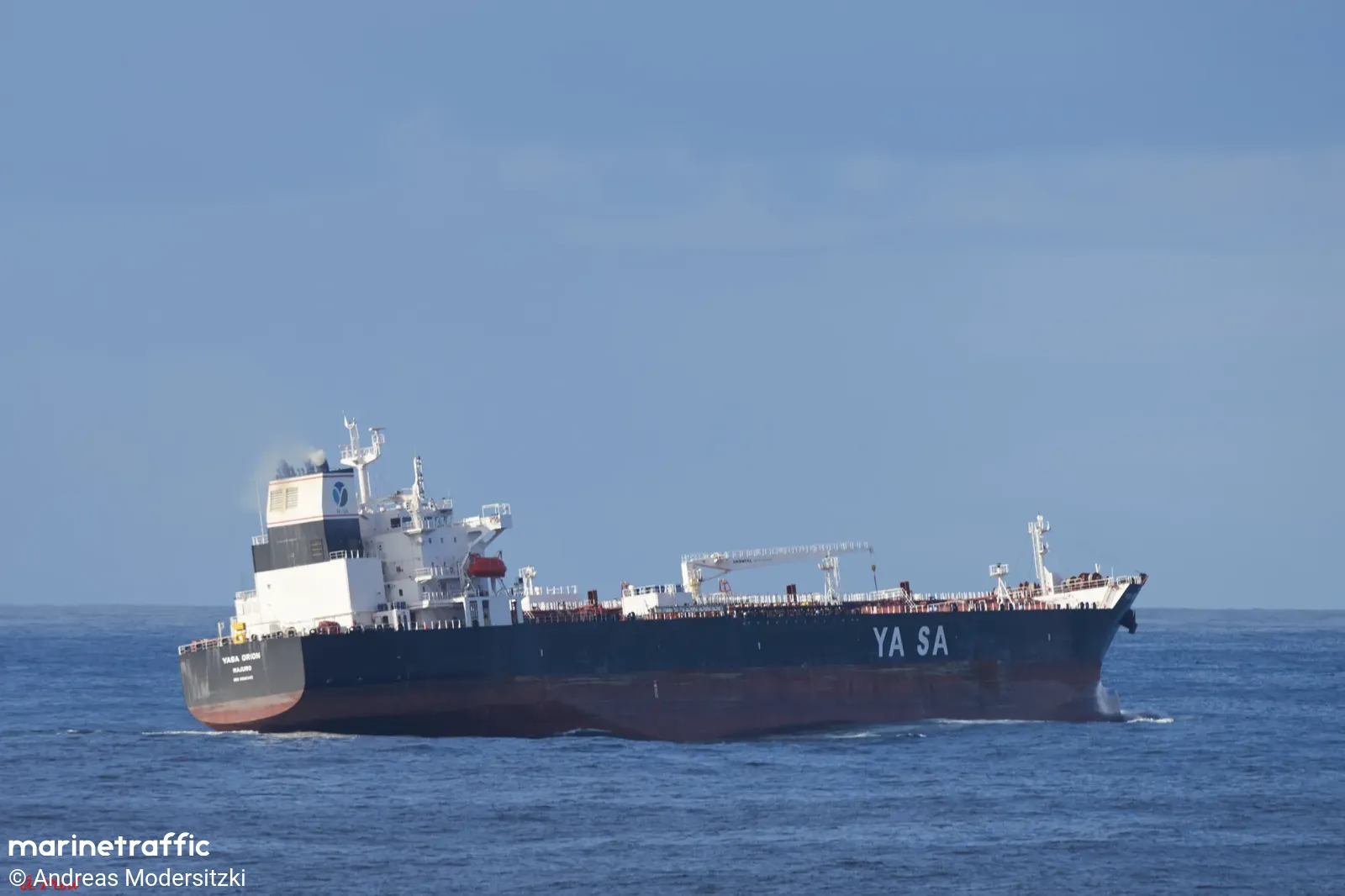
(Banjul, The Gambia) – A petroleum cargo vessel that arrived in Gambian waters under a cloud of suspicion has been sent away without discharging its fuel after its operators failed to produce the quality documentation required by The Gambia’s petroleum regulator, a development that raises serious questions about the integrity of the country’s fuel supply chain and the measures in place to protect it.
The Gambia Journal had first sounded the alert on Thursday, June 5, after sources within the Gambia Ports Authority alleged that the tanker had been turned away from Senegal following laboratory tests that reportedly found its diesel cargo to be contaminated.
While Senegalese authorities made no official confirmation of those claims, the allegations were serious enough to prompt urgent scrutiny from Gambian regulators.
The Public Utilities Regulatory Authority (PURA) confirmed on Sunday, June 8, that it had concluded its regulatory assessment of the petroleum cargo aboard the MT Yasa Orion, a Marshall Islands-flagged oil and chemical tanker operated by YA-SA Tanker Isletmeciligi AS. The vessel, measuring 183 meters in length, had sailed from the Port of Huelva in Spain on a voyage initially destined for Dakar, Senegal, before diverting to the Port of Banjul.
A Regulatory Test, and a Refusal
PURA’s response to the vessel’s arrival illustrates the authority’s mandate in action. Upon learning of the vessel and the concerns surrounding its cargo, the regulator issued a directive prohibiting any discharge, transfer, storage, distribution, or commercialization of the fuel pending submission of key documents, including laboratory test results, quality certifications, and related cargo records.
The directive was not merely procedural. In a country heavily dependent on imported petroleum products, the consequences of contaminated fuel entering the market can be severe, ranging from damage to vehicle engines and generators to broader disruptions in energy supply, with knock-on effects for businesses, hospitals, and households.
What followed, however, was a telling silence. According to PURA, despite repeated requests and what the authority described as a “reasonable opportunity” afforded to the vessel’s representatives, the required documentation was never submitted.
PURA was therefore unable to independently verify the quality and compliance status of the cargo, and, bound by its statutory obligation to protect consumers and uphold national petroleum standards, it was not prepared to permit discharge on unverified assurances alone.
“In the absence of verified documentation and in line with its statutory mandate to safeguard petroleum product quality and protect consumers, PURA was not in a position to authorize the discharge of the cargo within the jurisdiction of The Gambia,” the authority stated in its media update.
The MT Yasa Orion subsequently departed Gambian waters, following clearance processes coordinated with the Gambia Ports Authority and the Gambia Navy, which PURA said had been informed that it had no objection to the vessel’s departure.
Why the Documentation Gap Matters
The refusal to provide documentation is, arguably, as significant as anything else in this episode. Quality certificates and independent laboratory test results are standard instruments of accountability in the international petroleum trade.
Their absence, or a deliberate withholding in the face of regulatory demands, ordinarily signals one of several possibilities: that the documentation does not exist, that it would reveal non-compliance, or that the cargo has already been flagged elsewhere.
Whether the allegations about a prior rejection in Senegal are accurate remains unconfirmed. What is confirmed is that the operators of the MT Yasa Orion chose not to cooperate with The Gambia’s regulatory process. That choice, in itself, speaks volumes.
For consumers and industry observers, the incident underscores the importance of robust regulatory capacity in the downstream petroleum sector.
The Gambia, like many small import-dependent economies, is particularly vulnerable to the dumping of substandard fuel, a practice that is not unheard of in the region, where weaker oversight in some markets can make them attractive destinations for cargoes that have been refused elsewhere.
Fuel Supply Unaffected, PURA Says
PURA moved to reassure the public that the departure of the MT Yasa Orion does not create an immediate risk to national fuel supply. The country’s fuel supply chain, the authority indicated, remains stable, and no shortage is anticipated as a result of the episode.
That assurance will be welcomed, particularly given the sensitivity of fuel availability in The Gambia, where disruptions can quickly cascade into economic hardship for ordinary citizens. But it also raises a question that the incident brings into sharp relief: what would have happened had PURA not intervened, or had the vessel arrived at a port with less vigilant oversight?
A Broader Question of Standards
The MT Yasa Orion episode arrives at a moment of growing public awareness about fuel quality in West Africa. Across the sub-region, concerns about adulterated petroleum products, fuels that have been diluted, mixed with lower-grade substances, or otherwise tampered with, have surfaced repeatedly in recent years, often with damaging consequences for consumers and economies alike.
The Gambia’s downstream petroleum sector has not been immune to such concerns. In that context, PURA’s handling of this case is likely to be viewed by many as a reassuring demonstration of regulatory vigilance.
The authority acted swiftly, issued a clear directive, engaged the vessel’s representatives, and, when those efforts failed to produce the required documentation, held firm on its mandate rather than bending to commercial pressure or supply considerations.
Whether the operators of the MT Yasa Orion ultimately face any formal consequences, and whether the full story of the vessel’s reported rejection in Senegal ever comes to light, remain open questions. What is clear is that The Gambia’s regulatory gatekeepers were tested, and, on this occasion, they held the line.
PURA says it remains committed to safeguarding fuel quality and ensuring the integrity and reliability of the country’s downstream petroleum sector.















Leave a Reply