


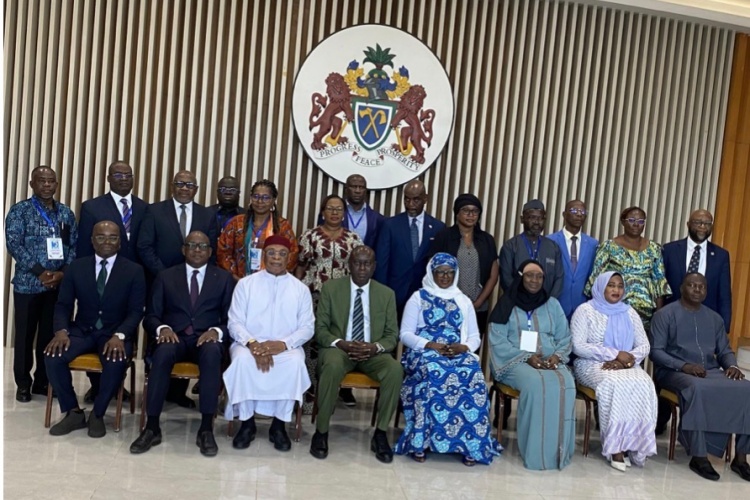
Gambiaj.com – (BANJUL, THE GAMBIA) – The Gambia has called on West and Central African nations to turn regional maritime commitments into concrete action, as ministers gathered in Banjul to address financing, security, and institutional reforms across the sector.
The call was made on Tuesday, November 17, 2026, during the Ministerial Meeting of the 12th Ordinary Session of the Bureau of Ministers of the Maritime Organization of West and Central Africa (MOWCA).
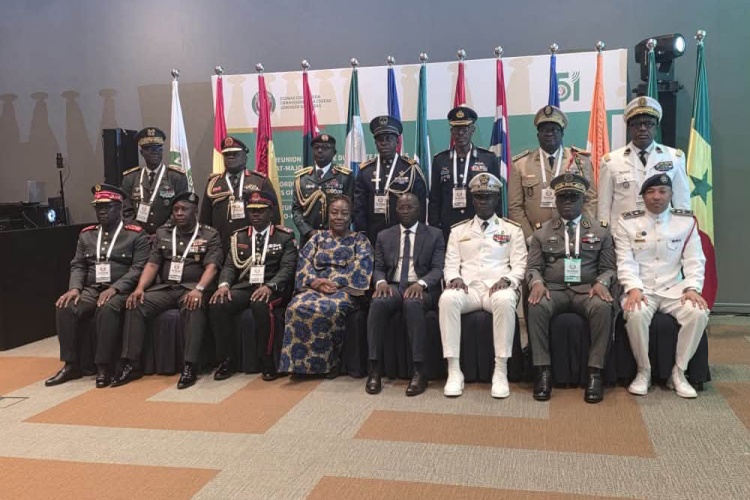
The two-day summit, which opened on Monday, brought together ministers, government officials, and industry stakeholders from across the region to chart the future of the maritime sector.
Opening the session, The Gambia’s Minister of Transport, Works and Infrastructure, Ebrima Sillah, urged delegates to seize the gathering as an opportunity to translate political pledges into practical and financial outcomes.
Recalling that the 19th General Assembly in Banjul entrusted The Gambia with MOWCA’s chairmanship for the 2026–2027 biennium nine months ago, Sillah emphasized that the time for deliberation must give way to execution.
“Today’s session is not merely routine,” Sillah said. “It is a decisive milestone in translating the political will of the 19th General Assembly into financial and operational realities.”
Operationalizing the Regional Maritime Bank
A central item on the agenda was the operationalization of the Regional Maritime Development Bank in Abuja, Nigeria—an institution expected to unlock critical financing for port infrastructure, fleet renewal, and regional maritime trade.
Ministers examined a report from the Special Committee of Experts alongside legal frameworks prepared by Juris Law. Sillah stressed the urgency of removing outstanding administrative and legal bottlenecks to get the bank running.
The Bureau also reviewed the Regional Maritime Fund, human resource development, and member states’ financial contributions for 2027. Further discussions focused on engaging regional blocs ECOWAS and WAEMU to resolve double-taxation hurdles currently affecting the organization’s financial sustainability.
Continental Integration and Security
Delegates also deliberated on the proposed transformation of MOWCA into the continental African Maritime Organization. Sillah called for strategic clarity during the transition to ensure continental integration strengthens existing regional structures rather than creating institutional duplication.
In addition, ministers reviewed preparations for the inaugural MOWCA Heads of State Summit, to be hosted by Côte d’Ivoire. The summit aims to elevate maritime governance, blue economy development, and regional security to the highest political level.
Progress on MOWCA’s 2026 work program specifically regarding maritime safety and inland waterways development—was also assessed.
A Defining Moment for Regional Prosperity
MOWCA Secretary-General Dr. Paul Adalikwu described the Banjul gathering as a defining moment for both the organisation and the wider African maritime industry, noting that the sector remains a cornerstone of regional prosperity through trade facilitation and job creation.
“Our region does not lack maritime potential, nor does it lack policy frameworks,” Adalikwu said. “We must now demonstrate the collective political will to translate these commitments into practical programmes.”
Adalikwu urged member states to prioritise institutional reform, bolster collective responses to piracy and illegal, unreported, and unregulated (IUU) fishing, and improve the implementation of regional resolutions. Warning that MOWCA’s effectiveness depends on measurable results, he underscored the need for strict financial sustainability.
“History will not judge us by the number of meetings we convene or the resolutions we adopt, but by the tangible impact of our decisions,” he added.
As MOWCA chair for the 2026–2027 term, The Gambia is positioned to play a pivotal role in driving these initiatives ahead of the next General Assembly, with the outcomes of the Banjul meeting expected to shape the trajectory of Africa’s maritime economy for years to come.






Leave a Reply