


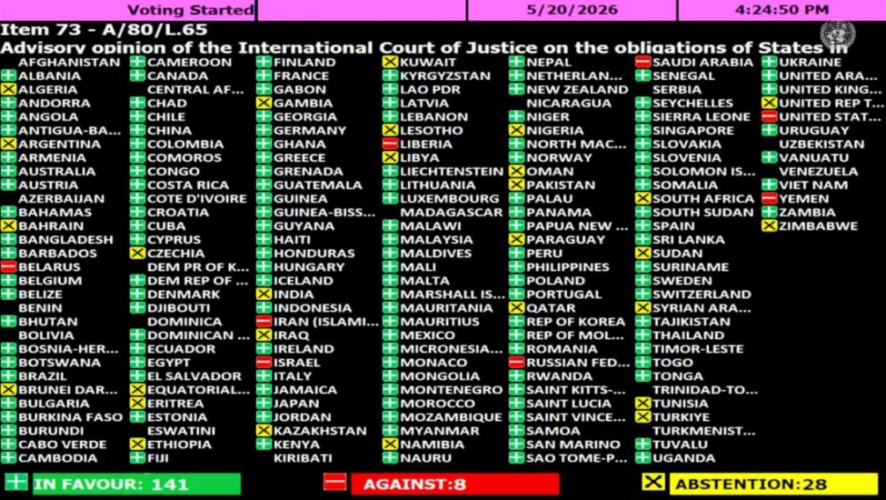
Gambiaj.com – (BANJUL, The Gambia) – The Gambia’s decision to abstain from a major international vote on climate accountability has triggered debate among observers and citizens, with critics questioning why a country heavily exposed to climate change impacts chose not to support the measure backed by 141 countries.
The global initiative, aimed at strengthening climate accountability, was widely viewed as an effort to increase pressure on nations and institutions to address the growing climate crisis and support vulnerable countries facing its effects.
The UN General Assembly voted Wednesday on a landmark International Court of Justice (ICJ) ruling that outlines governments have legal obligations to combat climate change, a long-awaited move that could help to protect children’s futures.
The world’s top court ruled last year that states were obliged to tackle climate change under international law, and failing to do so would pave the way for “reparations” to vulnerable countries.
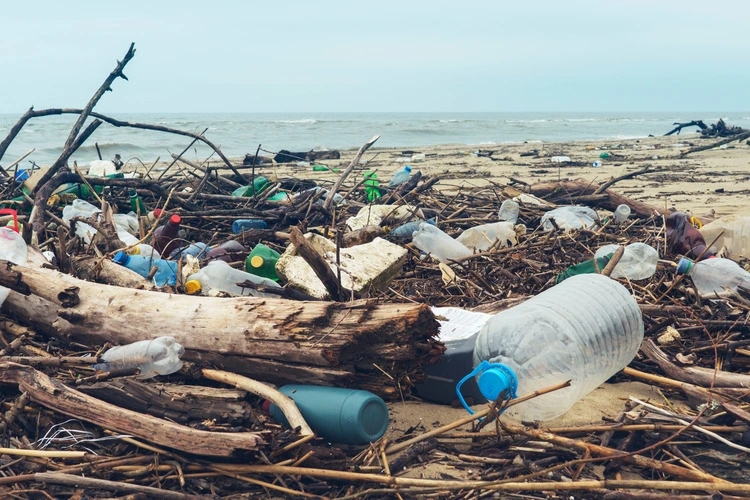
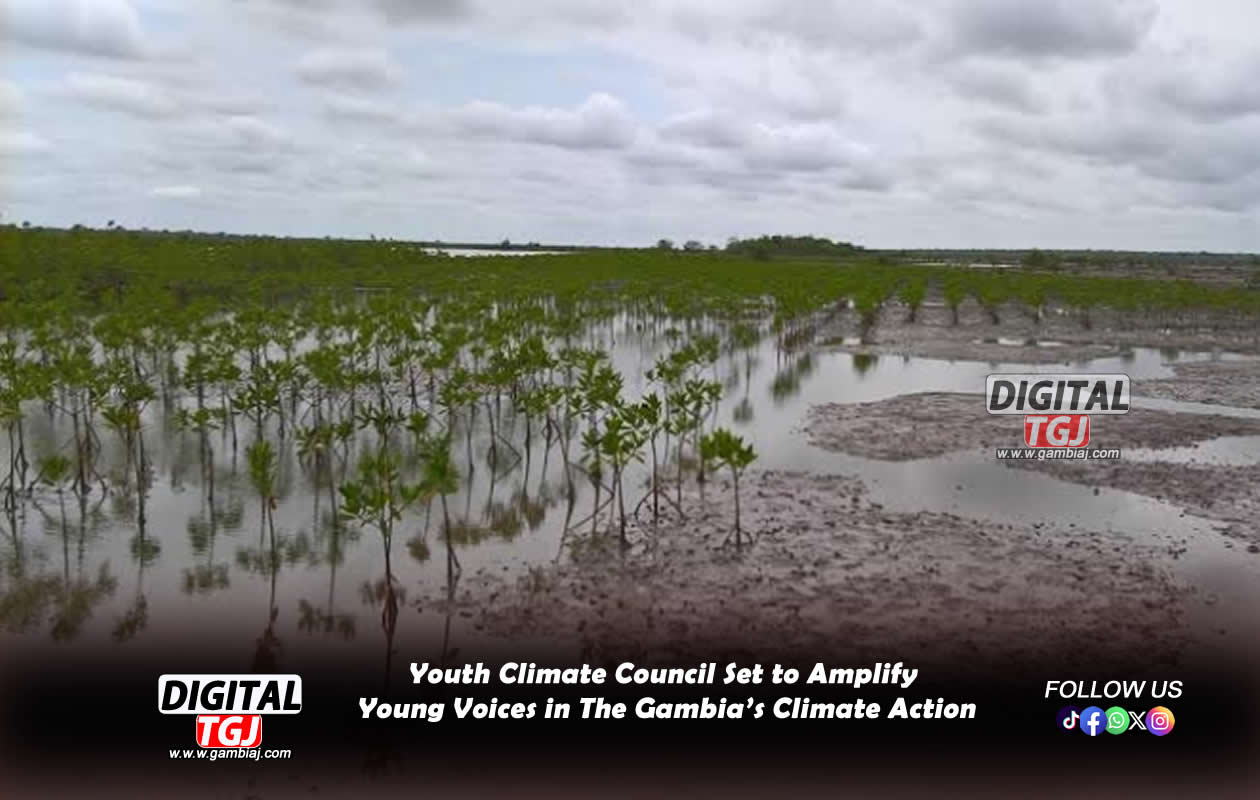
For The Gambia, the abstention has drawn particular attention because the country is already experiencing severe environmental challenges linked to climate change. Coastal erosion continues to threaten communities and infrastructure along the Atlantic coast, while saltwater intrusion is affecting farmland and contaminating drinking water sources in several areas.
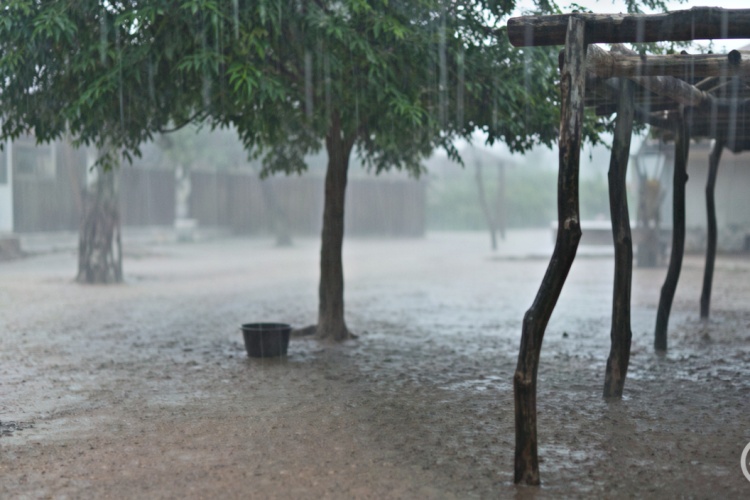
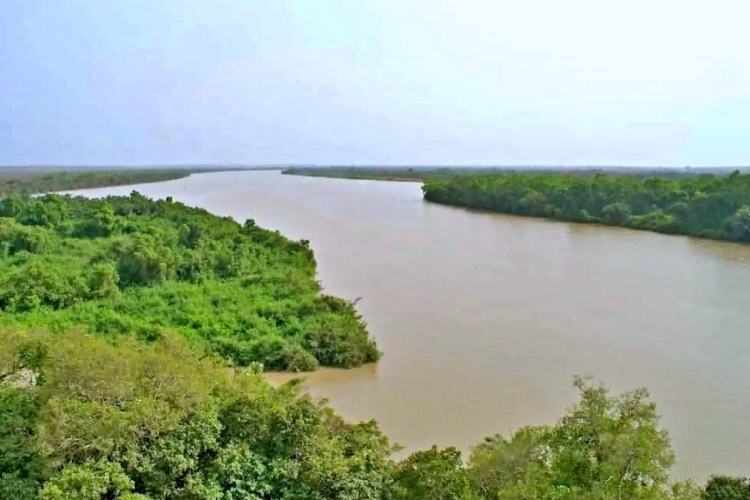
The country has also witnessed more frequent floods and droughts, conditions that are increasingly undermining food production, livelihoods, public health, and the safety of homes in low-lying coastal and riverine communities.
Although the government has not officially explained its position in detail, unconfirmed reports suggest Gambian authorities sought stronger protections for small states and assurances that any new international mechanism would provide practical support without imposing harmful legal obligations on vulnerable nations.
However, critics argue that by abstaining, The Gambia may have weakened its ability to influence the final outcome of the negotiations and reduced opportunities to secure stronger commitments on climate finance and technical assistance.
Observers say the country could have supported the broader principle of climate accountability while continuing diplomatic efforts to improve the implementation framework and address concerns affecting small and vulnerable states.
The abstention has also intensified calls for greater transparency from the government regarding its climate diplomacy and long-term environmental strategy.
Some analysts and environmental advocates are urging authorities to move quickly on adaptation measures, including stronger coastal protection systems, investment in salt-tolerant agriculture, improved water management, and enhanced public health interventions in climate-affected communities.
There are also growing calls for the government to strengthen access to international climate finance to help communities cope with the increasing effects of sea-level rise and changing weather patterns.
Attention is now turning to how The Gambia will approach future climate negotiations and whether its representatives will seek stronger guarantees for vulnerable nations while accelerating domestic resilience programmes.
For many Gambians already facing the realities of climate change, the debate has become more than a diplomatic issue. It is increasingly seen as a question of how the country intends to protect lives, livelihoods, and land in the face of a worsening environmental crisis.











Leave a Reply