


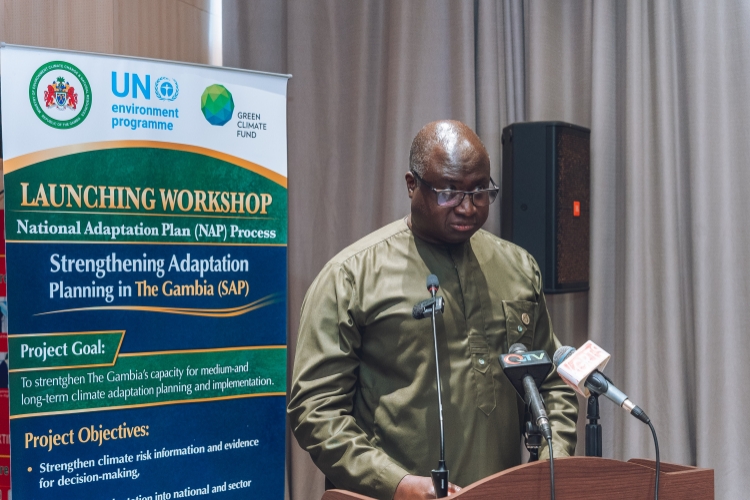
Gambiaj.com – (BANJUL, The Gambia) – The Gambian government has launched a new National Adaptation Plan (NAP) Readiness Project aimed at strengthening the country’s response to climate change and improving long-term resilience planning.
The initiative, supported by the Green Climate Fund and implemented through the United Nations Environment Programme, was officially launched on Thursday at the Sir Dawda Kairaba Jawara International Conference Centre.
Speaking during the launch, officials from the Ministries of Finance and Environment warned that climate change is increasingly becoming both an economic and development crisis for The Gambia.
The Permanent Secretary at the Ministry of Finance and Economic Affairs said climate shocks are placing growing pressure on public finances, infrastructure, and essential public services.
“Climate risks are macroeconomic risks,” the official said, warning that climate-related disasters can widen fiscal deficits, increase public debt pressures, and divert resources away from long-term development priorities.
According to the ministry, floods and storms frequently force the government into costly emergency spending, including repairing damaged roads, schools, and health facilities while also providing humanitarian assistance to affected communities.
“Planning ahead is cheaper than rebuilding after damage has occurred,” the Permanent Secretary added.
Officials said the National Adaptation Plan process is intended to shift The Gambia away from short-term and project-based climate interventions toward a more coordinated and strategic national framework.
The Ministry of Environment, Climate Change, and Natural Resources noted that climate change is already affecting communities across the country, particularly farmers, fishers, and businesses.
“Climate change is no longer a distant threat,” ministry officials stated during the opening session. “It is already shaping the daily realities of Gambian families.”
The ministry added that adaptation has become essential for protecting vulnerable communities and safeguarding development gains.
Under the new initiative, authorities will identify major climate risks, prioritize adaptation measures, and integrate climate resilience into national planning and budgeting systems.
Officials also stressed the importance of linking adaptation priorities to financing and investment decisions.
The Director of Climate Finance and National Designated Authority to the Green Climate Fund said the project would strengthen national coordination around climate finance and improve The Gambia’s ability to attract adaptation funding.
“We encourage an early focus on developing a pipeline of well-prepared adaptation investments that can attract climate finance and deliver measurable resilience benefits for communities,” the official said.
The Ministry of Finance further disclosed that the government recently adopted new Public Investment Management Guidelines aimed at integrating climate resilience considerations into public infrastructure planning and investment decisions.
Development partners were also urged to align funding and technical assistance with priorities emerging from the NAP process.
The launch workshop brought together government ministries, development partners, and technical experts to begin discussions on the country’s long-term climate adaptation planning framework.









Leave a Reply