


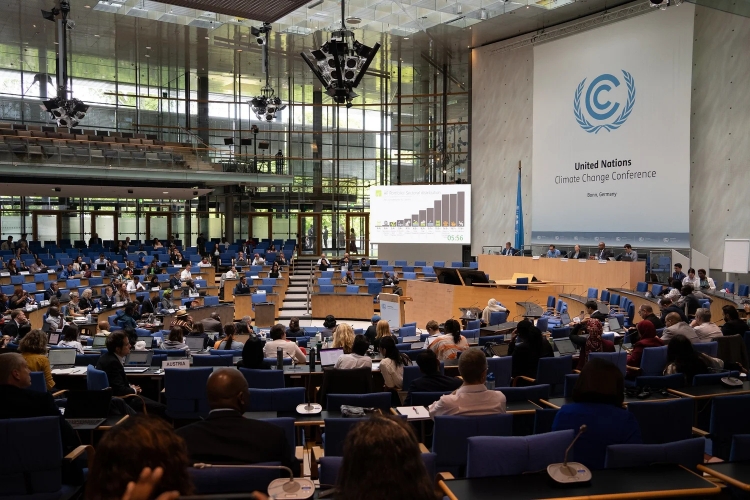
Gambiaj.com – (BANJUL, The Gambia) – A new media accreditation system introduced by the United Nations Framework Convention on Climate Change ahead of its June climate meetings in Bonn is drawing mixed reactions, with officials presenting it as a technical upgrade while journalists warn it could quietly restrict access to critical negotiations.
The reform requires every media organization seeking accreditation to designate a single focal point responsible for coordinating all applications through the UN’s Indico platform. This individual must submit a consolidated list of journalists and ensure that all documentation is complete and consistent.
While the system is framed as a move to streamline processes, reduce duplication, and improve verification, media practitioners argue that it effectively transfers a significant portion of the gatekeeping responsibility from the UN to news organizations themselves.
For major international outlets with established administrative systems, the transition is expected to be manageable. However, smaller and less-resourced newsrooms, particularly across Africa, Latin America, and parts of Asia, may struggle to adapt.
Many operate with limited staff and rely on freelance networks, making them more vulnerable to delays or errors that could affect multiple reporters simultaneously.
“Efficiency should not come at the expense of inclusion,” a media rights advocate said, cautioning that accreditation frameworks for global climate events must reflect the structural realities of diverse media institutions rather than favoring well-resourced organizations.
Another journalist familiar with previous UN climate negotiations noted that the issue is not one of outright exclusion, but rather the gradual introduction of procedural layers that make access more difficult, especially for under-resourced outlets.
The UN climate body has maintained that accreditation is granted only to bona fide media organizations and handled on a case-by-case basis to preserve the integrity and security of its meetings.
However, press freedom groups have long warned that such discretionary systems risk creating what they describe as “soft exclusion,” where access is narrowed through administrative complexity rather than explicit denial.
Concerns about access are not new. Journalists from the Global South have repeatedly reported visa delays, accreditation bottlenecks, and logistical hurdles at past climate summits, limiting their ability to report from within negotiation venues.
Critics argue that the new model, while not directly exclusionary, could exacerbate these existing disparities by shifting the burden of compliance onto organizations rather than individual reporters.
Beyond procedural implications, observers stress that the issue carries broader significance. Climate conferences serve not only as negotiation platforms but also as arenas where global narratives are shaped. Who is able to report from inside these meetings can influence how issues such as climate justice, financing, and accountability are understood worldwide.
If access increasingly hinges on administrative capacity, analysts warn, the diversity of perspectives in climate reporting could narrow without any formal restriction being imposed.
The UN says the overhaul is designed to enhance service delivery and prepare for greater automation in handling large volumes of applications. Yet critics caution that standardization in inherently unequal systems often advantages those already equipped to comply.
As the Bonn meetings approach, attention is turning to how the new system performs in practice. For many journalists, the real measure will not be its efficiency on paper but whether it enables equitable access on the ground.




Leave a Reply