


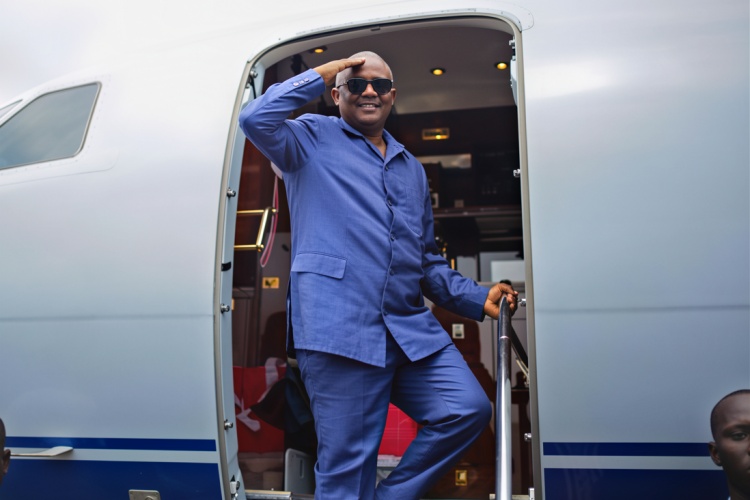
Gambiaj.com – (BISSAU, Guinea-Bissau) – As Umaro Sissoco Embaló prepares to return to Bissau and seek the presidency, the emergence of Ilídio Vieira Té and his new PPG raises a deeper question: is the transition quietly preparing the ground for Embaló’s political comeback, or is a former ally building the machinery that could ultimately replace him?
Guinea-Bissau’s military transition is approaching its most politically delicate moment since the overthrow of Umaro Sissoco Embaló in November 2025.
The former president says he will return to Bissau on October 4 and has confirmed that he intends to contest the presidential election scheduled for December 6. His announcement has suddenly placed the military authorities, the transitional government, and Embaló himself on the same political chessboard, but not necessarily on the same side.
What makes the return particularly sensitive is that the transition has never been entirely free of questions about its relationship with the political order it replaced. General Horta N’Tam, now transitional president, had served as Embaló’s army chief before the military takeover. Ilídio Vieira Té, the transitional prime minister, was Embaló’s finance minister and later headed his 2025 presidential campaign.
That history makes the present configuration unusually complicated: two men who were part of Embaló’s political establishment are now at the center of a transition whose outcome could determine whether Embaló himself returns to the presidency.
And beneath the official language of institutional transition, signs of friction appear to be emerging.
A Return That Tests the Military
Embaló has presented his return in deliberately conciliatory terms, calling for harmony, tolerance, and mutual respect and saying that national interest and stability should rise above political differences.
But his planned arrival is not simply the return of an exiled former president.
He is returning as a declared presidential candidate.
That makes October 4 a test of how far the military authorities are prepared to allow the political order they created to accommodate the man whose presidency they displaced.
The question is particularly sensitive because reports cited by Confidentiel Afrique describe disagreements within the presidential military security establishment over Embaló’s return, including claims of changes to the security arrangements surrounding elements associated with his former protection detail. Those claims have not been publicly confirmed by the transitional authorities.
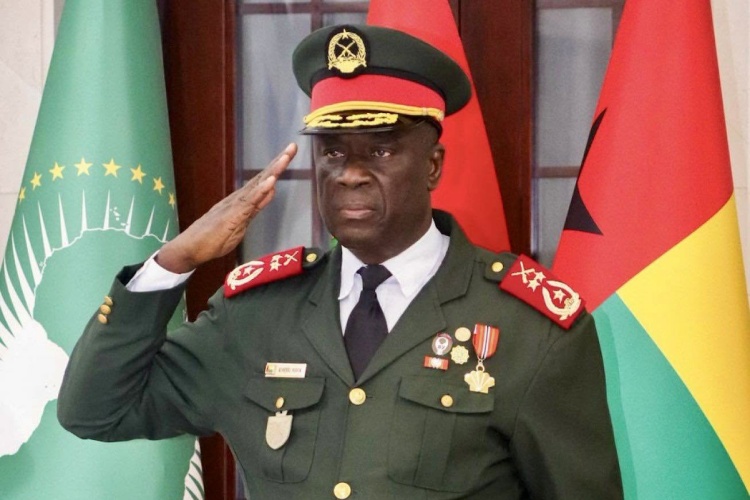
Horta N’Tam, meanwhile, has taken a notably open public position. Asked about Embaló’s possible return, he said that any Bissau-Guinean was free to return to the country. His statement has effectively left the door open, even as speculation continues about what the security apparatus will actually do when Embaló arrives.
That gap between the public position of the transitional president and reports of unease inside parts of the military establishment is one of the most important uncertainties surrounding the October 4 return.
Ilídio Vieira Té: The Former Insider Building His Own Centre of Power
The more intriguing figure, however, may be Ilídio Vieira Té.
His political journey since November has been remarkable. He moved from being a senior figure in Embaló’s administration and campaign to becoming prime minister of the military transition. He is now associated with the creation of the Partido Popular Guineense, or PPG, a new political formation preparing to enter the post-transition electoral arena.
That creates two very different readings of what is happening.
The first is that Vieira Té could be preparing a political vehicle through which the Embaló camp can return to power without Embaló himself needing to immediately dominate the political structure.
The timing is difficult to ignore. The PPG appeared after the constitutional changes and amid a reshuffling of Guinea-Bissau’s established parties. Reports have linked the new party to defections and political realignments from existing formations, suggesting that Vieira Té is not merely preserving a personal political profile but attempting to construct an organization capable of competing for influence after the transition.
If that interpretation proves correct, the PPG could become a bridge between the military transition and the political network that surrounded Embaló.
In that scenario, Embaló’s return would not necessarily represent a rupture with the transition. It could instead amount to a carefully managed re-entry into the political system through a structure built by one of his former political lieutenants.
But there is another, potentially more consequential interpretation.
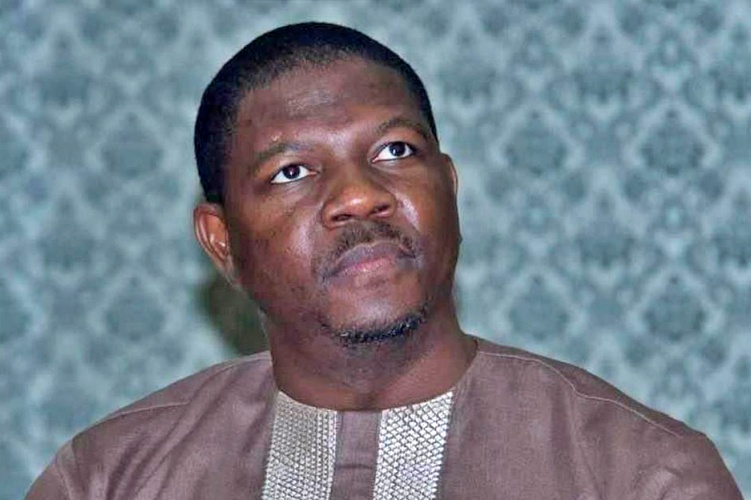
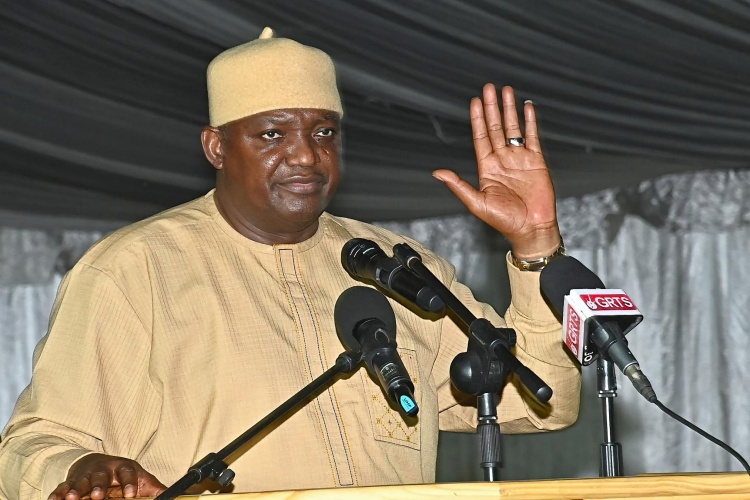
Former Minister of Finance of President Umaro Sissoco, Embaló Ilídio Vieira Té is currently serving as the 24th prime minister of Guinea-Bissau under Transition leader President Horta Inta-A Na Man since 2025.
Is Vieira Té Preparing for a Post-Embaló Politics?
Vieira Té has gone out of his way to reject the idea that the PPG is an Embaló vehicle.
In an interview published this month, he acknowledged his political history with the former president but insisted that past proximity did not mean present subordination. He said the PPG was not created as an extension, substitute, or political platform for Embaló and declared that there would be no “hidden presidents” or parallel centers of decision-making within the party.
That language is significant.
Vieira Té is not presenting himself as a caretaker of Embaló’s political inheritance. He is presenting himself as the author of a new political project.
He has also said that Embaló’s political future is ultimately for Embaló himself to decide, while stressing that the PPG will develop its own identity, program, and alliances.
If taken at face value, that points towards a different political calculation: Vieira Té may be building a machine that can survive independently of Embaló and potentially compete with him once the transition ends.
That would make the former relationship between the two men less important than it initially appears.
Embaló may have once had Vieira Té as a minister and campaign director. But the political equation could now be reversed. Embaló is preparing to return from exile with the intention of reclaiming the presidency, while his former political associate is already assembling an organization capable of negotiating the post-transition landscape.
In other words, the political transaction created by the November takeover may not have settled the question of who inherits the political space around Embaló.
It may have merely displaced that contest into the transition.
The Junta’s Dilemma
This is where the apparent tensions within the transition become important.
The military needs a political process that can eventually produce civilian legitimacy. But the emergence of political actors with competing interests inside the transition makes that process increasingly difficult to control.
Horta N’Tam is constitutionally positioned to oversee the transition but cannot himself contest the next election under the transitional framework. Vieira Té faces the same restriction under the transitional charter.
The charter therefore formally separates the two principal civilian and military faces of the transition from the immediate presidential contest.
Embaló is in a different position.
The transitional charter does not expressly place him in the same category as Horta N’Tam and Vieira Té. The new constitutional framework also does not explicitly name Embaló as someone barred from seeking the presidency. That has allowed his supporters to argue that his political future remains open.
There is, however, an important legal complication: the new constitutional framework reportedly requires presidential candidates to have maintained permanent residence in Guinea-Bissau for the five years immediately preceding their candidacy.
Since Embaló has lived outside the country since the November 2025 takeover, that requirement could become the subject of a legal dispute over his eligibility.
So even before voters decide Embaló’s fate, the courts, electoral authorities, or political actors could become part of the contest.
The Question Behind the PPG
This is why Ilídio Vieira Té matters so much.
If the PPG ultimately aligns with Embaló, it could provide a political bridge through which the former president and the transition’s political establishment remain connected after the military formally returns power to civilians.
If it instead develops as an autonomous force, Vieira Té could become one of the principal beneficiaries of the very transition that removed his former political patron.
Neither scenario has yet been conclusively established.
What is clear is that Vieira Té is attempting to move beyond the identity of “former Embaló insider.” His public statements increasingly describe the PPG as an independent political organization, while his emergence has coincided with movement within established parties and a broader reshaping of Guinea-Bissau’s political field.
That makes the PPG more than a footnote to Embaló’s return.
It could become the instrument through which Embaló returns to the center of politics or one of the structures that makes his return to the presidency considerably more difficult.
A Transition That Has Not Yet Decided Embaló’s Fate
The irony is that the military takeover may have removed Embaló from office without definitively removing him from the political equation.
His return now forces the transition to confront a problem it has so far been able to postpone: what happens when the man overthrown by the military seeks to re-enter the political system created after his removal?
The answer may depend less on Embaló himself than on the relationships that have developed around him since November.
Horta N’Tam appears publicly to favor an open door. Parts of the security establishment are reportedly less comfortable. Vieira Té insists that he has moved beyond political subordination to his former president. And the PPG is attempting to establish itself as an autonomous political actor.
That leaves Guinea-Bissau with an unusually fluid political equation.
Embaló may return, expecting to resume the political battle that was interrupted in November 2025. But he may find that the political landscape he left behind has changed, including among former allies.
The October 4 return will therefore be more than a homecoming. It will be an early indication of whether the post-coup order is quietly making room for Embaló’s political comeback or whether the transition has produced a new generation of political actors determined to build a future in which his influence is no longer central.





Leave a Reply