


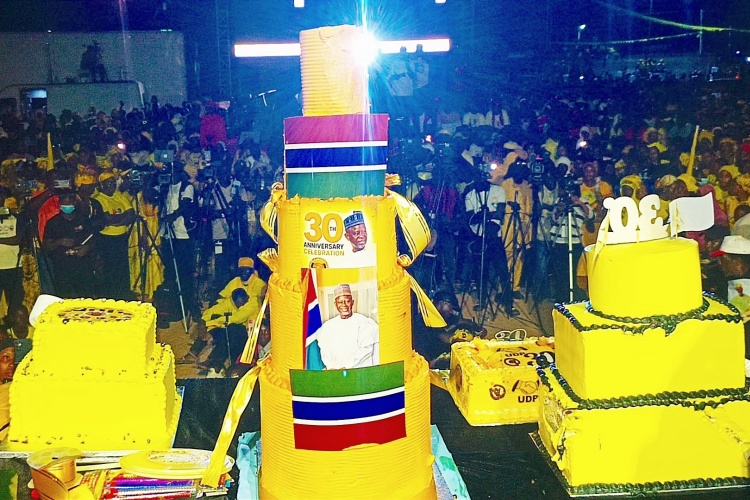
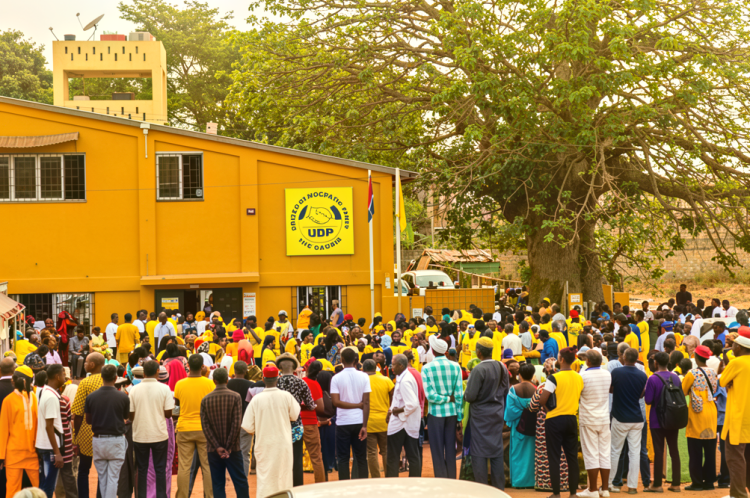
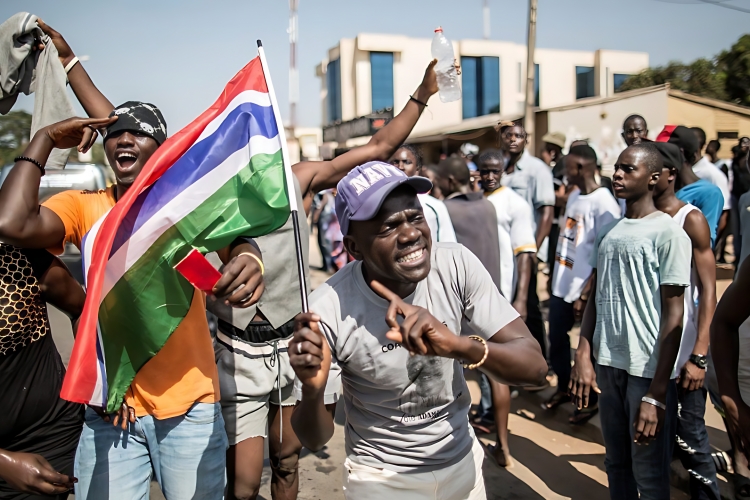
Gambiaj.com – (BRIKAMA, The Gambia) – United Democratic Party (UDP) leader Ousainou Darboe has expressed confidence that the party will win The Gambia’s December 5 presidential election, telling thousands of supporters in Brikama that the UDP is poised to complete the democratic struggle that began with its formation three decades ago.
Speaking at the UDP’s 30th anniversary celebration at Brikama SSP on Sunday, Darboe presented the upcoming election as a decisive moment for the country and called on Gambians to unite behind the party to unseat President Adama Barrow through the ballot box.
“Let’s forget about tribalism; let’s forget about our differences. Let’s unite to salvage this country,” Darboe told the gathering, which brought together UDP supporters, alliance partners, political leaders, and members of the media.
He said the UDP was established at a critical point in The Gambia’s political history, when democratic institutions had been weakened and constitutional rule had been undermined.
“UDP came at a time when our country was at a crossroads, when democracy was rigged, when our constitution was butchered, when one-man rule was installed,” he said.
Darboe said the party’s founding and subsequent struggles were rooted in the demand for democratic governance and argued that the December election provides an opportunity for Gambians to advance that cause.
Confidence in December victory
With less than four months to the presidential election, Darboe urged UDP supporters to intensify their mobilization and recruit more members, saying the party’s victory would depend on unity and grassroots organization.
“No one is going to write our history for us; we are going to do it by ourselves,” he said.
He called on supporters to put aside political, ethnic, and other differences, framing unity as essential to defeating the incumbent government.
Darboe also called for a free and fair election, saying the UDP and its political allies were committed to an electoral process that reflects the will of Gambian voters.
“We want a free and fair election. That is what UDP wants, and that is what all these political parties want,” he said, gesturing towards representatives of alliance partners present at the event.
Several speakers reinforced the call for political change. Banjul Mayor Rohey Malick Lowe urged voters to support the UDP, while Haruna Jatta, a member of the UDP Alliance, also called for change. Ousman Madike Faal, Secretary-General of the People’s Progressive Party, encouraged the public to support the UDP ticket.
Remembering the fallen
But the anniversary was also marked by an extended tribute to UDP members and supporters who, Darboe said, endured imprisonment, torture, violence, and death during the party’s 30-year history.
“We are not mourning them; we are celebrating them,” Darboe said as he reflected on the party’s fallen comrades and those who survived the years of political repression.
Much of his speech focused on the UDP’s history during the 22-year rule of former President Yahya Jammeh, recounting episodes that he said demonstrated the sacrifices made by opposition activists in the struggle for democratic change.
Darboe recalled September 22, 1996, as one of the darkest moments in the party’s history, saying UDP supporters were ambushed at Denton Bridge and that several young members, including Fa Badjo Darboe and Kebuteh Jafuneh, were tortured.
He said more than 70 injured people were brought to his home the following day.
He also recalled the arrest and beating of Amadou Sanneh by agents of the National Intelligence Agency, saying Sanneh had been targeted for refusing to support the then-governing Alliance for Patriotic Reorientation and Construction.
Darboe said the party’s anniversary was therefore not simply an occasion to celebrate its longevity but also an opportunity to remind younger Gambians of the sacrifices that made the party’s continued existence possible.
Solo Sandeng and the 2016 struggle
Among those Darboe remembered most prominently was Solo Sandeng, the UDP activist whose death in state custody in April 2016 became a defining moment in the campaign against Jammeh’s rule.
Sandeng had been arrested after participating in a demonstration calling for electoral reforms. His death prompted Darboe and other senior UDP figures to take to the streets demanding answers before they were themselves arrested and imprisoned.
Darboe described Sandeng as a man who sacrificed himself for political change and also remembered Lang Marong, Modou Ngum, Kafu Bayo, Nyanging Bojang, Babucarr Camara, and Falang Sonko among those who, he said, paid a heavy price during the struggle.
He argued that some of the reforms sought by those activists have yet to be fully realised.
Darboe specifically criticized the continued existence of restrictions under the Public Order Act, saying the legislation remains an obstacle to political rights and genuine electoral competition.
He also recalled the killing of student demonstrators in April 2000 and confrontations between the UDP and authorities at Fass Njaga Choi and Chamoi Bridge, presenting those events as part of a broader history of resistance to authoritarian rule.
Looking beyond the struggle
While much of Darboe’s speech was devoted to the past, he also outlined some of the priorities he said would shape a UDP government.
He promised greater attention to persons with disabilities and said people living with disabilities could be considered for high-level cabinet appointments.
He also pledged stronger and sustained support for farmers, placing agriculture among the sectors that would receive particular attention under a UDP-led administration.
For Darboe, however, the immediate priority remains the December election and the political change he believes it can deliver.
Three decades after the UDP was founded, he told supporters that the responsibility for completing the work begun by the party’s founders and fallen members now rests with the living.
The anniversary therefore served both as a commemoration of the UDP’s long political struggle and as a rallying point for its campaign to win the presidency on December 5.
Darboe’s message was unequivocal: the party believes its decades-long struggle for democratic governance must culminate in electoral victory, and he called on supporters to unite, expand the party’s ranks, and deliver that victory at the ballot box.




Leave a Reply