


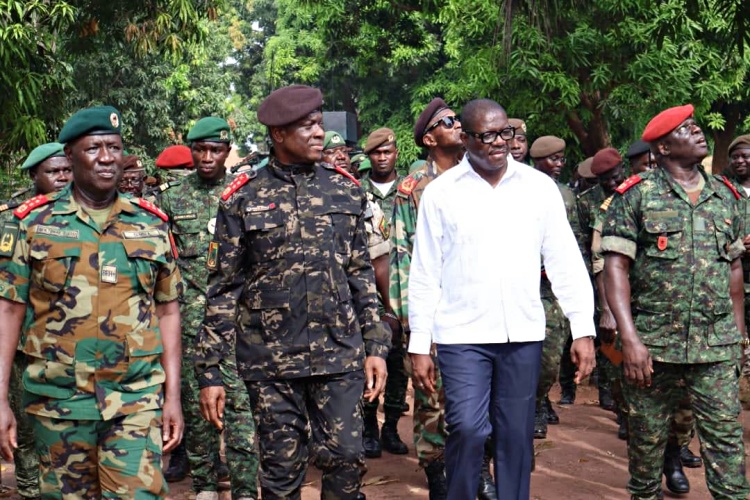
Gambiaj.com – (BISSAU, GUINEA-BISSAU) – Guinea-Bissau’s military authorities have postponed presidential and legislative elections until November 26, 2028, effectively extending the country’s military-led transition by almost two years and raising fresh questions about when civilian democratic rule will be restored.
The decision, announced on Thursday, November 26, by transitional President General Horta Inta-A, replaces December 6, 2026, as the date originally scheduled for the country’s general elections.
Under Presidential Decree No. 35/2026, the authorities say the country lacks the technical, material and financial conditions required to organize credible elections. The decree also cites the need to guarantee legality, transparency, inclusiveness and credibility in the electoral process.
It further identifies the institutionalization of local government through the organization of the country’s first municipal elections as another requirement before the electoral process can be completed.
However, the decision represents a significant extension of a transition that was initially expected to lead to a relatively swift return to constitutional government following the military takeover.
Rather than bringing the country closer to civilian rule, the new timetable leaves Guinea-Bissau under military-led transitional arrangements for nearly two additional years, potentially prolonging political uncertainty and weakening confidence in the authorities’ commitment to restoring democratic institutions.
A Transition With An Expanding Political Timeline
The postponement comes against the background of an increasingly complicated political transition following the military takeover that removed former president Umaro Sissoco Embaló from power.
Since assuming control, the military authorities have sought to restructure the country’s political and institutional landscape, while repeatedly presenting the transition as a process intended to restore stability and prepare the ground for credible elections.
Yet the initial December 2026 electoral timetable had already been accompanied by significant political and institutional obstacles.
Restrictions on political activities, the closure of the headquarters of the African Party for the Independence of Guinea and Cape Verde (PAIGC), and arrests involving opposition figures have raised concerns about the extent to which political parties can operate freely.
The authorities have also faced pressure from regional and international actors, including Senegal and ECOWAS, to establish clear guarantees for the transition, restore political freedoms and ensure that any electoral process is inclusive.
Although there have been indications of some relaxation of restrictions on political activity, the latest postponement complicates the prospects of a genuine political opening.
The central question is no longer simply whether elections will take place, but whether the political environment necessary for meaningful electoral competition will be established before the new deadline.
Ilídio Vieira Té And The Emerging Political Landscape
The extension also comes at a particularly sensitive moment in the country’s evolving political calculations, especially with the emergence of Prime Minister Ilídio Vieira Té as an increasingly prominent figure in the post-Embaló political order.
Vieira Té has become central to the junta’s political and diplomatic engagement, including its efforts to present the transition as a credible process leading towards elections.
His involvement in the creation of a new political formation, the Patriotic Party for Progress (PPG), has attracted considerable attention.
The party’s emergence has fueled speculation that the military authorities could be preparing a political vehicle through which individuals associated with the current transitional administration could participate in a future electoral contest.
Some observers believe Vieira Té could be emerging as the junta’s preferred political figure, potentially replacing Embaló as its choice for the country’s future political leadership.
That perception has gained traction amid the progressive removal of several prominent Embaló allies from positions of influence and the authorities’ refusal to facilitate the former president’s return to the country.
The developments have been interpreted as part of a broader process of de-Embalization of the political order established under the former president.
However, there is no publicly established evidence that the PPG is directly controlled by the military leadership or that Vieira Té has formally been selected as its candidate. Its political significance will depend on how the party positions itself and whether it can establish genuine independence from the transitional authorities.
Nevertheless, its emergence raises questions about whether the transition is simply preparing the country for competitive elections or gradually creating a new political configuration favorable to individuals associated with the junta.
The postponement to 2028 gives such political realignments considerably more time to develop.
What The Extension Means For Guinea-Bissau
The immediate consequence of the decision is that Guinea-Bissau will remain under military-led transitional arrangements substantially longer than initially anticipated.
That carries several implications.
First, the extension risks normalizing military involvement in the country’s political administration. A transition initially presented as temporary could gradually become an extended governing arrangement without a clearly enforceable mechanism for transferring power to elected civilian authorities.
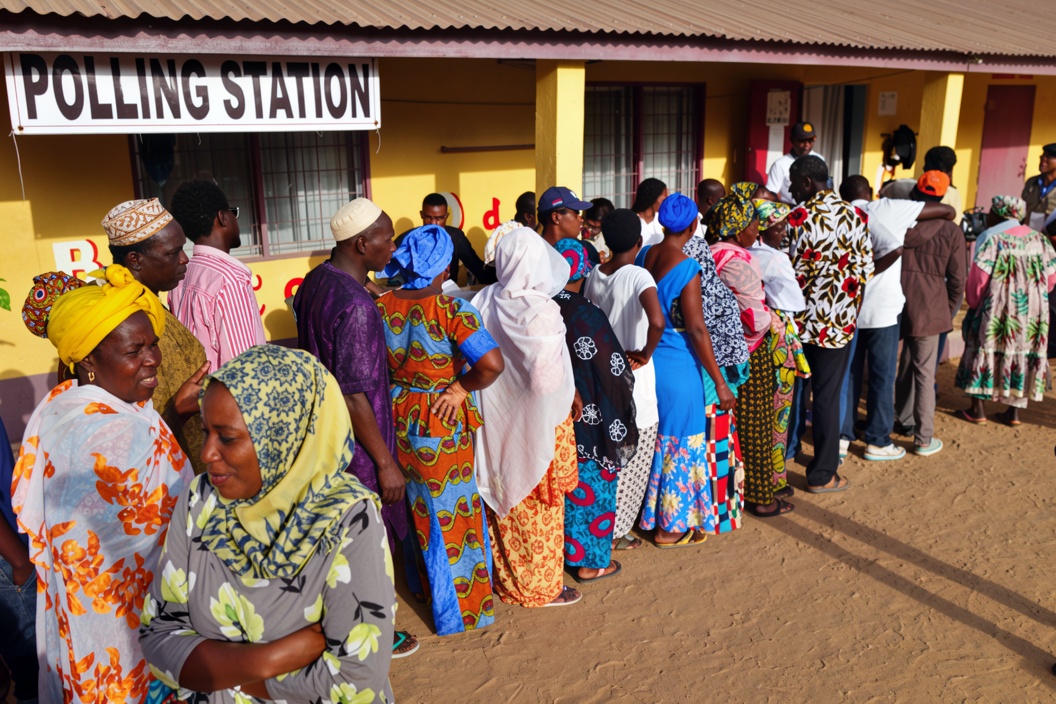
Second, the postponement could further weaken opposition parties and political organizations already operating under restrictions. An election cannot be considered genuinely competitive simply because a date has been announced. Parties must have sufficient time and freedom to organize, campaign, mobilize supporters and participate in the political process without intimidation or arbitrary restrictions.
Third, the new timetable creates uncertainty about the country’s institutional future. While the authorities argue that local elections are necessary to strengthen democratic governance, postponing national elections until those institutional arrangements are completed could become another source of delay unless clear milestones and guarantees are established.
There is also the question of regional credibility. Guinea-Bissau’s political instability has repeatedly tested the ability of ECOWAS and other regional institutions to defend constitutional order and ensure peaceful political transitions.
A further extension of military rule is likely to intensify pressure on regional actors to demand a more transparent and enforceable roadmap towards civilian government.
Ultimately, the credibility of the transition will depend less on the explanations accompanying the postponement than on whether the authorities use the additional time to restore political freedoms, rebuild democratic institutions and create conditions for genuinely competitive elections.
For now, the November 26, 2028 deadline offers a new electoral horizon but also prolongs the uncertainty surrounding Guinea-Bissau’s return to constitutional rule.
The country faces the risk that what was presented as a temporary military intervention could evolve into a prolonged political transition in which the authorities overseeing the return to democracy also retain considerable influence over the political arrangements that will determine its outcome.






Leave a Reply