


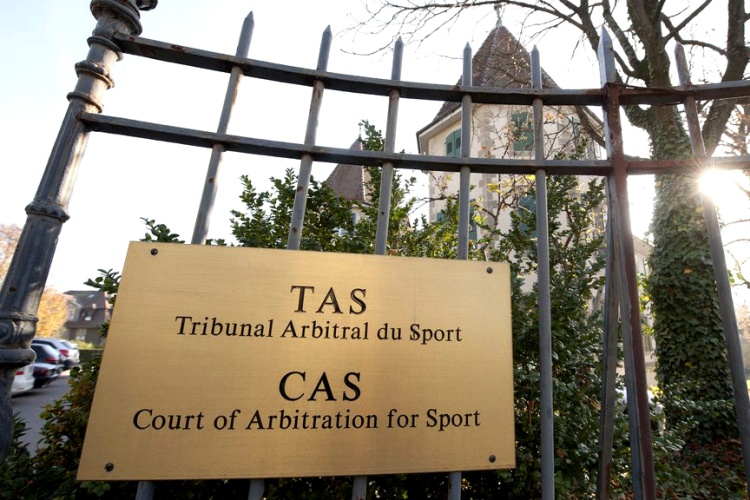
Gambiaj.com – (LAUSANNE, SWITZERLAND) – The Court of Arbitration for Sport (CAS) has overturned the Confederation of African Football (CAF) Appeals Board decision that stripped Senegal of the 2025 Africa Cup of Nations title and awarded it to Morocco, ruling that the referee’s decision to resume the final was decisive in determining its outcome.
In a unanimous verdict, the Lausanne-based tribunal found that referee Jean-Jacques Ngambo Ndala had acted within his authority when he restarted the match after Senegal’s players temporarily left the pitch. It concluded that his decision fell under the “field of play doctrine” and could not subsequently be overturned by CAF on the basis of forfeiture provisions relating to permanently abandoned matches.
The ruling offers an important distinction between two issues that had become central to the dispute: Senegal’s responsibility for its players’ conduct during the final and the authority of the referee to determine whether the match should continue or be abandoned.
It was this distinction that ultimately shaped the tribunal’s reasoning and provided the legal basis for restoring Senegal’s title.
The Legal Battle: Referee’s Authority Versus Forfeiture Rules
The dispute originated from the controversial final, during which Senegal’s players temporarily walked off the pitch before returning to complete the match.
CAF initially accepted the sporting outcome of the final, but on 17 March 2026, its Appeals Board overturned that result, declared Senegal defeated by forfeit, and awarded the trophy to Morocco.
The Senegalese Football Federation (FSF) subsequently appealed to CAS, arguing that the referee’s decision to resume play in the 109th minute (90+19) was a sporting decision protected by the field of play doctrine.
This principle generally prevents judicial and disciplinary bodies from revisiting decisions made by referees in the course of a match, particularly where those decisions concern the application of the laws of the game.
Morocco’s Royal Moroccan Football Federation (FRMF) challenged that interpretation. It argued that the dispute was not simply about a refereeing decision but about the disciplinary consequences of Senegal’s conduct.
The Moroccan federation maintained that Senegal had breached Articles 82 and 84 of the AFCON regulations by leaving the pitch and that the referee should have abandoned the match. It further argued that allowing play to resume amounted to an error of law and an arbitrary exercise of authority.
The central question before CAS was therefore whether the referee’s decision to restart the final could be reviewed retrospectively by CAF’s Appeals Board.
Why The Referee’s Decision Became Decisive
CAS’s reasoning rested primarily on the circumstances surrounding the resumption of play.
After examining the arguments presented by both federations, the arbitration panel concluded that deciding whether to resume a match or stop it permanently fell within the referee’s discretion.
The tribunal attached particular importance to the fact that both teams had returned to the pitch and demonstrated their willingness to continue playing.
By signalling the resumption of the match, Ngambo Ndala had effectively determined that the conditions for continuing the game had been met.
For CAS, this was not a minor procedural decision. It was the exercise of the referee’s authority over the conduct of the match.
The panel consequently determined that the effects of his decision were confined to the field of play, bringing it within the protection of the field of play doctrine.
This finding undermined the foundation of CAF’s decision. If the referee’s decision to resume the match was protected from retrospective review, CAF could not subsequently treat the same incident as grounds for declaring that the match should have ended in a forfeit.
In effect, CAS placed the authority exercised by the referee during the match above the subsequent attempt by CAF’s Appeals Board to change its sporting outcome.
Why Articles 82 And 84 Did Not Apply
Another important element of the ruling concerned the interpretation of Articles 82 and 84 of the AFCON regulations.
Morocco had relied on these provisions to argue that Senegal’s conduct should have resulted in an automatic forfeiture.
However, CAS interpreted the articles as applying to situations in which the behaviour of a team leads the referee to establish that a match has been permanently abandoned.
That distinction was crucial.
The tribunal reasoned that the provisions were intended to determine the outcome of a match when a team’s conduct causes the referee to stop it definitively. They were not applicable where the referee had decided to resume play and allow the contest to reach its sporting conclusion.
Since Ngambo Ndala had restarted the final, CAS found no legal basis for applying those forfeiture provisions retrospectively.
The tribunal therefore concluded that the referee had committed no error of law.
This was arguably the strongest element of Senegal’s case: the regulations invoked by Morocco could not be applied independently of what the referee had actually decided during the match.
CAS Rejects The Argument Of Arbitrary Refereeing
The panel also considered Morocco’s argument that the referee’s decision was arbitrary.
CAS acknowledged that Ngambo Ndala had been operating under extremely tense circumstances. However, it found that the difficult atmosphere surrounding the final did not, in itself, establish that his decision was arbitrary.
More importantly, the tribunal found no indication that his judgement had been influenced by factors external to the game.
This finding reinforced the application of the field of play doctrine. Had CAS established that the referee’s decision was arbitrary or influenced by external considerations, the argument for protecting it from review might have been more difficult to sustain.
Instead, the panel concluded that the referee had exercised his judgment in circumstances that did not invalidate his decision.
Disciplinary Responsibility Was Not the Same as Sporting Forfeiture
Perhaps the most significant distinction in the ruling was CAS’s treatment of the disciplinary consequences of Senegal’s walk-off.
The tribunal did not suggest that Senegal’s conduct was acceptable or that the players and officials were exempt from disciplinary responsibility.
Rather, it noted that the FSF, head coach Pape Thiaw and some players had already been sanctioned by CAF through separate disciplinary proceedings.
This allowed CAS to distinguish between punishing misconduct and changing the result of a completed match.
In the tribunal’s reasoning, disciplinary sanctions could address Senegal’s conduct without necessarily requiring the retrospective annulment of the sporting result.
This distinction was central to the outcome. Morocco’s argument sought to connect Senegal’s temporary departure from the pitch directly to forfeiture, while CAS considered that the disciplinary dimension had already been addressed separately.
The tribunal therefore found no justification for using the same incident to overturn the result of a match that the referee had allowed to continue.
A Defeat For CAF’s Interpretation Of Its Own Regulations
The ruling is also a significant setback for CAF’s Appeals Board, whose decision to award the title to Morocco was effectively overturned because the tribunal rejected its interpretation and application of the forfeiture provisions.
The case raises questions about the relationship between refereeing authority, competition regulations, and the powers of football governing bodies to intervene after a match has ended.
At the center of CAS’s reasoning was the principle that a governing body’s disciplinary authority does not automatically extend to reversing sporting decisions that fall within the referee’s jurisdiction.
Senegal’s victory, therefore, was not based on a finding that the walk-off did not happen or that the team had no disciplinary responsibility. It rested on the legal consequences of the referee’s decision to restart the game.
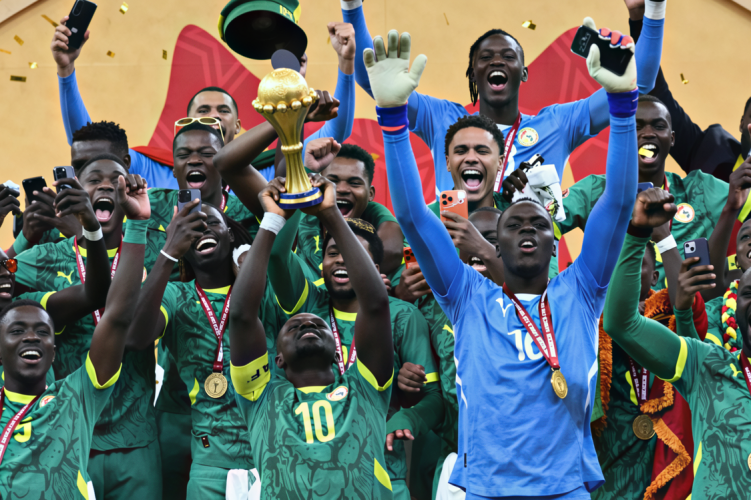
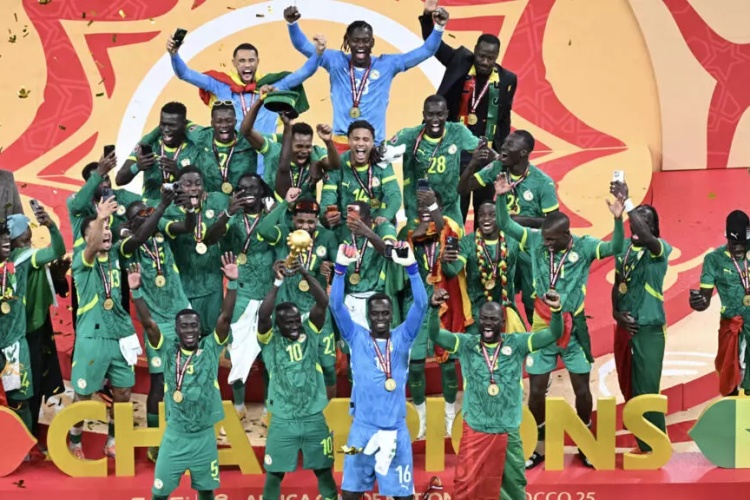
By unanimously admitting the FSF’s appeal, CAS overturned the CAF Appeals Board decision and restored the sporting outcome of the final in Senegal’s favor.
The broader significance of the ruling lies in the boundary it draws between disciplinary accountability and the integrity of decisions made on the field: a team may still face sanctions for misconduct, but that misconduct does not automatically entitle a governing body to rewrite a match result when the referee has exercised his authority to allow the game to continue.












Leave a Reply