



Gambiaj.com – (THE HAGUE – SWITZERLAND) – Veteran war crimes prosecutor and human rights lawyer Reed Brody has hailed the International Court of Justice’s (ICJ) landmark ruling finding Myanmar guilty of genocide against its Rohingya Muslim population as a historic legal triumph for The Gambia and a watershed precedent for global justice.
Speaking in an interview with the BBC on Thursday following the court’s decision, Brody described the verdict as a remarkable achievement given the extraordinarily high legal threshold required to prove genocide under international law.
“Proving genocide is probably the most difficult thing in international law,” Brody said.
To secure the ruling, The Gambia had to establish two distinct legal elements: first, that prohibited acts – such as killings, serious bodily or mental harm, and – occurred; and second, that Myanmar acted with specific “genocidal intent” to destroy the Rohingya group in whole or in part.
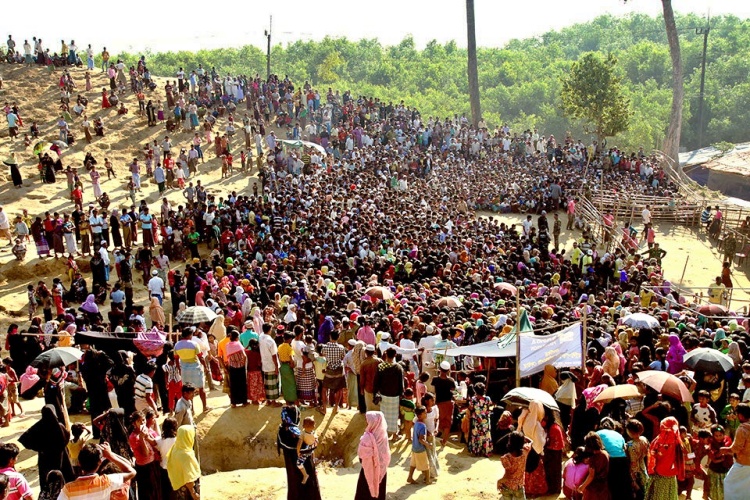
According to Brody, the ICJ judges examined the comprehensive pattern of evidence presented by The Gambia, including coordinated massacres, mass rape, the burning of villages, the murder of children, state-backed hate speech, decades of systemic persecution, and inflammatory statements by Myanmar’s leaders.
From this, the court concluded that the “only reasonable inference” was an intent to destroy a substantial part of the Rohingya population.
A Small Nation Champions International Law
The case, originally filed by The Gambia in 2019 on behalf of the international community, relied on the legal principle that genocide is a crime of universal concern. Under the 1948 Genocide Convention, any state party can invoke another nation’s responsibility even if it has no direct injury or stake in the conflict.
Brody highlighted the stark geopolitical contrast underscored by Banjul’s legal victory at the world’s top court.
“While some of the world’s most powerful states, including the United States and Russia, are openly flouting international law, Gambia, a small West African country with no direct stake, turned to the law to defend the people on the other side of the world,” Brody noted.
However, he cautioned that the historic verdict is only the first step, stressing that the immediate challenge lies in translating the ICJ’s judgment into tangible justice on the ground for Rohingya victims.
Far-Reaching Precedent for Gaza Case
The legal framework successfully argued by The Gambia has already served as a direct template for South Africa’s ongoing genocide case against Israel at the ICJ regarding its military campaign in Gaza. Brody emphasized that Thursday’s ruling carries major implications for that pending case.
In finding Myanmar guilty, the ICJ explicitly rejected Naypyidaw’s defense that its military crackdown was a legitimate counterterrorism operation. The court established that the existence of an armed conflict or a national security objective does not rule out genocidal intent.
“I think this could be particularly consequential for Israel, which defends its military operations in Gaza as a campaign against Hamas,” Brody explained. While noting that the specific facts and evidence in the two cases differ, he underscored the core legal precedent set by the court: “Even if you have a military justification for your operations, you cannot commit genocide.”












Leave a Reply