


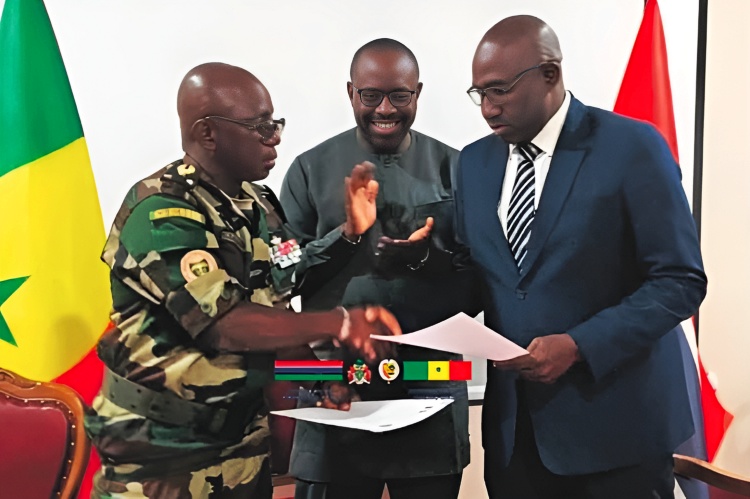
Gambiaj.com – (DAKAR, Senegal) – The Gambia and Senegal have reached a “definitive agreement” on the clear and consensual demarcation of their shared border, weeks after a military incident at Bulock brought renewed attention to long-standing territorial disagreements between the two neighbors.
The Senegalo-Gambian Permanent Secretariat announced the agreement on Wednesday, July 29, describing it as a major step towards resolving outstanding questions surrounding the countries’ common frontier.
According to the Secretariat, the agreement was reached in accordance with the “high instructions” of the Presidents of Senegal and The Gambia, who it said had prioritized dialogue, consultation, and the spirit of fraternity in addressing border-related concerns.
The development comes at a sensitive time in relations between the two countries, following a recent incident involving Senegalese military personnel at Bulock, in the Foni Bintang Karanai area of southwestern The Gambia.
Border Activities to Resume
The Permanent Secretariat said joint activities to reaffirm and densify the southern section of the border will resume on August 15, 2026.
The exercise will cover the stretch running from Touba Tranquil–Dar Salam to Saré Yoro Guèye–Jahanka.
The resumption of the joint border activities is expected to give practical effect to the agreement and strengthen efforts by both countries to establish and maintain clearly recognised border markers along the frontier.
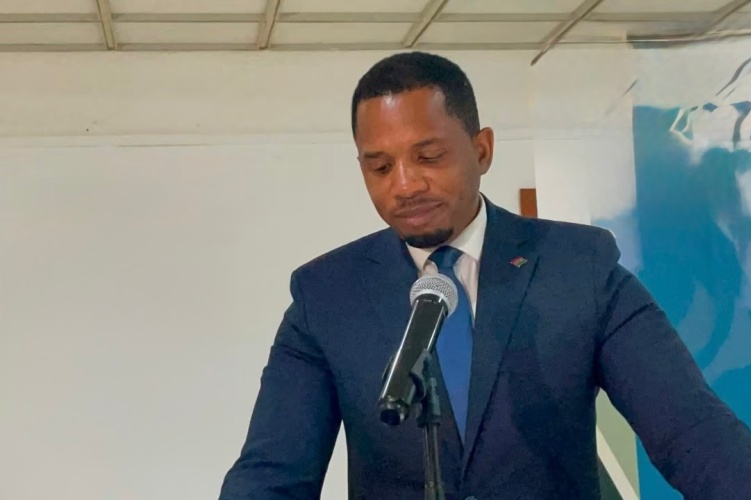
The Secretariat congratulated Alieu Njie, President of The Gambia’s National Boundaries Commission, and Senegal’s National Border Management Commission President, Major General Cheikh M. L. B. Camara, for what it described as their “remarkable efforts” in bringing the agreement to fruition.
Bulock Incident Put Border Disputes Under Spotlight
The agreement follows a tense incident on July 16, when Senegalese soldiers entered the vicinity of a Gambian military post in Bulock and demolished part of its perimeter fence.
The Senegalese side maintained that the area in question falls within Senegalese territory, while the incident triggered concern in The Gambia and raised questions about the precise demarcation of the border.
The incident quickly gained public attention after photographs and video footage circulated widely, prompting the Gambian government to describe the action as “profoundly provocative and totally unacceptable.”
Banjul nevertheless said Gambian soldiers at the scene had demonstrated professionalism and restraint, while diplomatic engagement between the two governments got underway to prevent the dispute from escalating.
Senegal, for its part, acknowledged that the area had been the subject of discussions between the two countries for years, underscoring the longstanding nature of some of the border questions.
The latest agreement could therefore help defuse tensions arising from territorial ambiguities while providing a framework for both sides to address future disputes through established bilateral mechanisms.
A Longstanding Border Question
The Gambia and Senegal share close historical, cultural, and economic ties, with Senegal completely surrounding The Gambia except for its Atlantic coastline.
Their border, however, has for years been affected by disagreements over territorial demarcation, security operations linked to the Casamance conflict, and allegations of cross-border incursions.
The two countries have previously undertaken joint exercises to identify, reaffirm, and reinforce border markers, but sections of the frontier have continued to generate uncertainty and occasional tensions among communities and security forces operating on either side.
The July 16 Bulock incident demonstrated how quickly such unresolved questions can become diplomatic concerns.
The announcement of a definitive agreement now signals a renewed commitment by Dakar and Banjul to settle such issues through dialogue rather than confrontation.
With joint border demarcation activities scheduled to resume next month, the implementation of the agreement will be closely watched, particularly by communities living along the southern frontier where questions over the exact location of the international boundary have historically been most sensitive.









Leave a Reply