


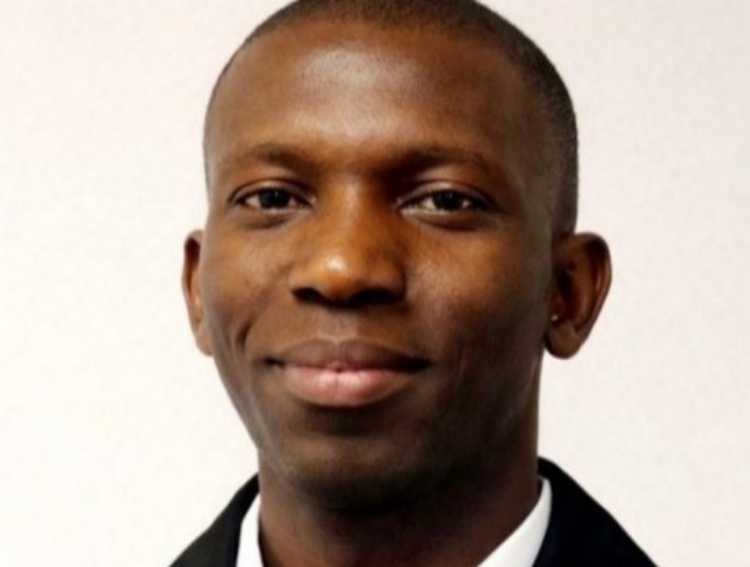
Gambiaj.com – (BANJUL, The Gambia) – The International Federation of Journalists has condemned the arrest and charging of Jollof News Online editor Momodou Justice Darboe, describing the police action as intimidation and harassment against a journalist carrying out his professional duties.
Darboe was arrested at the Banjul Magistrates’ Court on 11 March after photographing two defendants as they left the courtroom following proceedings in a case involving two Austrian nationals accused of disobeying lawful orders. He was later detained and charged with assaulting a police officer.
In a statement, the IFJ said it was joining its Gambian affiliate, the Gambia Press Union, in denouncing what it called “an act of intimidation and harassment meted out to a journalist who was simply doing his job.”
According to the GPU, Darboe had gone to court to cover the case and took a photo of the accused persons after the sitting had ended and while they were outside the courtroom. He later reported that he was attacked from behind during the incident.
Darboe alleged that his phone was forcibly taken from him by Abdoulie Sanneh, the Commissioner for Police Prosecutions, and that he sustained injuries to his hands in the process. He was subsequently arrested and detained for six hours at Banjul Police Station before being granted self-bail.
Police later charged him with common assault, an offense under The Gambia’s Penal Code that carries a prison sentence of up to one year.
The GPU argued that while taking photographs inside a courtroom may amount to contempt of court, there is no law prohibiting journalists from photographing accused persons outside court premises.
The union has called on police to stop harassing journalists in the course of their work, to withdraw the charge against Darboe, and to remove bail conditions requiring him to report regularly to Banjul Police Station.
The IFJ’s position was equally forceful, with General Secretary Anthony Bellanger saying Darboe’s arrest and prosecution were unjustified in a democratic society.
“Darboe’s arrest is an unnecessary display of reckless and brutal force by the police, often used to intimidate and harass journalists and media workers,” Bellanger said.
He added that there was nothing improper about journalists photographing accused persons outside courtrooms, arguing that Darboe had acted in good faith and in the public interest.
“Journalist Darboe acted in good faith, based on the public’s interest and right to know, and cannot be condemned for such an act,” Bellanger said.
The IFJ said it was standing with the GPU in demanding the immediate and unconditional release of Darboe and the dropping of the common assault charge against him.
The case has sparked renewed concern among press freedom advocates over the treatment of journalists in The Gambia, particularly when covering matters of public interest involving the courts and law enforcement.







Leave a Reply