


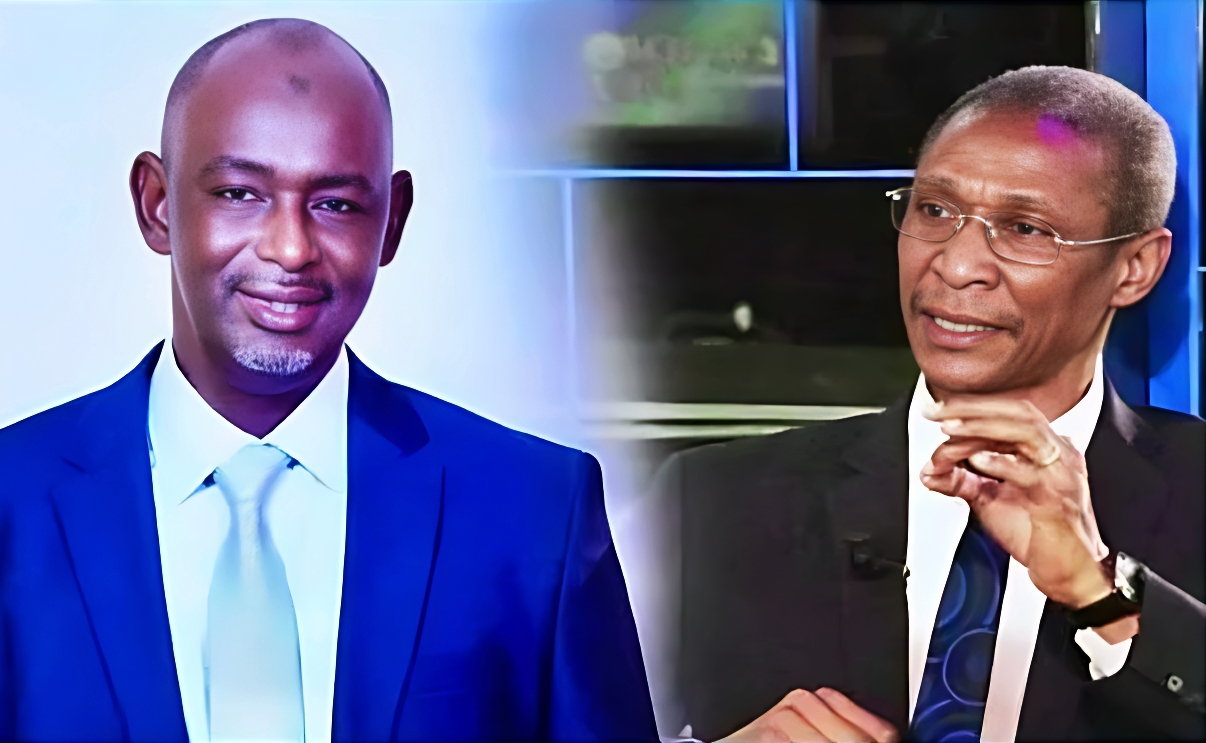
Gambiaj.com – (DAKAR, Senegal) – The decision by Ousmane Sonko to remain Senegal’s Prime Minister has automatically and definitively ended his mandate as a member of parliament, according to a legal and institutional analysis of the country’s constitutional framework by Cheikhou Oumar Sy and Théodore Chérif Monteil, two former members of the Senegalese Parliament au fait with the Standing Orders of the Senegalese National Assembly.
The issue has emerged as a major constitutional question following Sonko’s election as a deputy in 2024 while already serving as head of government. The former parliamentarians argue that Senegalese law leaves no ambiguity regarding the incompatibility between serving in government and simultaneously holding a parliamentary seat.
Under the Standing Orders of the National Assembly, as well as provisions contained in the Electoral Code and related organic laws, two distinct situations are recognized.
The first concerns a sitting deputy who is later appointed minister. In such cases, Article 124 provides for temporary replacement by a substitute while the minister serves in government.
The second situation — which applies to Sonko — concerns an individual who is already a member of government before being elected to parliament. In that case, Articles 123 and 132 establish what the analysis describes as an “immediate incompatibility regime.”
Article 123 explicitly states that the parliamentary mandate is incompatible with membership in government.
The elected official is granted eight days to resolve the incompatibility. Failing that, Article 132 provides that the individual is automatically deemed to have resigned from parliament.
The analysis stresses that Sonko’s case does not fall under the constitutional mechanism allowing deputies appointed to government to later reclaim their seats in parliament. Instead, it argues that by choosing to remain Prime Minister, Sonko “de facto and de jure” relinquished his parliamentary mandate permanently.
As a result, the substitute elected alongside him is considered the definitive holder of the seat for the duration of the legislature rather than a temporary replacement.
The development has also reignited debate over the separation of powers within Senegal’s institutional system.
According to Cheikhou Oumar Sy and Théodore Chérif Monteil’s explanations, the strict enforcement of incompatibility rules is intended to preserve the balance between the executive and legislative branches and prevent the indefinite concentration of political authority in the hands of a single officeholder.
The interpretation further underlines that prioritizing a government position over a parliamentary mandate is not merely a political choice but also carries irreversible institutional consequences under Senegalese law.
More broadly, the case is being presented as a test of the robustness of Senegal’s democratic institutions and constitutional order, with the analysis concluding that legal legitimacy must remain subordinate to established constitutional procedures in order to safeguard institutional credibility and stability.





Leave a Reply