


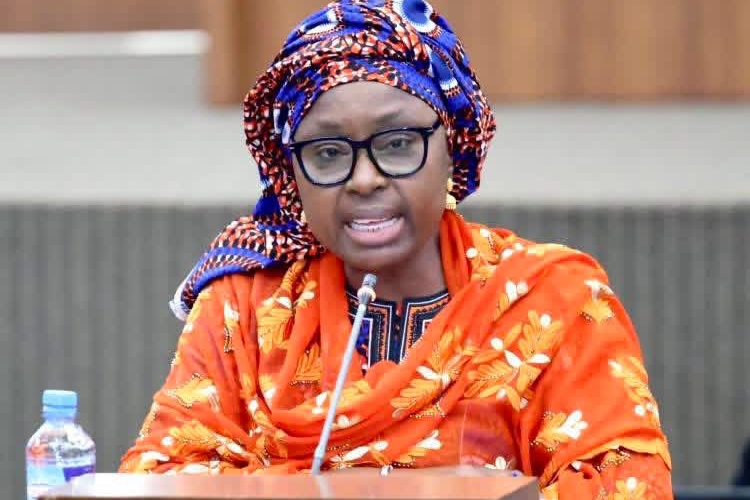
Gambiaj.com – (BANJUL, The Gambia) – Gender Minister, Fatou Kinteh has acknowledged persistent challenges facing juvenile detention facilities, including overcrowding, inadequate resources, and limited vocational training opportunities, while assuring lawmakers that the government is taking steps to strengthen rehabilitation and reintegration services for children in conflict with the law.
The minister made the remarks while responding to the report of the National Assembly Select Committee on Gender, Children, and Social Welfare following its nationwide tour of selected orphanages, rehabilitation centers, and juvenile detention facilities from 5 to 10 May 2025.
The committee’s report highlighted a number of concerns, including staff shortages, limited rehabilitation support, and inadequate infrastructure, which it said were affecting the quality of care and services provided to vulnerable children and young people.
Responding to the findings, Kinteh said the government recognizes the need to further strengthen child protection systems and ensure that children in detention receive adequate care, counseling, education, and opportunities for rehabilitation.
She said the Ministry of Gender, Children, and Social Welfare, through the Department of Social Welfare, is implementing measures to improve conditions and services at juvenile facilities by expanding rehabilitation programs, enhancing monitoring mechanisms, and increasing support for social welfare officers.
According to the minister, additional social workers have been approved to improve case management, counseling services, and educational support for juveniles in detention.
She added that officers working with children in conflict with the law have undergone further training to strengthen their capacity to deliver effective rehabilitation and reintegration services.
Kinteh also disclosed that the government is supporting vocational and skills-training programs aimed at equipping juveniles with practical skills to help them become self-reliant upon their release. She noted that some beneficiaries have already received scholarships for professional training in areas such as computer studies and other technical fields.
While acknowledging ongoing resource constraints, the minister reiterated the government’s commitment to addressing gaps in infrastructure, staffing, and rehabilitation services through collaboration with development partners and relevant institutions.
She further informed lawmakers that the ministry is developing a coordinated implementation plan, complete with timelines, to address the recommendations contained in the committee’s report.
During the debate, members of the National Assembly urged the ministry to continue prioritizing rehabilitation and reintegration efforts, stressing that juvenile detention centers should serve as places of correction, education, and reform rather than punishment alone.




Leave a Reply