


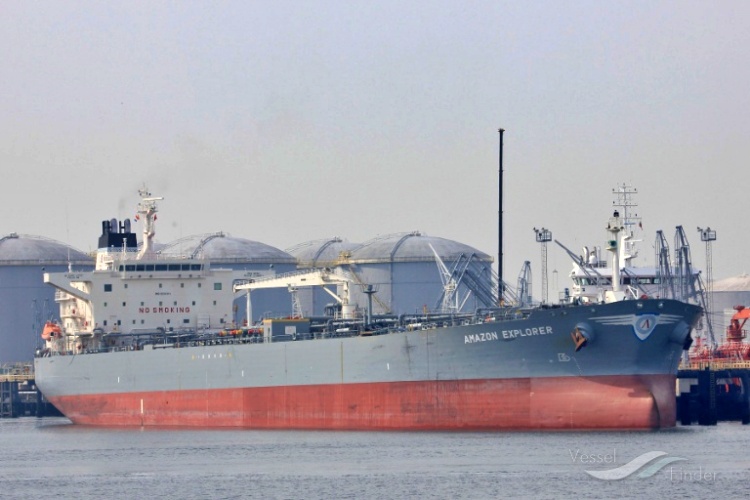
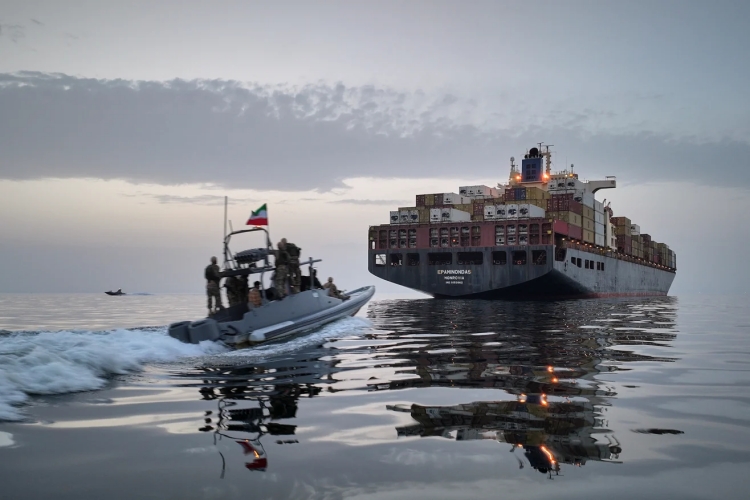
Gambiaj.com – (BANJUL, The Gambia) – A vessel flying The Gambia’s flag has successfully transited the Strait of Hormuz, one of the world’s busiest and most strategically important shipping routes, amid growing concerns that Iran is exercising tighter control over maritime traffic through the narrow waterway.
The vessel has been identified as the YONGTAI (IMO 9231511, MMSI 629009846), an oil products tanker built in 2002 and currently sailing under the Gambian flag.
The tanker is en route to Taiwan at a speed of 15.9 knots and is expected to arrive on August 12 at 16:00. At the time of publication, on July 22, 2026, at 22:23 UTC, the vessel was continuing its voyage on a heading of 123.7 degrees after safely exiting the Strait of Hormuz.
According to vessel-tracking data The Gambia Journal succeeded to obtain, the Gambian-flagged tanker exited the Strait of Hormuz on Tuesday, joining a small number of vessels that have managed to leave the Persian Gulf despite heightened tensions in the region.
The ship’s exact route could not be independently verified because electronic interference in the area disrupted tracking signals.
However, available data placed it near Iran’s Larak Island, where several other vessels have recently been observed sailing close to the Iranian coastline.
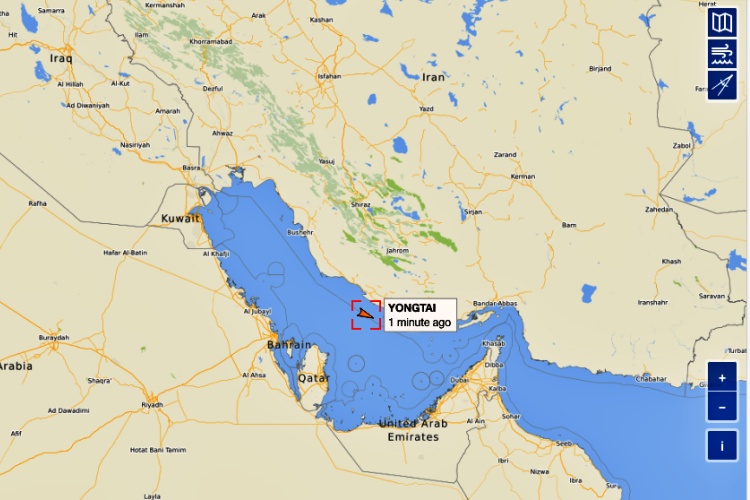
Isolated position of the YONGTAI on July 22, 2026, at 22:23 UTC
Few Vessels Passing Through Amid Iran’s Growing Influence
The Gambian-flagged vessel was among only a handful of ships that have successfully navigated the strait in recent days. A Pakistani-flagged tanker passed through on Sunday, while two India-flagged liquefied petroleum gas tankers and two bulk carriers also completed similar voyages.
Maritime analysts believe these ships may have been allowed to use a route running between Iran’s Larak and Qeshm islands before continuing into the Gulf of Oman.
The route differs from the traditional shipping lane, which normally lies farther from the Iranian coast.
Experts say the emerging pattern suggests Iran may be selectively allowing certain vessels to transit while maintaining strict control over the waterway.
Harrison Prétat, deputy director of the Asia Maritime Transparency Initiative at the Center for Strategic and International Studies (CSIS), said the route appears to depend on Iran’s approval of individual ships.
Analysts believe Tehran could be directing friendly or approved vessels through the coastal corridor while discouraging or attacking ships using the conventional route.
JPMorgan analysts have also suggested that although the Strait of Hormuz has not been officially closed, passage is increasingly dependent on political understandings with Iran.
Global Shipping Disrupted
The Strait of Hormuz has experienced unprecedented disruption following recent military exchanges involving Iran, the United States and Israel.
Several ships have reportedly come under attack in and around the waterway, leaving many vessels stranded inside the Persian Gulf while others have been unable to enter.
The disruption has affected global energy supplies, contributed to fuel shortages in parts of Asia and driven up international oil prices.
Countries including India and Turkey have reportedly sought assurances from Tehran to allow their vessels safe passage through the strait.
Although many ships registered under The Gambia’s flag are owned and operated by foreign companies under the country’s open ship registry, the successful passage of the YONGTAI highlights the country’s indirect connection to one of the world’s most strategically important maritime trade routes.
Shipping and insurance experts caution that vessels sailing close to Iranian waters face increased commercial and financial risks. Insurers may be reluctant to cover voyages through the new route because of sanctions against Iran, while banks financing international cargoes are also closely monitoring ships operating near Iranian territory.
Despite the successful transit of the Gambian-flagged tanker, maritime experts say only a small fraction of the normal volume of shipping has resumed through the Strait of Hormuz, with uncertainty continuing to weigh heavily on global trade and energy markets.







Leave a Reply