


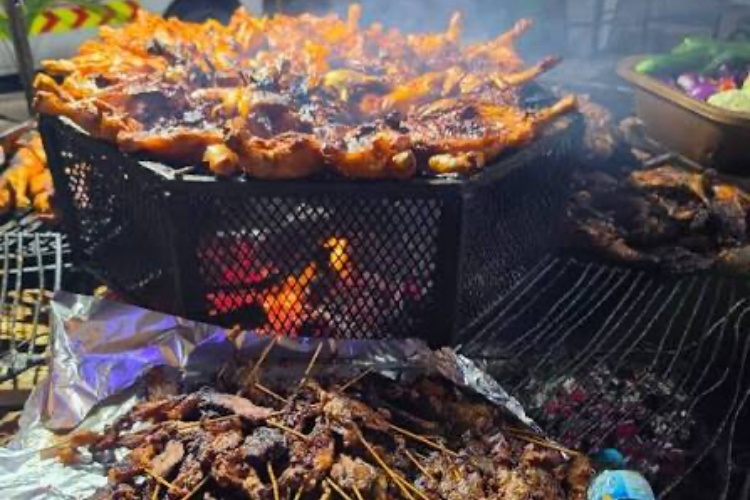
Gambiaj.com – (BANJUL, The Gambia) – I think we need to talk about food hygiene and safety in The Gambia. Last week, I got some pasta from a restaurant I won’t name, and it gave me some serious food poisoning. It got me thinking about all the other times I’ve gone through something similar after ordering food from vendors here. You go to some restaurants sometimes and are genuinely shocked at what their kitchens look like and how carelessly some staff handle your food.
And it goes deeper than restaurants.
You go to the shop to buy bread, and the shopkeeper is just coming out of the bathroom, wipes his hands on his shirt, and then makes you your mburoe pompiterr. For the omelette, they can reuse the same oil mixture for weeks.
Even the most basic things are sometimes overlooked. They don’t wear plastic gloves when serving food, even though these are relatively affordable. And when they finally give you your bread, it is sometimes wrapped in old toubab newspapers that you have no idea where they’ve been or whose hands have touched them, not to mention the ink.
We don’t really do things like population health studies, but I have a feeling that a lot of our health problems may be linked to this complete lack of basic food hygiene.
What you eat determines so much about your life.
In The Gambia, we don’t take preventive health seriously enough. Diabetes and high blood pressure are so common, for example. We go to the dentist to have a tooth pulled when it becomes rotten instead of going for regular check-ups to make sure it never gets to that point.
We have legs amputated, and people die from complications related to high blood pressure instead of paying closer attention to our sugar and salt intake. Yearly health check-ups are treated as a luxury. Our philosophy seems to be that lopitán is for “sick people,” rather than for people who are trying to stay healthy.
But prevention is always better than cure.
Having healthy Gambians means having a healthier and more prosperous country. It also means fewer resources being spent treating preventable illnesses, allowing us to improve the quality of healthcare for everyone.
I keep hearing about “BODOFEL,” which existed before my time, and people usually talk about it with fondness because of the work it did.
What happened to it?
Why doesn’t the Ministry of Health carry out routine inspections to enforce food hygiene regulations? Is it simply a lack of resources or a lack of political will?
It could be something as simple as having a reporting hotline and conducting routine, random inspections of food vendors, restaurants, and other establishments that prepare or sell food.
We need “BODOFEL,” or something like it, back, properly funded, active, and effective.
It is one of the things that makes sense in a country with limited resources: let’s keep Gambians out of the hospital in the first place by making the food we eat safer, cleaner, and more hygienically prepared.
It takes a little work that could go a very long way.
I’m sure there are already laws and regulations in existence that simply need to be properly enforced.
Save our stomachs.

















Leave a Reply