



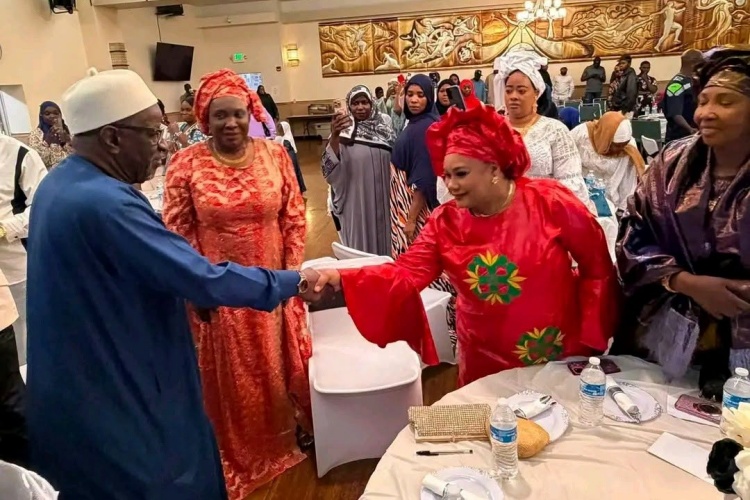
Gambiaj.com – (BANJUL, The Gambia) – While living in Madison, Wisconsin, USA in around the mid-1990s, a Sierra Leonian friend of mine asked me to be his Best Man at his renewal of wedding vows with his wife. Although I am Muslim, I gladly granted his request, rented a tuxedo (which I could hardly afford), and threw myself headfirst into the ceremonies and festivities! We got into a limousine, went to Church, and partied!
My friend and his wife had many friends and family relatives coming to Madison from practically all-over the world to join them in their celebration. People came from the UK, Canada, and many parts of the US, turning the event into a family and national reunion.
It was a festive gathering of very nice, decent and highly educated people, and I remember my friends’ sister-in-law and her husband offering me to pay all expenses whenever I decided to get married. I never took them up on their offer, but such was the extent of their generosity.
One day, as we sat around having drinks and waiting for lunch, I realized that I was the only non-Sierra Leonian in the group. I then thought to myself: how come Sierra Leone, home to all these highly educated and very smart people had descended into a civil war?
The history of Sierra Leone and The Gambia are intertwined since British colonial rule over the two countries. In this vein, the Gambia’s former President Sir Dawda Kairaba Jawara as Chairman of the ECOWAS, championed the creation of ECOMOG, the ECOWAS intervention force which helped end the civil war in Sierra Leone.
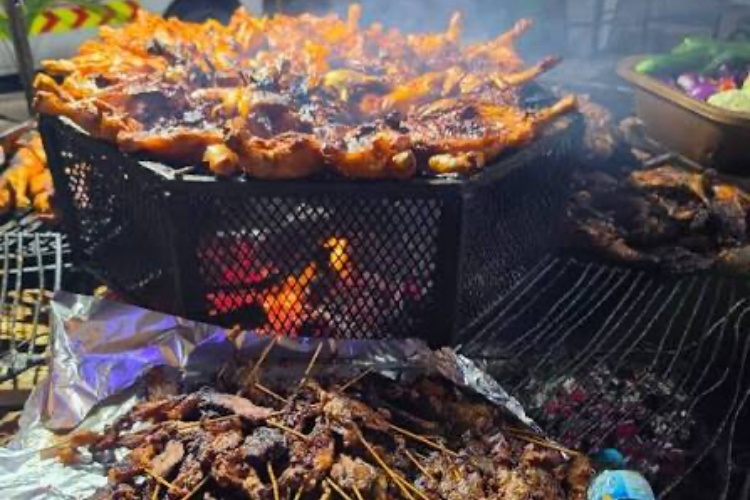
As fate would have it, Gambian soldiers who served in Liberia later mutinied, leading to a successful coup against President Jawara in 1994. Many Sierra Leonians fled to The Gambia to seek refuge from the civil war, and brought along ebeh, which has forever changed the Gambian culinary landscape.
The descent of Sierra Leone into chaos and civil war has lately been on my mind because of recent events in our country, The Gambia. Sierra Leone didn’t just wake up one morning and found themselves in a civil war. The circumstances (such as corruption and the consequent failure of the State) which led to the civil war were a long time in the making, but were ignored.
Although civil strife, popular uprisings, and military coups often break out spectacularly, as happened against the Shah Mohammad Reza Pahlavi of Iran (January, 1979), Ignatius Kutu Acheampong of Ghana (June, 1979), “Baby Doc” Duvalier of Haiti (February, 1986), our own President Jawara (July, 1994), and Muammar Gaddafi of Libya (October, 2011), hndsight shows that all these rulers laid the foundation for their own downfall.
One of the worst enemies of power is hubris: the arrogance and insensitivity of the powerful and ruling class who think that a docile population would forever accept any hardship brought upon them. This arrogance can manifest itself in many ways, including abuse of human rights and civil liberties, and in the emergence of corruption as a norm.
Almost 10 years after former President Yahya Jammeh was voted out of office, corruption has been normalized in The Gambia, and hardly a day goes by without a scandal breaking out about massive corruption by government officials, and those who aid and abet them. In many respects, matters have gotten worse precisely because the leadership has failed to address corruption and serve as role models of probity.
Although many Gambians, under President Jammeh, feared him, not God, they now fear neither God nor President Barrow. As a result, rampant corruption by wicked public officers is getting worse.
In the past few days, Gambians were shocked to see an official letter showing that in 2021 government officials from Ministers to Permanent Secretaries, and down to drivers and cleaners were paid “honorariums” from compensation the international oil giant BP paid to the Gambia government.
The letter was signed by an official (whose job title was not stated) on behalf of an un-named Permanent Secretary at the Office of the President and addressed to an un-named Permanent Secretary at the Ministry of Finance and Economic Affairs — the perfect obfuscation of a greedy grab of public resources by government officials.
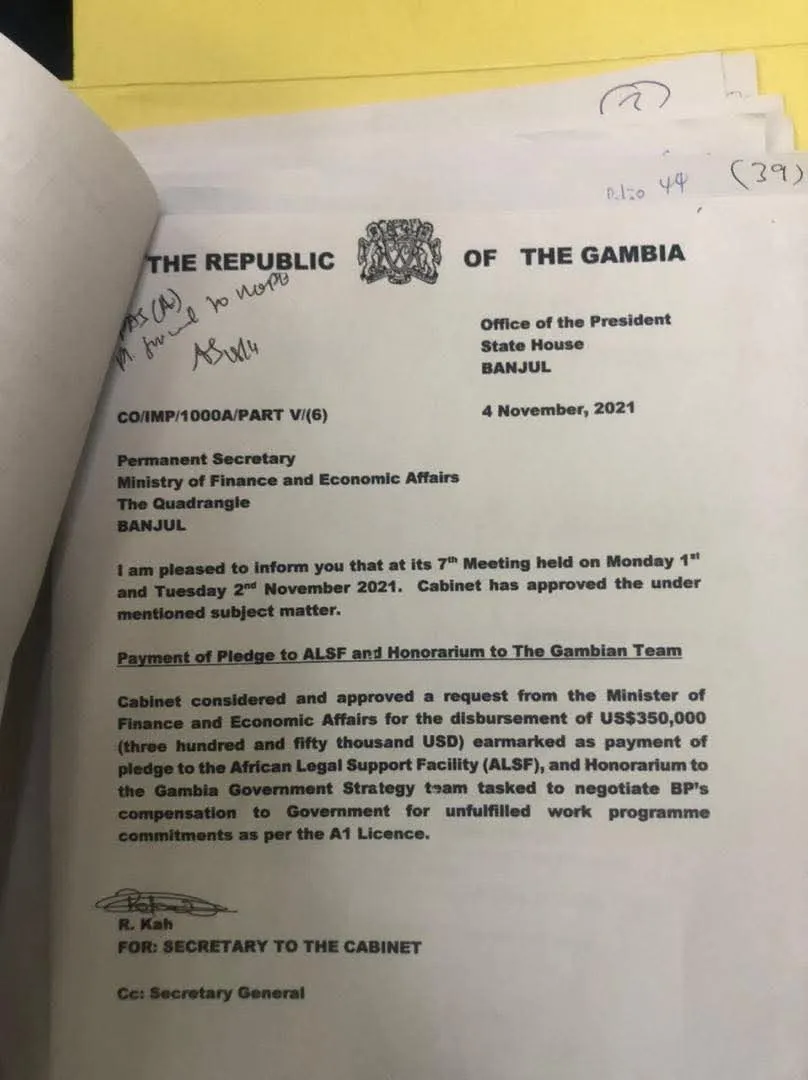
2021 letter on the payment of honorariums to Gambia government officials. Source: Facebook
In two rounds of payments, two Ministers each got D1.2 million, while a Permanent Secretary, the Commissioner of Petroleum, and the Managing Director of GNPC, the national oil company, got D1.1 million each. The wickedness of this is evident when one considers that the lowest paid civil servant in 2021 earned a monthly salary of D1,200 (one thousand two hundred Dalasis); 1,000 (one thousand) times less than what the Ministers were paid as honorariums.
The 2021 bureaucratic heist is not the only corruption scandal that has surfaced recently. A few days ago, the National Assembly Special Select Committee (SSC) submitted its report on the disposal of former President Jammeh’s assets by the Janneh Commission.
The SSC report which showed that the Janneh Commission, which was constituted to investigate President Jammeh’s corruption, itself did not show probity in its disposal of former President Jammeh’s assets.
In the past few days, the Local Government Commission of Inquiry presented to President Barrow its report on its investigation of Local Government Authorities and Municipalities around the country. Although its final report is not yet published, testimonies at its hearings revealed rampant corruption and abuse of office around the country.
In September 2025, 60 Chinese nationals were arrested and later convicted of running cybercrime operations from The Gambia. By any definition, this was a great catch, except for the fact that the National Security Adviser was the landlord of the Chinese criminals.
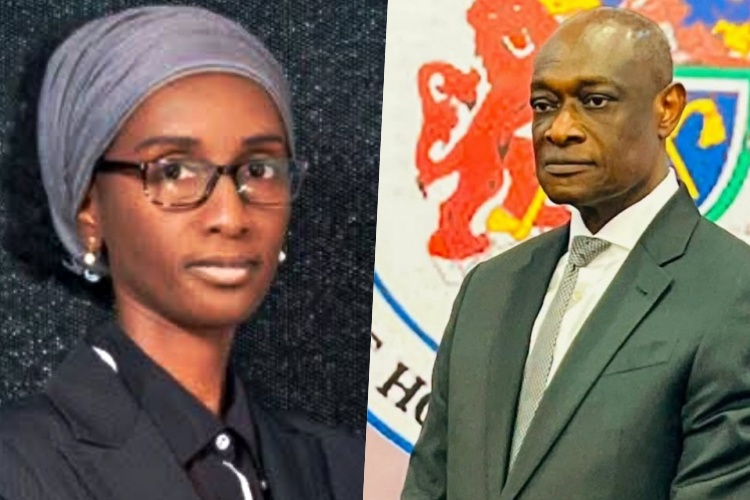
A few days ago, the then Chief of Defence Staff (CDS) of the Gambia Armed Forces (GAF), Lt. General Mamat O. Cham was accused of corruption. The allegations against him were substantiated by documents, and a few days later, General Cham resigned. Although some commended his resignation, and President Barrow ordered an independent Inquiry into allegations against former CDS Cham, others concluded that his resignation is not enough.
If the record of past allegations of corruption is anything to go by, the General Cham matter will soon be forgotten. The next step will probably be his assignment to a plum job in the Gambian foreign service, just as former CDS Lt. General Masaneh Kinteh (Rtd.) is now our Ambassador in the People’s Republic of China.
The rampant corruption that now pervades the Gambian civil service, and Gambian society at large is worrying for various reasons. Sooner or later, people are going to say “enough is enough” and revolt against the government, as has happened in various countries around the world. In addition, corruption is detrimental to our national development efforts because scarce resources are not properly applied to serve the public interest, and the money stolen often ends up in foreign bank accounts.
Corruption leads to a deterioration of public services ranging from electricity and water supplies, health services and the quality of education, and all of these affect us personally. I know, because a friend of mine died in my presence at Serrekunda Hospital when power went out and the ventilator he was on was not connected to a UPS.
Similarly, a niece of mine lost her daughter because they Maternity Ward at the EFSTH in Banjul ran out of oxygen to provide the little girl.
For now, all seems quiet, and many people have concluded that things will remain so because Gambians are a very peaceful people. I would, however, remind them that Gambians are as capable as any other people of being violent. The mass graves which resulted from the 1981 abortive coup attempt prove my point. And that was a full 10 years before a single shot was fired in Sierra Leone in their civil war which started in 1991.
Sierra Leon’s civil war devasted the country, and her people, including my good friends I hung out with in Madison. As it happened, my friend’s mother-in-law decided to return to Sierra Leone after being diagnosed with a terminal illness. She, I was informed, decided that she wanted to die in Sierra Leone, instead of in the US.
Shortly after she arrived in the country to live her last days, the rebels attacked Freetown and kidnapped her granddaughter who was staying with her. Her daughter and my friend’s sister-in-law who offered to pay for my wedding, had a heart attack when she heard the news and died. Mostly terribly, her mother died practically alone after everyone fled Freetown to escape the wrath of the rebels. After the dust settled, her granddaughter was found safe — a bit too late.
Nobody would wish upon The Gambia what happened to Sierra Leone. But we must keep in mind that the more we let a culture of corruption and moral bankruptcy take root and flourish in this country, the more we are setting ourselves for an appointment with conflict and strife.
What we need now, more than ever, is an honest, hard-working leadership that can pull us out of this nosedive we are in. Otherwise, we are, God forbid, doomed and destined to be another African Failed State.
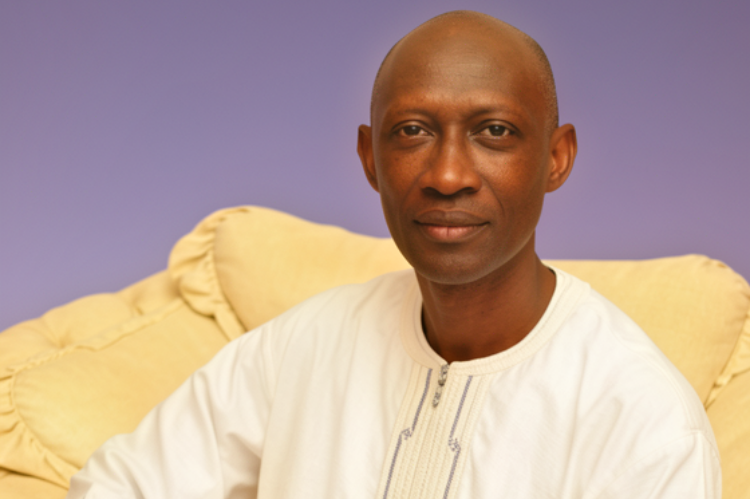
The author, Dr. Katim S. Touray, Ph. D. Is a soil scientist, an international development consultant and a writer on sustainable development and gobal affairs











Leave a Reply