


Gambiaj.com – (BANJUL, The Gambia) – The International Center for Transitional Justice (ICTJ) has warned that The Gambia’s transitional justice process has reached a critical stage, with victims increasingly frustrated by delays and the country facing growing challenges in sustaining the process financially and politically.
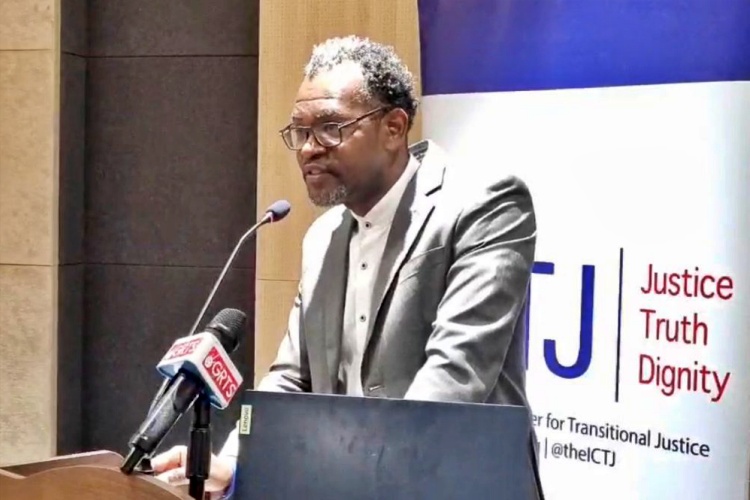
In an article published on the ICTJ website, Didier Gbery, who leads the organization’s work in The Gambia as Head of Program, said the establishment of the Reparations Commission in April 2025 and the appointment of British barrister Martin Hackett in April 2026 as the country’s first special prosecutor for human rights abuses committed during Yahya Jammeh’s 22-year rule were important and long-awaited developments.
According to Gbery, the two developments have raised hopes among victims that the findings and recommendations of the Truth, Reconciliation and Reparations Commission (TRRC) could finally be translated into concrete action.
However, he cautioned that the next phase of the process would require sustained public, political, and financial support, both within The Gambia and from the international community.
Victims Growing Frustrated
Gbery said victims and survivors have become increasingly frustrated by the slow pace of transitional justice, including delays surrounding legal reforms and political negotiations.
“Their exasperation is understandable,” he said, warning that delays in delivering justice could deepen trauma, undermine public confidence, and fuel perceptions that political leaders lack sufficient commitment to accountability.
The ICTJ Head of Programme said victims have carried the transitional justice process for years and “cannot be left waiting any longer.”
He disclosed that an ICTJ monitoring exercise conducted with victims in early 2026 found signs of what he described as “process burnout.”
The exercise identified emotional, cognitive, and physical exhaustion among victims, alongside disappointment with the process and growing disengagement.
Gbery attributed the fatigue to prolonged waiting periods, a widening gap between victims’ expectations and actual outcomes, and declining trust in institutions responsible for implementing the transitional justice agenda.
Funding Threatens Progress
Beyond delays, Gbery identified the declining availability of international assistance as another major threat to the process.
He noted that The Gambia remains largely dependent on international aid to sustain its transitional justice program over the long term.
The sharp reduction in such assistance since January 2025, coupled with changing priorities in international development, could undermine the country’s ability to implement key recommendations emerging from the TRRC, he warned.
Gbery said the country had already achieved significant progress in documenting human rights violations and establishing the foundations for criminal accountability, reparations, and guarantees of non-recurrence.
But he stressed that the critical test now is whether the state can maintain the political will, institutional discipline, and financial resources required to turn those foundations into justice in practice.
A Process Once Seen as a Model
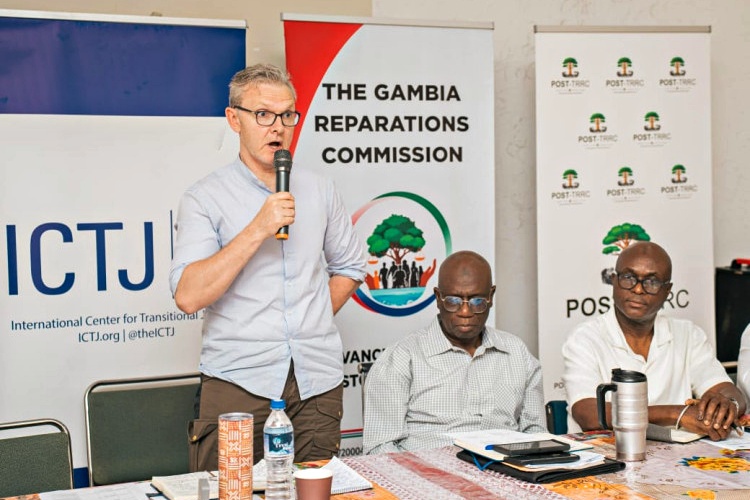
PHOTO: Special Prosecutor Martin Hackett, with representatives of the Reparations Commission to his left, addresses a town hall meeting organized by ICTJ in Brikama, The Gambia, in May 2026. (ICTJ)
The Gambia’s transitional justice programme was launched after Jammeh was forced into exile in 2017 following his refusal to accept the outcome of the presidential election won by Adama Barrow.
The subsequent process, including the TRRC, has been widely regarded as one of Africa’s more innovative transitional justice initiatives.
Gbery highlighted its strong public ownership, participation by the Gambian diaspora, use of information technology, and ability to adapt to local circumstances.
The TRRC, which submitted its final report in 2021, recommended reparations for victims, prosecutions of dozens of people implicated in serious human rights violations, and restorative justice measures.
Following the commission’s closure, the government established a post-TRRC unit to coordinate implementation of its recommendations, while the National Human Rights Commission was designated as the monitoring institution.
The establishment of the Reparations Commission and appointment of a special prosecutor have since added important institutional mechanisms for addressing two of the central demands of victims: reparations and accountability.
“Much More Remains to Be Done”
Despite the progress, Gbery said The Gambia remains at a decisive moment.
He noted that the country is among the few states that have undertaken a national transitional justice process and made substantial progress in implementing the recommendations of a truth commission.
But he warned that abandoning the process at this stage would represent a failure to honor commitments made to victims and the wider Gambian population.
Gbery called on state institutions, politicians, civil society organizations, international justice actors, and donors to maintain pressure and support for the process.
“The Gambian people, particularly victims, deserve justice, healing, and lasting peace,” he argued, stressing that the ultimate success of the process will depend on whether authorities and their international partners can sustain the momentum needed to deliver those outcomes.
For Gbery, giving up now would not only undermine years of work but also risk betraying victims who have consistently advocated for justice and reparations, as well as Gambians seeking reconciliation and lasting peace.








Leave a Reply