


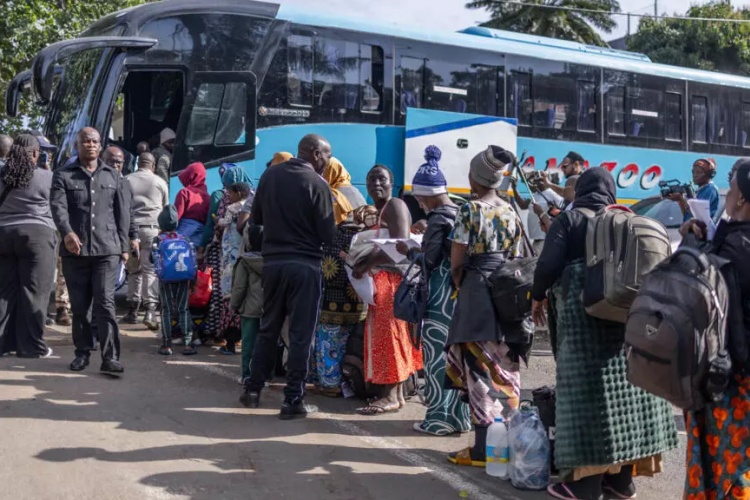
Gambiaj.com (PRETORIA, South Africa) – South Africa is moving to recover nearly 300 million rand (about €16 million) spent repatriating tens of thousands of foreign nationals after a wave of large-scale anti-migrant protests forced the government into emergency deportation operations between late June and early August.
The Department of Home Affairs says close to 90,000 foreign nationals, most of them Malawian citizens, left South Africa during the unrest, though several African governments have put the number even higher. The department has now written to the Malawian government and to the Nigerian and Ethiopian embassies, formally requesting that they help cover the cost of getting their citizens home.
Presenting the figures to a parliamentary committee this week, a Home Affairs representative said the bulk of the expenditure went toward chartering buses to transport people out of the country.
The department also had to set up a temporary processing center in the north of the country to manage the influx of returnees, further straining a budget that had not planned for an operation of this scale.
Home Affairs Minister Leon Schreiber described the scale and speed of the repatriation drive as “unprecedented,” noting that while some countries arranged and paid for their own nationals’ transport home, others simply did not have the resources to do so, leaving South Africa to foot much of the bill.
The push for reimbursement stands in sharp contrast to demands from Ghana and Nigeria, both of which have called on Pretoria to compensate their citizens for harm suffered during the protests, a request South Africa has firmly rejected.
The dispute over who should bear the financial and human cost of the crisis comes as migration policy takes center stage in Durban, where foreign ministers of the Southern African Development Community (SADC) are meeting ahead of a summit of heads of state scheduled for Monday, 17 August. The unrest that triggered the exodus and its regional fallout, is expected to feature prominently in those discussions.
















Leave a Reply