


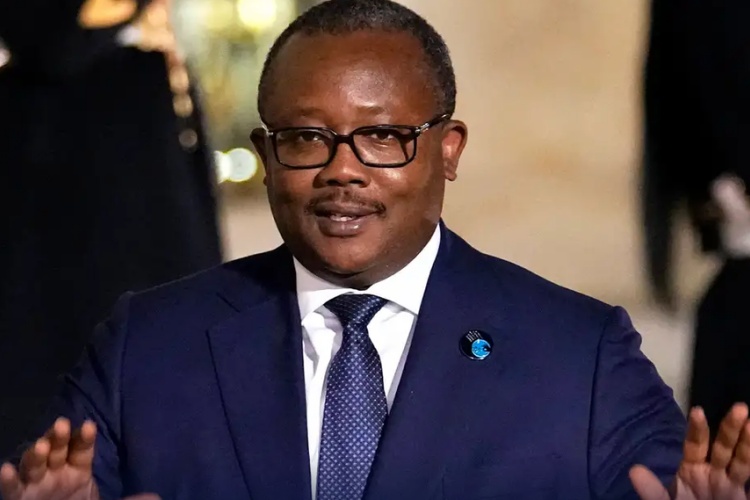
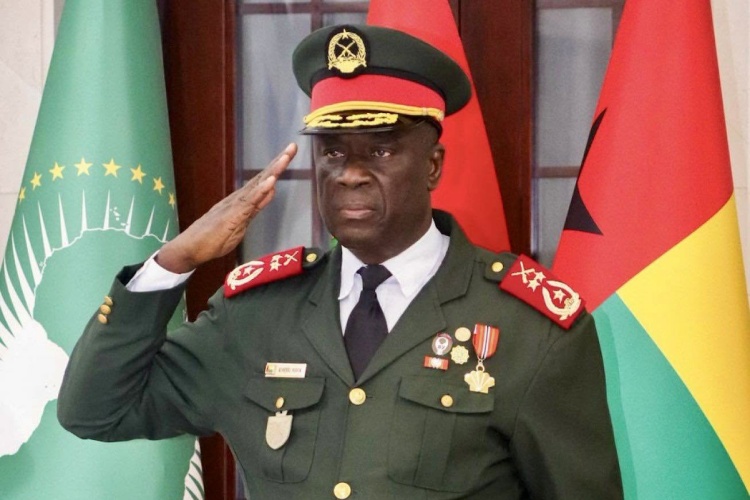
Gambiaj.com – (BISSAU, Guinea-Bissau) – Former President Umaro Sissoco Embaló has appealed for calm among his supporters and reaffirmed his intention to contest Guinea-Bissau’s December presidential election after the country’s military authorities blocked his planned return from exile, citing security concerns.
Embaló had announced that he would return to Guinea-Bissau on October 4, nearly a year after he was removed from power following the military takeover of November 26, 2025. The military authorities, however, said they had determined that the security conditions necessary to guarantee his return were not yet in place. The decision was justified on grounds of national security, public order, and the need to prevent developments that could threaten social stability.
In a message published on Thursday evening, Embaló urged his supporters and the wider population to remain calm and avoid actions that could lead to confrontation or instability.
“Our struggle must continue to be a peaceful, democratic struggle that respects the law,” he said, stressing that human life should take precedence over political ambitions.
From his political exile in Morocco, Embaló said he respected the decisions of the authorities while maintaining that he intends to participate in the December election. He also called on the judicial authorities to examine his candidacy with impartiality and independence and in accordance with the principles of justice.
His position leaves open a central question for Guinea-Bissau’s transition: whether Embaló will be allowed to participate in an electoral process that the military authorities have presented as the route back to civilian rule.
The elections are scheduled for December 6. The military takeover last November interrupted the previous electoral process shortly before the results were due to be announced. The authorities have since overseen a political transition and approved constitutional changes in an August referendum. Among the changes reported by Reuters is a requirement that presidential candidates must have lived continuously in Guinea-Bissau for the preceding five years, a provision whose implications for Embaló’s candidacy remain unclear
Pressure on Embaló’s political network
The restriction on Embaló’s return has been accompanied by moves affecting figures associated with his former administration.
On Friday, Malam Sissé, leader of the African Party for Peace and Social Stability (PAPES) and a former supporter of Embaló, was removed as director-general of Guinea-Bissau’s Tax and Contributions Directorate.
Sissé had been appointed to the position on March 17 following a Council of Ministers meeting. His dismissal was reportedly effected through a decree by transitional Prime Minister and Finance Minister Ilídio Vieira Té.
Sources cited in the report said further changes to senior government positions could follow, potentially affecting other officials considered close to Embaló.
The developments suggest that the dispute over Embaló’s political future is extending beyond his own return and candidacy into the wider political and administrative structures associated with his presidency.
Civil society calls for disarmament and accountability.
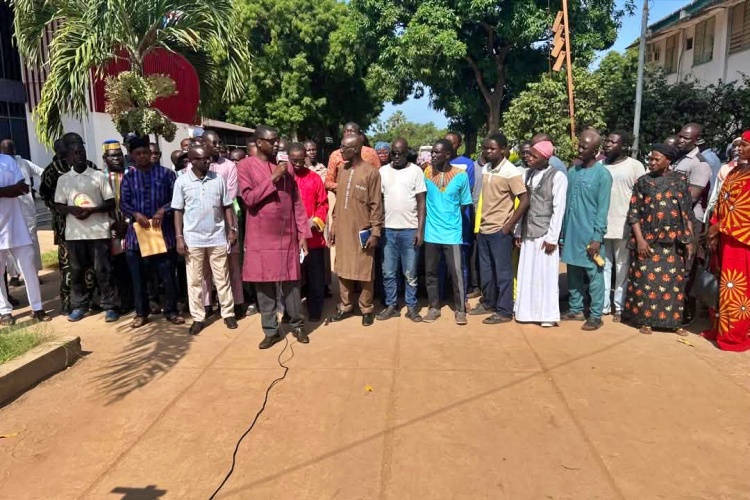
Meanwhile, Guinea-Bissau’s civil society has welcomed the military authorities’ reported decision to disarm armed structures associated with Embaló while demanding that the former president return to the country to face judicial scrutiny.
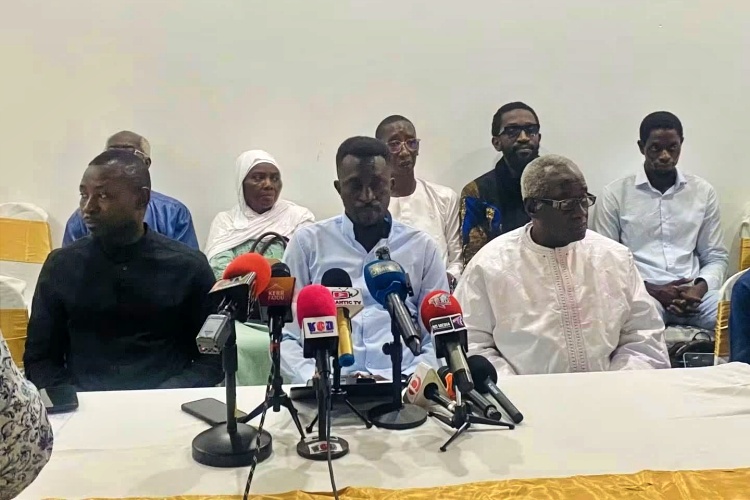
The Espaço de Concertação das Organizações da Sociedade Civil and the Frente Popular said the disarmament should be followed by an independent investigation into the identity of those involved, the chain of command, the origin of weapons and allegations of intimidation, persecution and violence.
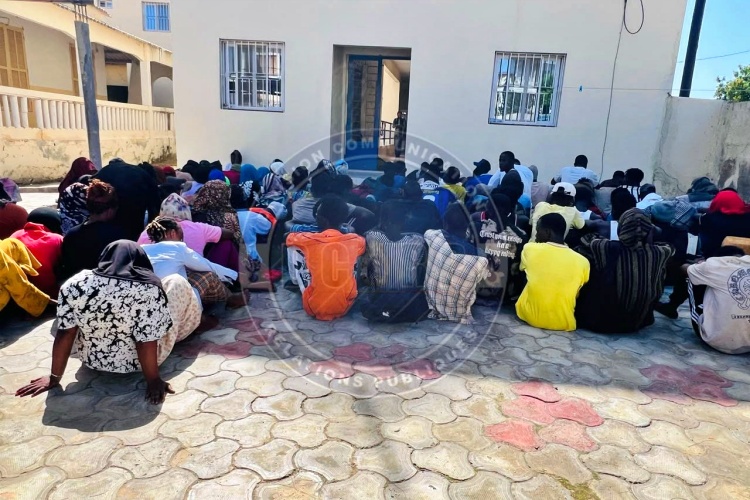
The two platforms, which bring together more than 50 civil society organizations, also called for the release of people they describe as having been arbitrarily detained and for the restoration of political and civic freedoms.
The organizations accused Embaló and former military chief General Biaguê Na N’Tam of contributing to the weakening of democratic institutions and the rule of law during the previous political period. Those are allegations made by the civil society platforms and have not been established as judicial findings in the material reviewed.
They also described the events surrounding the November 2025 takeover as an alleged attempt to prevent the proclamation of election results and interpreted the military’s latest actions as evidence of a growing break between the current authorities and Embaló.
For Embaló, however, the immediate message is one of patience rather than confrontation. He has told his supporters that he remains “firm, patient, and determined” to pursue his political objectives through peaceful means.
The former president’s planned return on October 4 may therefore no longer be the immediate test of Guinea-Bissau’s transition. The bigger question is whether a military-led process preparing for December elections can accommodate the return and political participation of the man whose presidency ended with the military intervention that created the transition in the first place.







Leave a Reply