


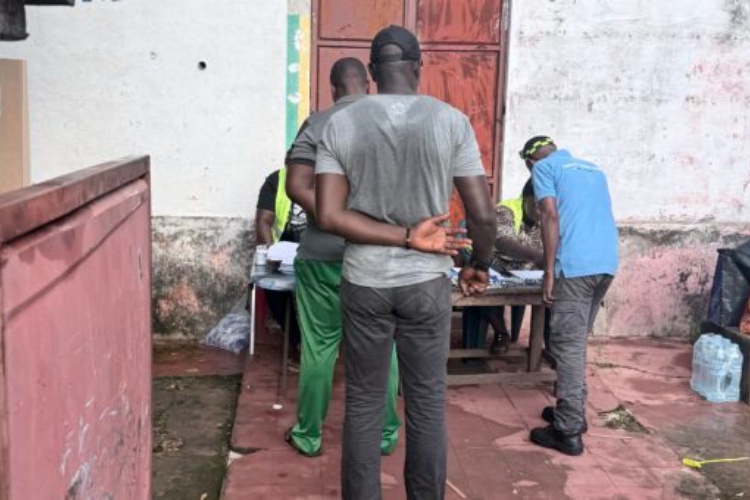
Gambiaj.com – (BISSAU, Guinea-Bissau) – A national referendum on a new constitution in Guinea-Bissau was marked by visibly low voter turnout on Sunday, August 30, despite the National Elections Commission’s preliminary estimate that around 55 percent of eligible voters had participated.
Rainfall in several parts of the country, calls by opposition figures for a boycott and an apparent lack of enthusiasm among voters combined to shape the voting day, with several polling stations reportedly remaining largely empty for much of the day.
Polls opened at 7:00 a.m., allowing approximately 914,000 registered voters to cast their ballots at 3,562 polling stations across the country. However, low voter turnout was noticeable from the early hours of voting and appeared to persist until polling stations closed.
Sparse Polling Stations
A report based on observations at several polling centers described polling stations that were practically empty for long periods at several locations. Even as the end of voting approached, voters were reportedly arriving only in small numbers.
The low turnout prompted an appeal from the President of the transition, General Horta, who acknowledged the situation and urged citizens, particularly young people, to exercise their right to vote.
He stressed the importance of the referendum, in which voters were being asked to decide on the approval of a new Constitution for the Republic.
National authorities also encouraged citizens to participate throughout the day, but turnout remained below expectations in several areas, according to observations from the ground.
Rain that fell in Bissau and other regions was cited as one possible reason for the slow turnout. At the same time, opposition-linked figures used social media to call on citizens to remain at home and boycott the referendum.
CNE Reports 55 Percent Participation
Despite reports of low turnout at several polling locations, the National Elections Commission (CNE) announced in its preliminary assessment that participation stood at around 55 percent.
The CNE’s executive secretary, Idriça Djaló, said turnout was particularly strong in the eastern regions of Bafatá and Gabú, as well as in Oio and Cacheu in northern Guinea-Bissau.
The electoral body also said the voting process had taken place in a calm atmosphere, with no incidents reported since polling stations opened.
According to the CNE, all polling stations received the necessary voting materials, and the process proceeded normally across the country.
The final turnout figures and results of the referendum are expected to provide a clearer picture of whether the participation recorded nationwide matched the preliminary 55 percent estimate, following a day in which many polling stations appeared to receive significantly fewer voters than expected.













Leave a Reply