


Gambiaj.com – (BANJUL, The Gambia) – After more than four decades in development planning and project management, including extensive experience in the health sector, I have come to see project management differently from the way it is sometimes understood.
The real challenge is not simply to complete a project, spend the resources, and close the books. It is to bring together Government ownership, professional implementation, and development partner support in a way that produces results the health system can sustain after the project ends.
Experience across project preparation and implementation, institutional leadership within the Ministry of Health, and coordination of a World Bank-supported project during the COVID-19 emergency has reinforced one important lesson: no single institution or individual can successfully manage a development project alone.
The starting point must be Government ownership. A project may be financed by the World Bank or another development partner, but it is intended to address a national priority. The Ministry therefore has to take full ownership of the project and ensure that its objectives remain aligned with the health system it is expected to strengthen.
This places particular demands on the Permanent Secretary. The PS needs strategic vision, institutional authority, sound judgement, and the ability to make decisions when implementation becomes difficult.
The PS must facilitate coordination across technical directorates and other parts of Government, remove institutional bottlenecks, and ensure alignment with national priorities. At the same time, the PS must trust competent professionals to manage the project without turning institutional leadership into day-to-day project management.
That distinction is important. The Project Coordination Unit needs sufficient professional space to manage implementation while remaining firmly within the Ministry. It coordinates activities, monitors progress, manages implementation issues, and maintains communication with the development partner.
The technical directorates, meanwhile, remain responsible for the professional content and service delivery areas that the project supports.
The World Bank Task Team Leader has a complementary role. The TTL leads the Bank’s engagement with Government, coordinates the Bank team, provides technical and implementation support, raises concerns when necessary, and monitors progress against agreed development objectives.
This requires more than technical knowledge. A good TTL needs sound judgement, responsiveness, candor, and the ability to build professional relationships based on trust.
The TTL must be prepared to challenge Government when necessary, while recognizing that Government owns the project and possesses institutional knowledge that the development partner may not have.
The relationship should therefore be one of professional partnership rather than control. The PS provides institutional leadership, the PCU manages implementation, the technical directorates provide technical leadership, and the TTL supports, challenges, and helps Government address implementation problems.
Trust is the bridge between these responsibilities. The PS must be able to trust the professional judgement of the TTL and the project team.
The TTL must respect Government ownership and trust the ministry’s institutional leadership. The PCU, in turn, must have the confidence and accountability necessary to manage implementation professionally.
When these relationships work, problems can be identified early and addressed before they become crises. When they do not, even a well-designed project can become unnecessarily difficult to implement.
Lessons from the PHPNP experience
The experience of the Participatory Health, Population, and Nutrition Project demonstrates why this relationship begins during project preparation. Preparation is not simply the stage before implementation. It is where objectives are defined, institutional responsibilities are established, implementation capacity is assessed, risks are considered, and arrangements for monitoring and sustainability are developed.
The World Bank’s completion assessment found that implementation of the PHPNP faced significant difficulties, including weaknesses in project management capacity and delays in important areas. It also found that progress before the March 2002 midterm review had been limited, but that implementation improved substantially thereafter as corrective measures were introduced.
The lesson is important. Good project management does not mean the absence of problems. It means having the capacity to recognize problems, respond to them, and keep the project focused on its development objective.
The COVID-19 experience
The COVID-19 response provides a different but equally instructive experience. It was designed and implemented during an unprecedented emergency and required speed, flexibility and rapid adaptation.
The World Bank’s October 2023 implementation assessment reported that the project’s objectives had been achieved and that all Project Development Objective-level indicator targets had surpassed their targets. Progress towards achievement of the development objective was rated Highly Satisfactory, while overall implementation progress was rated Satisfactory.
The project strengthened areas including emergency response capacity, surveillance, and healthcare waste management, while contributing to the strengthening of national systems for public health preparedness. The Bank specifically reported that the project contributed to health systems strengthening for public health preparedness for future pandemics.
The contrast between the PHPNP and COVID-19 projects is instructive. One demonstrated the consequences of implementation challenges and the importance of corrective management. The other demonstrated the importance of adaptability when circumstances change rapidly.
Yet both point to the same principle: project management is ultimately about turning resources and plans into sustainable results.
That is why completion should never be confused with success.
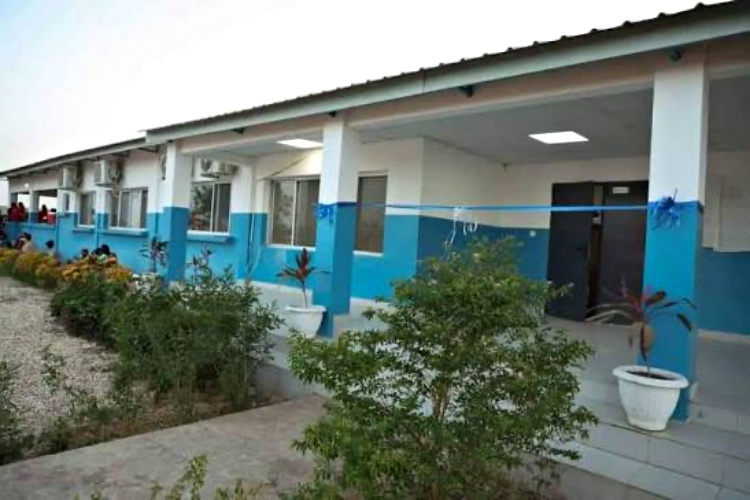
A health facility can be constructed, equipment procured, staff trained, and funds fully disbursed. These are important outputs, but they do not, by themselves, guarantee better health services. The real test comes afterwards. Is the facility functioning? Is the equipment being used and maintained? Are trained personnel still available? Can the Government meet the recurrent costs? Are patients receiving better and more accessible services?
The PHPNP completion assessment remains particularly relevant here. While the project delivered important outputs, its experience also highlighted weaknesses that affected sustainability and implementation effectiveness.
The lesson is not that the project produced no value. It is that the value of a development investment ultimately depends on whether the institutions responsible for delivering the service can sustain what has been created.
The COVID-19 experience provides a further illustration of the same principle. The project’s objective was not simply to respond to COVID-19 but also to strengthen the national system for public health preparedness. The Bank reported that the project contributed to health systems strengthening for preparedness for future pandemics and that its PDO-level targets had been surpassed.
This is what development projects should aspire to achieve: not simply an intervention that ends when the financing ends, but an investment that leaves the health system better prepared for the future.
The most important question at the end of every health project is therefore simple:
What remains when the project ends?
If what remains is a functioning facility, maintained equipment, capable people, stronger systems, institutional knowledge, and better health services, then the project has achieved something beyond completion. It has strengthened the health system itself.
That is the real purpose of project management. The project may have a limited lifespan; the health service does not.
That is the real harvest of development investment.
And the harvest never lies.
















Leave a Reply