


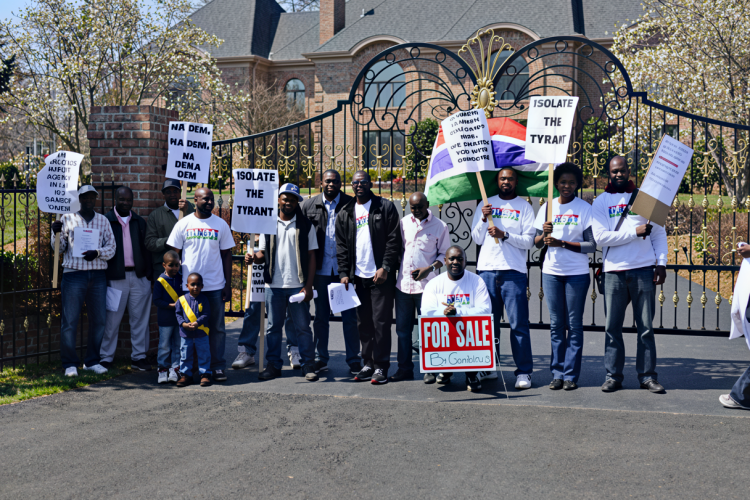
Gambiaj.com – (BANJUL, The Gambia) – There are moments in a nation’s history when an old story suddenly acquires a new meaning. For Gambians, the Potomac mansion is one of those stories. For years, the sprawling property in one of the most exclusive neighbourhoods of Maryland stood as a distant symbol of the excesses surrounding Yahya Jammeh’s rule, a house purchased in the United States while ordinary Gambians at home struggled with poverty, unemployment, and the consequences of a system in which public resources were allegedly diverted for private benefit.
Now, the story has come full circle. The United States Department of Justice has returned US$2,507,911.73 in net proceeds from the sale of the Potomac property to The Gambia. The money is to be used to compensate eligible victims of the Jammeh regime under The Gambia’s Victims Reparations Act.
The US says the mansion was purchased using criminal proceeds and misappropriated Gambian public funds.
And suddenly, a phrase that Gambians often use when something long-awaited finally happens comes to mind: “Fateh hejut fii.”
This time, the victory is not simply that a mansion has been sold.
It is that something once associated with the accumulation of wealth and privilege has been turned, through the long process of investigation, forfeiture, and recovery, into resources intended for victims.
But before we celebrate the money, we should remember the people who refused to let the Potomac story disappear.
They followed the mansion when others could not
During the Jammeh years, Gambians living abroad often assumed a responsibility that was almost impossible for many people inside the country.
They became the voices that could speak when others were afraid.
They investigated. They protested. They wrote. They contacted lawmakers. They spoke to journalists. They knocked on doors in Washington. They tried to connect what was happening in The Gambia to the properties, bank accounts, and lifestyles being maintained abroad.
Among them was Sohna Sallah.
In 2010, the late Gambian journalist Pa Nderry Mbai, through his Freedom Newspaper, reported that Jammeh’s wife, Zeinab, had acquired a property in the wealthy Potomac area.
But knowing that such a house existed was one thing.
Finding it was another.
Sallah and members of the Democratic Union of Gambian Activists, or DUGA, began searching property records. They came across the name MYJ Family Trust, a name that raised questions because the initials appeared to correspond with Yahya Jammeh.
They investigated further.
They drove around Potomac.
And then came the moment when suspicion became something tangible.
Sallah and her colleagues saw Zeinab Jammeh arriving at the property.
They knew they had found it.
The mansion was no longer merely a name in a newspaper report. It had a gate. It had an address. It had a physical presence in the United States.
And DUGA decided that the mansion should not be allowed to remain invisible.
“For sale, by Gambians”
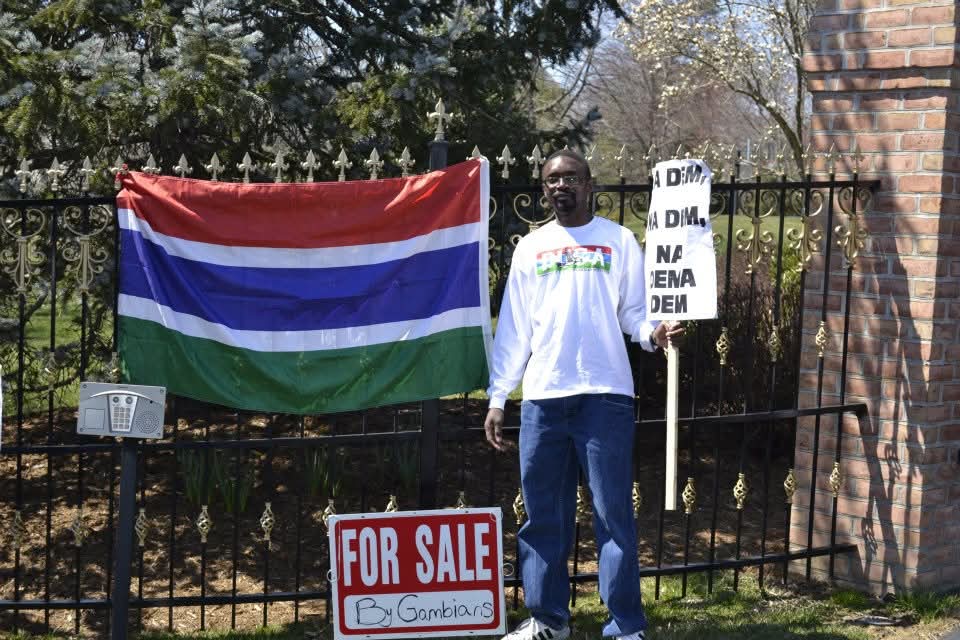
Activist Pa Samba Jow triying to grab the attention of Yahya Jammeh’s neighbors in Potomac
The images are almost cinematic.
Gambians standing outside a luxury mansion in Potomac.
A Gambian flag attached to its gates.
A makeshift sign declaring: “For sale, by Gambians.”
Activists distributed leaflets to neighbors, attempting to explain what they believed the property represented, the contrast between the extraordinary wealth surrounding Jammeh and the economic realities faced by Gambians back home.
The irony was difficult to miss.
A government that had ruled a small and relatively poor country was being associated with an extraordinary mansion thousands of miles away, in one of America’s wealthiest communities.
The house itself was a statement.
Six bedrooms. A swimming pool. Gym. Guest house. Movie screening room. Seven bathrooms and the trappings of an extraordinary private residence.
But to the activists, the most important thing was not the marble, the swimming pool, or the size of the house.
It was the question: Where did the money come from?
That question eventually became central to the legal case.
According to the US Justice Department, the property was purchased for US$3.5 million through the MYJ Family Trust, with the funds traced to misappropriated Gambian public money and criminal proceeds. The US subsequently pursued civil forfeiture of the property.
The trash bins told another story
Perhaps one of the most extraordinary anecdotes from this campaign concerns Sohna Sallah’s brother, Babou Sallah.
Unable to enter the heavily secured mansion, Babou looked for another way to understand what was happening inside. He reversed his car onto the gate of the mansion and did the unbelievable.
He went to the trash.
He examined their contents, looking for discarded receipts and other material that could provide clues about the lifestyle being maintained inside the mansion.
It was an unconventional form of investigation.
But sometimes unconventional methods are born out of unconventional circumstances.
Among the material collected were receipts and evidence of expensive purchases, flowers, gifts, and shopping.
The discarded remains of a luxury lifestyle were being turned into information.
The activists were building their own archive.
They were trying to document the contrast between the life being lived in that mansion and the realities of the people whose country had allegedly financed it.
That work mattered.
Because corruption is often easiest to understand when it stops being an abstract figure on a balance sheet and becomes a house, a car, a shopping receipt, or a luxury property sitting behind an American gate.
They took Potomac to Washington
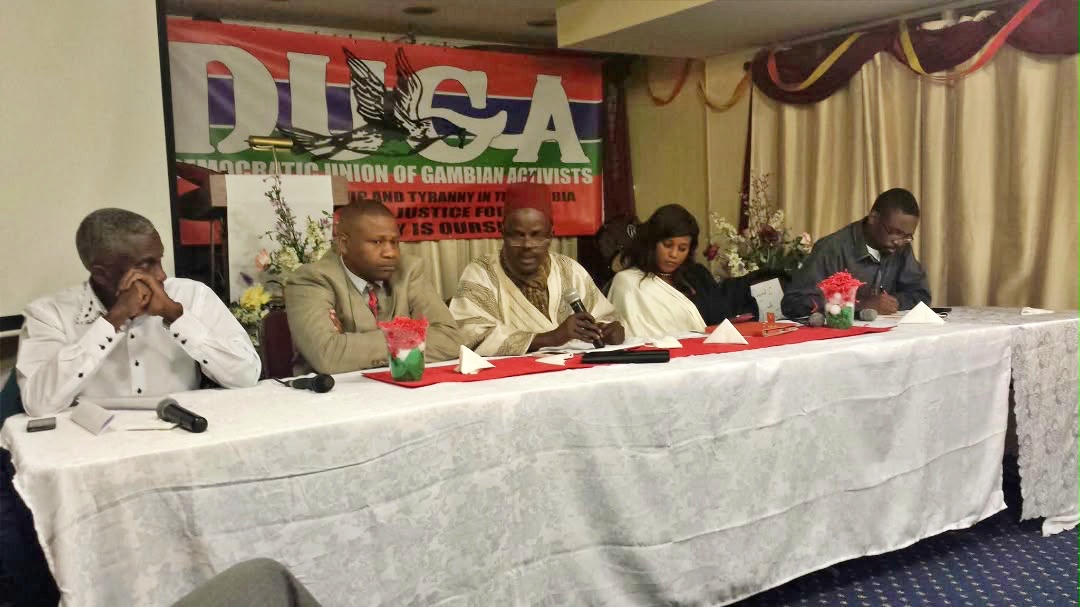
Gambian activists in the U.S then taking the case of Yahya Jammeh to the world
The campaign did not stop at demonstrations.
Gambian activists took the issue to members of the US Congress. They approached senators. They spoke to the media. They sought international attention.
Among those involved were Pa Samba Jow, Soffie Ceesay, Sohna Sallah, Buba Sallah, Sainabou Phall, Sulayman Mbenga, Ousainou Mbenga, Baboucarr Mbye Sarr, Musa Ceesay and others like Banka Manneh, Amadou Scattred Janneh, Fatu Camara and the late Tuku Jallow.
Their individual contributions were different, but the objective was broadly the same: keep the story alive.
And there was another crucial figure who deserves particular remembrance.
Pa Nderry Mbai.
For years, the late journalist made the activities of the Jammeh government a central focus of his reporting. His Freedom Newspaper became an important platform for allegations of corruption and abuse during the Jammeh era.
The Truth, Reconciliation and Reparations Commission later documented the pressure brought against Mbai and the extent to which Jammeh’s government regarded him as an adversary. The Commission found credible evidence concerning attempts to silence him, including the hacking of his newspaper’s website and his placement on a reported hit list.
Pa Nderry did not live to see this day.
Neither did some of the other Gambians who spent years pursuing the Potomac story.
That makes this moment more poignant.
The people who fought before the victory became possible
Today, it is easy to look at the US$2.5 million and see only a successful legal and diplomatic process.
But history is rarely that simple.
Before lawyers appeared in court, activists had been knocking on doors.
Before government officials signed agreements, journalists had been publishing.
Before the US Justice Department announced the return of the money, Gambians had spent years saying that the property should never be allowed to remain simply a symbol of wealth acquired during Jammeh’s rule.
Their work did not itself confiscate the mansion. The forfeiture was ultimately achieved through the US legal process, with cooperation from the Gambian and US authorities. The Justice Department specifically credited assistance from the Gambian government and other US agencies in facilitating the recovery.
But the activists helped ensure that the question remained visible.
That distinction matters.
Because accountability is rarely the work of one institution.
It is often the accumulation of pressure from journalists, activists, victims, lawyers, investigators, governments, and ordinary citizens who refuse to let an uncomfortable story die.
From Potomac to the victims
This is where the symbolism becomes powerful.
A mansion bought during the Jammeh era is gone.
The money generated from its sale is coming back to The Gambia.
And it is intended for victims.
The US$2,507,911.73 will be transferred for compensation of eligible victims under the Gambian reparations framework.
The transformation could hardly be more striking.
From private luxury to public accountability.
From an asset associated with alleged corruption to money designated for reparations.
From Potomac back to The Gambia.
That is why this moment should not be treated simply as another government announcement.
It is part of the unfinished story of accountability for the Jammeh era.
And it should remind us that assets recovered abroad are not merely financial transactions. They are part of the larger question of whether a nation can recover what was lost and whether victims can finally see something tangible from the long struggle for justice.
Remember those who kept the light on
So, as The Gambia marks this moment, we should remember the people who kept talking about Potomac when many had moved on to other stories.
Remember Sohna Sallah.
Remember Babou Sallah.
Remember Pa Samba Jow, Soffie Ceesay, Buba Sallah, Sainabou Phall, Sulayman Mbenga, Ousainou Mbenga, Baboucarr Mbye Sarr, Musa Ceesay, Amadou Scattred Janneh, Banka Manneh, the late Tuku Jallow and the others.
Remember the many unnamed Gambians who stood outside that mansion, carried the flag, distributed leaflets, attended protests, made phone calls, and continued talking about the issue.
And remember Pa Nderry Mbai, who understood the power of information long before the Potomac property became a matter before a US court.
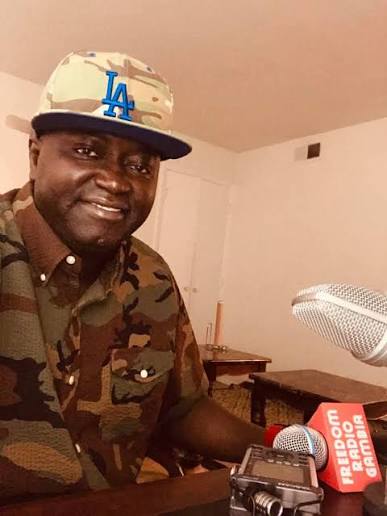
From Raleigh, North Carolina, Pa Nderry M’Bai, the Founding Managing Editor and Publisher of Freedom Newspaper, played a key role in exposing human rights abuses and other injustices during Yahya Jammeh’s time in office.
They did not recover the money themselves.
But they helped keep the question alive.
And that is sometimes how accountability begins.
A newspaper story.
A suspicious name on a property record.
A car driving down Bentcross Drive.
A Gambian flag on an American gate.
A discarded shopping receipt.
A protest.
A phone call to a congressman.
A television interview.
Another newspaper story.
And another.
Until, eventually, the mansion that once represented the distance between those who had power and those who paid the price became part of a process that is bringing money back to the people who were harmed.
That is the real meaning of “Fateh hejut fii.”
The victory belongs not to one person or one institution, but to a long chain of Gambians and institutions that refused to allow the story to disappear.
The Potomac mansion has finally become something very different from what it was intended to be.
It has become a reminder.
A reminder that wealth acquired through public office can be pursued across borders.
A reminder that stolen or misappropriated public resources can leave a paper trail.
A reminder that activists can preserve evidence and public attention even when formal accountability seems distant.
And, most importantly, a reminder to Gambians that the fight for accountability does not necessarily end when the powerful leave office.
Sometimes, it takes years.
Sometimes, it takes decades.
But the trail can still lead home.
Fateh hejut fii.
And to those who kept the trail alive when there was little reason to believe they would ever see this day: this moment belongs, in part, to you.
The rest of us should make sure that the money now returning to The Gambia reaches the victims it is intended for: transparently, fairly, and without another generation having to fight the same battle.





Leave a Reply