


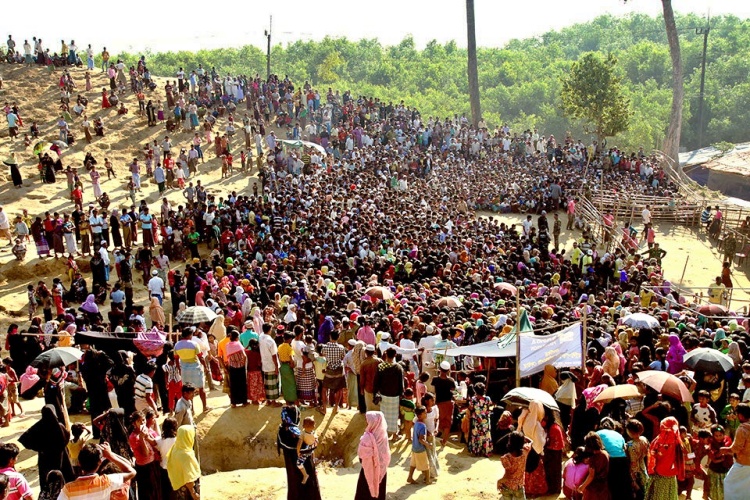
Gambiaj.com – (THE HAGUE – SWITZERLAND) – Seven years after The Gambia took the unprecedented step of dragging Myanmar before the United Nations’ highest court, the International Court of Justice (ICJ) ruled on Thursday that the Southeast Asian nation committed genocide against its minority Rohingya Muslim population.
In a landmark 9–6 decision delivered at the Peace Palace in The Hague, ICJ President Yuji Iwasawa declared that Myanmar acted with the clear intent to destroy “a substantial part” of the Rohingya people during the military’s brutal 2017 crackdown in northern Rakhine State.
For The Gambia—a small West African nation that filed the case in November 2019 on behalf of the Organization of Islamic Cooperation (OIC) despite having no direct geographic ties to the conflict—the ruling marks a defining triumph in international human rights diplomacy.
“This Victory Belongs to the Rohingya”
Speaking to reporters outside the Peace Palace immediately following the three-hour hearing, Gambian Attorney General and Minister of Justice Dawda Jallow hailed the judgment while keeping the focus squarely on the survivors.
“This victory belongs to the Rohingya. They survived. They testified,” Minister Jallow said, echoing the arguments he presented to the bench that the Rohingya had been targeted with a deliberate “will to destroy.”
Justice Jallow noted, however, that Banjul’s legal battle is not yet over. The Gambia will be required to return before the World Court in subsequent proceedings to formally submit claims for financial and material reparations on behalf of the victims.
Three Genocidal Acts Established
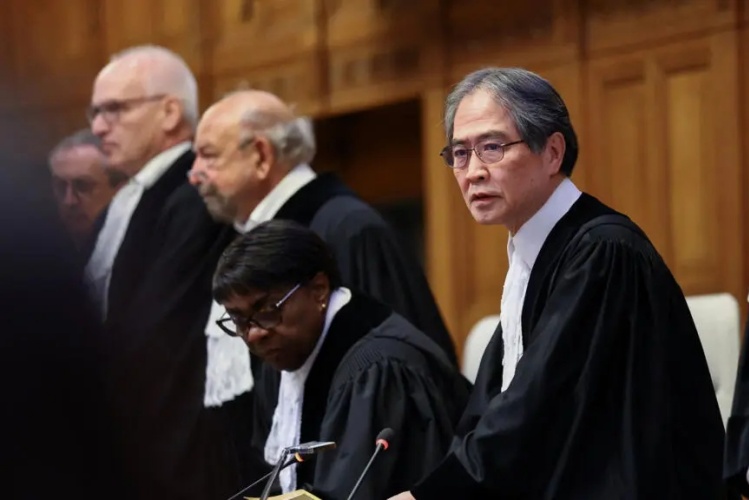
International Court of Justice (ICJ) President Judge Yuji Iwasawa delivers the court’s ruling in the case brought by The Gambia, which accuses Myanmar of committing genocide against the Rohingya Muslim minority, in The Hague, Netherlands, on November 19, 2026. REUTERS – Piroschka Van De Wouw
After examining every article of the 1948 UN Genocide Convention, the judges concluded that Myanmar violated its international obligations through three distinct genocidal acts.
The court found credible evidence backing estimates that the Myanmar military murdered approximately 10,000 Rohingya civilians, roughly 1.2 percent of the community, during the summer of 2017.
Judges cited widespread sexual violence, mass rape, extreme violence against children, the forced exile of hundreds of thousands, and the razing and repopulation of 360 Rohingya villages. The Court found that the burning of Rohingya homes, leaving residents with nothing to return to, and the subsequent resettlement of other communities supported the inference that the population had been deliberately targeted.
The court ruled that Myanmar imposed deliberate measures intended to prevent births within the Rohingya population with approximately 392 of the 993 villages across three townships in northern Rakhine State partially or completely destroyed during and after the 2017 operations.
Myanmar’s defense had argued that its forces were conducting legitimate counter-insurgency operations following attacks on police posts.
The ICJ flatly rejected that claim, ruling that the slaughter of infants and the collective punishment of an entire civilian population cannot be justified as counter-insurgency. Furthermore, the court found that Myanmar actively destroyed evidence and failed to investigate or punish senior military commanders.
Only once before in its 80-year history has the ICJ ruled that genocide occurred, in the 1995 Srebrenica massacre in Bosnia, making Thursday’s verdict a rare and monumental precedent in international law.
Gratitude from the Camps and Global Fallout
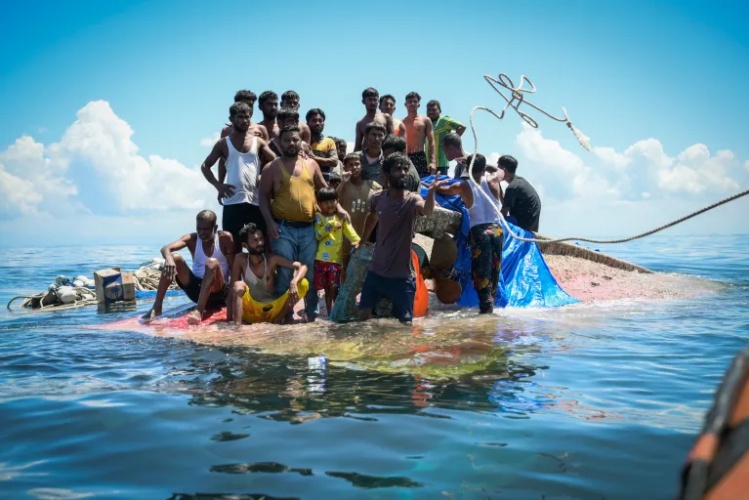
In Bangladesh’s sprawling Cox’s Bazar refugee camps, where hundreds of thousands of displaced Rohingya live in exile, the news was met with tears, relief, and specific praise for Banjul.
“We express our deepest gratitude to Bangladesh, The Gambia, and the OIC… who have supported us all these years,” said Sayed Ullah, head of the United Council of Rohingya Refugees in Bangladesh.
Osman, a refugee whose parents were killed during the 2017 crackdown, said the ruling validated years of painful testimony. “This judgment proves we were not lying when we spoke of genocide,” he said, adding that true justice will only be complete when refugees can return home in dignity.
While ICJ rulings are legally binding and cannot be appealed, the court lacks an enforcement mechanism to compel compliance from Myanmar’s military junta, led by General Min Aung Hlaing—the very commander who oversaw the 2017 operations before seizing power in a 2021 coup.
Still, the verdict triggered immediate diplomatic consequences. The court ordered Myanmar to facilitate the “safe, voluntary, and dignified” return of displaced Rohingya, ensure family reunification, and pay reparations.
UN Secretary-General António Guterres and UN High Commissioner for Human Rights Volker Türk both hailed the ruling as a turning point against impunity. Meanwhile, the United Kingdom announced the immediate expulsion of Myanmar’s defense attaché, summoned its chargé d’affaires, and called for an urgent session of the UN Security Council to enforce accountability.








Leave a Reply