


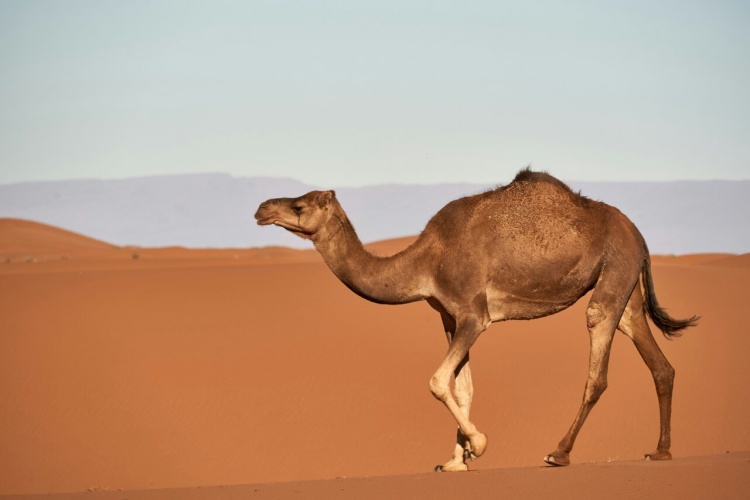
Gambiaj.com – (BANJUL, The Gambia) – A camel in the sea. The image seems almost impossible. We know the camel as the great traveler of the desert, built to endure scorching heat, scarce water, and long journeys across unforgiving terrain.
Yet along the coast of Gujarat in India, the Kharai camel has adapted to a very different environment. These remarkable camels swim through the waters of the Gulf of Kutch to reach mangrove islands where they feed, sometimes covering several kilometers in the process.
Perhaps that unexpected image carries a lesson for us. We often define ourselves by the environments we have survived, the burdens we have carried, and the hardships we have endured. But surviving one season does not mean we are destined to remain in it. Life changes. Circumstances change. And sometimes Allah takes us from one environment into another, asking us not only to endure but also to adapt.
The Qur’an invites us to begin by looking closely: “Do they not look at the camels, how they are created?” (Surah Al-Ghashiyah 88:17). The invitation is simple: look. Observe. Reflect.
The camel is remarkably adapted to difficult conditions, yet its abilities extend beyond the desert image we have come to associate with it. Perhaps that is one reason creation itself can be a source of reflection. What appears to belong to one world may possess the capacity to navigate another.
And perhaps that is true of us.
We often think strength means enduring whatever life places before us. There is certainly strength in endurance, but there is another kind of strength: knowing when and how to adapt when circumstances change. Human beings need both. There are seasons when patience is required and seasons when Allah opens a new door. Wisdom lies in recognizing the difference.
The Qur’an reminds us, “Indeed, with hardship comes ease. Indeed, with hardship comes ease.” (Surah Ash-Sharh 94:5–6). Someone who has struggled for years can begin to believe that struggle is all there is. Someone who has carried responsibility for a long time may find it difficult to put the burden down, even when circumstances improve.
Yet Allah does not ask us to live permanently in survival mode. He also teaches us to recognize and give thanks for His blessings: “If you are grateful, I will surely increase you.” (Surah Ibrahim 14:7).
There is therefore no contradiction between resilience and enjoyment. We can endure difficult circumstances without becoming prisoners of them.
Yesterday’s hardship does not necessarily describe tomorrow, just as a season of sacrifice does not mean that joy has been taken away from us forever. Sometimes Allah teaches us through what we are required to endure. At other times, He teaches us through what He allows us to enjoy. Both hardship and ease can bring us closer to Him if we respond to them with patience and gratitude.
This is where the imagery of water becomes especially meaningful. Water sustains the body, but the human soul has another kind of thirst. A well-known biblical verse captures that longing beautifully: “As the deer pants for streams of water, so my soul longs after you, my God.” (Psalm 42:1).
The point is not to compare scriptures but to recognize something deeply familiar in the human experience. We can possess wealth, status, and worldly success and still feel spiritually empty. The soul ultimately seeks its Creator.
For the believer, remembrance of Allah, prayer, gratitude, and trust provide a nourishment that worldly abundance cannot replace.
Life will bring difficult roads and unexpected openings. When the road is difficult, be patient. When circumstances change, be adaptable. And when Allah brings you into a season of ease, do not become so accustomed to struggle that you fail to recognize the blessing. Gratitude is more than saying Alhamdulillah with the tongue. It is recognizing the source of what we have received and using Allah’s blessings in ways that please Him.
Ultimately, the deeper lesson is not about the camel. It is about tawakkul—placing our trust in Allah while continuing to do what is required of us. We do not always understand the road. He has chosen for us. We see one moment; Allah sees the whole journey. We see the difficulty. He knows what it may produce. We see a closed door; He knows what lies beyond the one He will eventually open.
Perhaps this is the spiritual lesson hidden in the camel: the environment that taught you how to survive does not have to be the environment in which you remain. The desert may have taught you endurance, but Allah may yet lead you to water.
The burden may have made you strong, but Allah may yet give you rest. The difficult season may have shaped your character, but it does not have the authority to define your future.
So when life becomes difficult, do not despair. When life becomes easy, do not forget Allah. When the road changes, do not assume that you are lost. Sometimes what feels like a departure from everything familiar is simply another part of the journey Allah has written for you.
The Qur’anic command to look at the camel is therefore more than an invitation to admire creation. It is an invitation to reflect on the Creator and on ourselves. If Allah can create a creature known for crossing the desert and give some camels the ability to cross the sea, then perhaps we should be careful about deciding what is impossible for us.
We may not know where the journey is leading. We may not understand why one season had to be so difficult. But we can trust the One who sees the entire journey while we see only the road beneath our feet.
The desert is not always the destination. The hardship is not always the ending. And the season you are in is not the whole story.
Perhaps Allah is teaching you how to survive today because He is preparing you to navigate tomorrow.
Stay patient in the desert. Be grateful when you reach the water. And in every season, keep your heart turned towards Allah.
Allah knows best.









Leave a Reply