


Gambiaj.com – (BANJUL, The Gambia) – For years, cattle farmers in Dingiri had to take their animals across the border into Senegal in search of water, a journey that sometimes resulted in livestock getting lost or trapped in muddy terrain.
That long-standing challenge is now expected to ease following the commissioning of a new solar-powered livestock watering facility in the community.
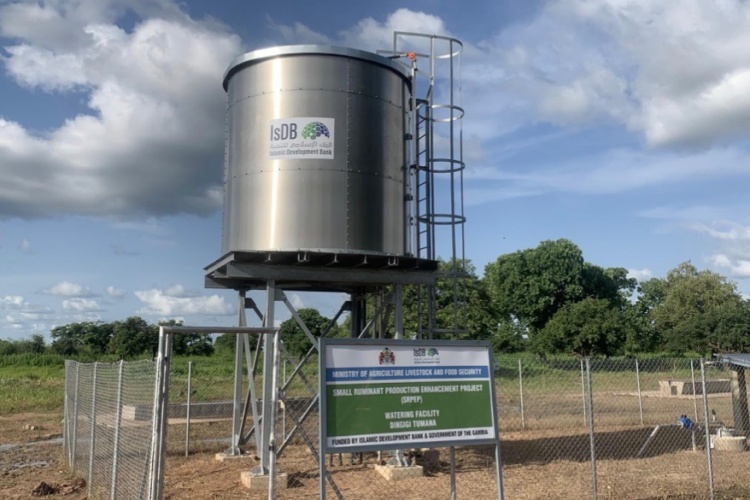
President Adama Barrow handed over the 50,000-liter automated facility in Dingiri, Tumana District, providing a local water source for an estimated 6,000 cattle.
The facility was constructed under the Small Ruminant Production Enhancement Project, funded by the Government of The Gambia and the Islamic Development Bank. It can pump up to 49,000 litres of water a day and automatically resumes pumping when the reservoir is depleted.
For farmers, the facility addresses a longstanding challenge that has complicated livestock management, particularly during the dry season.
Famory Samasa, who owns more than 100 cattle, said farmers previously had to make difficult journeys into Senegal to find water for their animals.
“Before the establishment of this facility, we used to take our cattle to Senegal for them to drink. Sometimes, our cattle get lost on the way. Sometimes, they get stuck in the mud,” he said.
He said the journey was particularly difficult for pregnant cattle, making access to water closer to home a major relief for livestock owners.
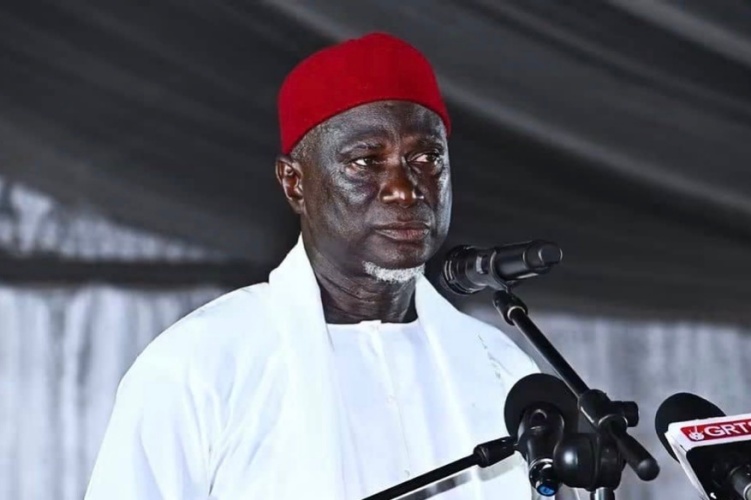
President Barrow said the facility was built in response to a request made by residents during his Meet the People Tour.
“When I came here on the Meet the People Tour, the community requested an animal drinking point so that we would build a water system so that the animals can get somewhere to drink. They used to migrate because of a lack of water. They have almost 6,000 animals around this area,” he said.
Barrow said the project demonstrated the importance of engaging communities directly to identify their needs.
“Because of that Meet the People Tour, we were able to engage the people and know what they want and what they need. That’s why we noted it, and it was part of our project, so we delivered the project,” he said.
The President said an assessment of the area had also identified the need for a second livestock watering facility and an animal market.
He said the government would construct the additional watering facility and an animal market to further support livestock owners in the area.
Agriculture Minister Demba Sabally said Dingiri is a major livestock catchment area that has suffered from water shortages for many years.
“This is an area that has suffered so long from water scarcity. In fact, they used to move across the border into neighboring countries just so that the animals could have water,” Sabally said.
He said the new facility is solar-powered, with a 2.4-kilowatt peak capacity, and can supply up to 49,000 liters of water daily.
A pipeline has also been extended to the community to provide water for domestic use.
Sabally said the sustainability of the facility would depend on effective community management, with local committees responsible for overseeing operations and collecting a minimal user fee to support maintenance.
He said there are 29 similar facilities across the country, including seven in the Upper River Region.
Project Director Mamud Njie said management committees had been trained and established savings accounts to support the upkeep of the facilities.
Some communities, he said, have accumulated more than D300,000 in savings.
The President of the National Livestock Owners Association, Ebrima O. Jallow, welcomed the intervention, saying it would help reduce the movement of Gambian livestock across the border during the dry season.
For Dingiri’s cattle farmers, the new facility means water is now available closer to home, reducing the need for long and risky journeys and potentially limiting the loss of animals during the dry season.




Leave a Reply